Why the Modern Saltbox House Works

modern-saltbox-house

Table of Contents

I never thought a roof shape could stop me in my tracks.

But the first time I spotted a modern saltbox house tucked between newer builds, I just stood there staring. That long, swooping rear slope. The clean lines.

The way it looked old and fresh at the same time.

It made no sense on paper, yet it worked perfectly. I dug into the history, talked to people who actually live in them, and pulled together everything worth knowing before you build or buy one.

What Makes a Modern Saltbox House Different

The saltbox house is one of those rare designs that actually gets better with time.

It keeps the asymmetrical roofline from colonial New England, but everything else has been rethought. Better materials, bigger windows, open interiors.

Unlike styles that chase trends, the saltbox shape has real bones.

A few features define the modern version:

  • Clean Geometric Architecture: Asymmetrical roofline stripped of decorative excess, leaving sharp, purposeful lines
  • Floor-to-Ceiling Windows: Tall glass panels pull in light and open up the space
  • Minimalist Exterior Details: Raw materials like board and batten or dark metal let the roofline do the talking
  • Strong Indoor-Outdoor Connection: Large sliding doors and low-profile decks blur the line between inside and outside

Modern Saltbox Exterior Styles Worth Knowing

What I find most interesting is how the saltbox shape adapts to completely different design languages without losing its identity, unlike a single slope roof.

I’ve seen it done four ways that genuinely work, and each one has its own personality worth knowing before you commit to anything.

1. Scandinavian Inspired Saltbox Homes
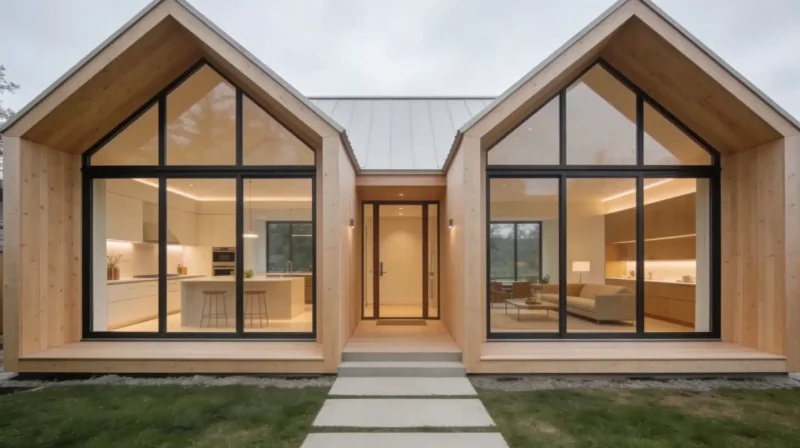
Modern Scandinavian-inspired saltbox house with light wood siding, large windows, and minimalist architecture

This is the version I personally gravitate toward. Light wood cladding, neutral tones, and zero clutter on the facade.

The Scandinavian approach strips the saltbox down to its bare geometry and lets the roofline carry everything.

One mistake I see often is people adding too many window variations, breaking the calm rhythm this style depends on. Keep the openings consistent and the palette tight.

2. Japandi Saltbox Designs
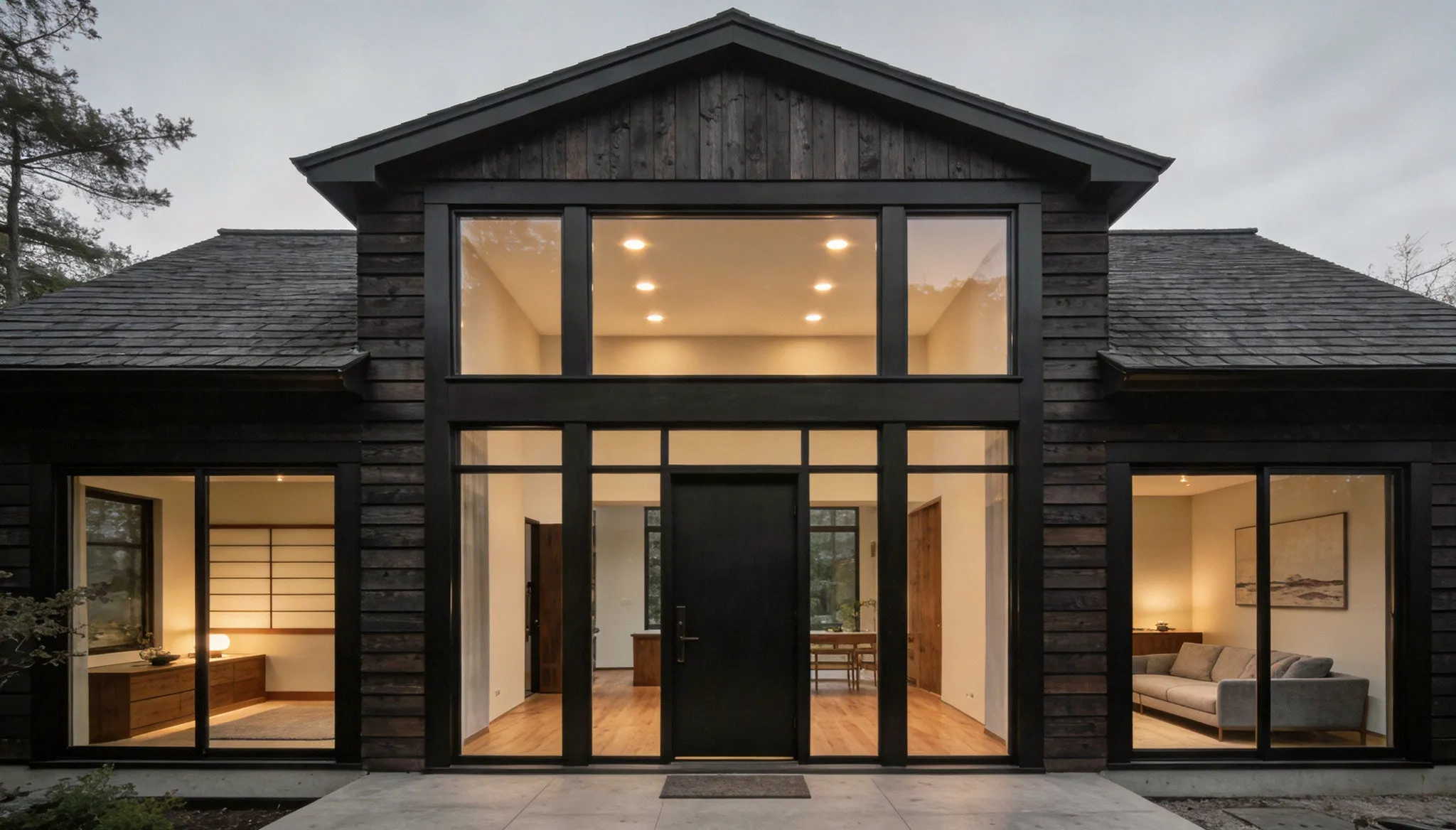
Japandi-style saltbox house featuring dark timber cladding, black accents, and minimalist landscaping.

Japandi takes the saltbox somewhere quieter. Think dark timber, muted earthy tones, and very deliberate material choices. What makes it work is the balance between warmth and restraint.

  • Natural wood paired with matte black accents
  • Low horizontal landscaping that mirrors the long rear slope
  • Minimal roofline detailing with clean cedar or composite finishes

When I first looked into Japandi saltbox builds, I kept wanting to add things. But every time I pulled back, the design looked stronger. Trust the restraint.

3. Modern Farmhouse Saltbox Houses

 When I first saw a saltbox roof, its unique silhouette immediately caught my eye one side slopes gently, while the other drops steeply, giving it a distinct, charming look. Today’s homeowners love saltbox roofs for their blend of practicality and curb appeal. In this post, I’ll quickly cover why saltbox roofs are making a comeback, highlight their weather-resistant design and extra living space, and help you decide if this classic style fits your home. You’ll also get a glimpse of their history, key features, maintenance tips, and cons. What is a Saltbox Roof? A saltbox roof is an asymmetrical roofing style where one side has a long, steep slope while the other features a shorter, more gradual incline. The name comes from its resemblance to the wooden boxes that colonial families used to store salt in their kitchens. The Colonial Connection I find it interesting how this roof style emerged in 17th-century New England out of pure necessity. Early American settlers needed homes that could handle harsh winters, heavy snow loads, and driving rain. The saltbox design proved perfect for these challenges. Many colonial families started with simple homes, then added lean-to additions to the back. This created the signature long rear slope that we associate with saltbox roofs today. It wasn't just about expansion; it was smart building. What Makes it Stand Out The most obvious feature is the asymmetry. When I look at a saltbox roof, I see: A steep front slope (usually 40-50 degrees). A much longer back slope that extends almost to the ground. A ridgeline that sits closer to the front of the house. Clean, unbroken lines that shed water and snow efficiently. This uneven design might look odd at first glance, but it serves multiple purposes. The long slope creates extra interior space while the steep pitch handles weather beautifully. Pros of Saltbox Roof Design Advantage Description Excellent Drainage Steep slopes allow water and snow to shed quickly, reducing pooling and ice dams. Unique Visual Appeal Asymmetrical shape gives strong curb appeal and architectural character. Space-Saving Interiors High front creates cathedral ceilings; sloped back offers cozy upper rooms. Weather Resistance Aerodynamic form resists wind uplift; snow naturally slides off. Cons of Saltbox Roof Design Disadvantage Description Complex Construction Requires skilled labor due to asymmetrical angles and framing complexity. Limited Attic Space Sloped back often results in awkward or low-clearance attic areas. Furniture Placement Issues Uneven ceilings make arranging tall furniture and décor more difficult. Higher Costs More materials and labor lead to increased building and maintenance expenses. Creative Saltbox Roof Variations & Adaptations The beauty of saltbox roofs lies in their adaptability. From glass-filled contemporary homes to charming tiny houses, the saltbox shape is proving it can work in almost any context. Let me show you some of the most interesting variations I've come across. Modern Saltbox alt text: Modern saltbox-style home with metal roofing, large glass windows, and symmetrical front design I've been amazed by how contemporary architects are reimagining the traditional saltbox. Instead of small colonial windows, I'm seeing floor-to-ceiling glass panels installed along the steep front slope. This floods the interior with natural light while maintaining that classic asymmetrical profile. Open floor plans work beautifully with saltbox designs the soaring front ceiling creates dramatic living spaces while the lower back section houses more intimate areas like kitchens and dining rooms. Saltbox Sheds & Tiny Homes alt text: Row of charming tiny cottages with steep saltbox-style roofs and cozy farmhouse design The saltbox shape translates perfectly to smaller structures, and this trend is growing currently. Garden sheds with saltbox roofs look charming while providing excellent storage in the tall front section. Tiny home builders are using this design to maximize headroom where you need it most, usually over the living area, while keeping sleeping lofts cozy under the long slope. Weekend cabins with saltbox roofs feel rustic. Blending Tradition with Modern Materials alt text: Modern saltbox home with mixed cedar siding, metal roofing, and large black framed windows What excites me most is watching builders mix traditional saltbox proportions with modern materials. I've seen homes where the classic roofline is covered in standing seam metal instead of wood shingles, or where one slope features traditional cedar while the other showcases contemporary fiber cement. The contrast creates stunning visual interest while honoring the historical roots. Saltbox Roofs for Multi-Generational Living alt text: Large modern saltbox-style home with dark metal roof, tall windows, and covered porch I'm noticing more families using saltbox designs to create separate but connected living spaces. The natural division between the high front section and lower back area makes it easy to design homes where grandparents or adult children can have their own private areas while sharing common spaces. It's a smart solution for changing family needs. Tips for Building or Installing a Saltbox Roof If you're thinking about building a saltbox roof, I want to share some hard-earned wisdom from my experience with these projects. Here are the key things I've learned that can make or break your saltbox roof installation. 1. Find Contractors with Saltbox Experience I always ask to see photos of their previous asymmetrical roof projects. Generic roofers often struggle with the complex framing angles and uneven load calculations that saltbox designs require. 2. Match Materials to Your Slope Angles The steep front and gentle back slopes need different approaches. I've learned that metal roofing works great on the longer, lower-pitched back section where standard shingles might fail. 3. Plan Insulation Strategically Poor insulation placement creates hot and cold spots throughout saltbox homes. I work closely with contractors to ensure continuous coverage without thermal bridging, especially in the cathedral ceiling areas. 4. Reinforce the Extended Back Slope In windy areas, that long back slope acts like a sail. I always specify extra structural support additional rafters, hurricane ties, or enhanced sheathing attachment to prevent wind damage. 5. Account for Complex Drainage Patterns Water flows differently on each slope, so I make sure gutters and downspouts are sized appropriately. The steep front section sheds water fast, while the back slope needs careful drainage planning. 6. Budget for Specialized Labor Costs Saltbox roofs take longer to build and require skilled craftsmen. I typically budget 20-30% more than standard roof installations to account for the complexity and expertise needed. Final Thoughts Saltbox roofs are more than just a design choice they’re a smart, long-term investment. The main point? While saltbox roofs can cost more upfront, their durability, extra living space, and curb appeal often make them worth it in the long run. If you’re interested, start by finding local contractors who have experience with asymmetrical roof styles. Tour nearby saltbox homes for inspiration, and talk to homeowners about their experiences. Have questions about saltbox roofs? Leave a comment below I’m here to help you make the best choice for your home. Frequently Asked Questions (FAQ's) 1. What is the Purpose of a Saltbox Roof? A saltbox roof improves drainage, handles snow well, and creates extra living space with its asymmetrical roof design. 2. What is the Strongest Shape for a Roof? Gable and hip roofs are considered strong because they evenly distribute weight and withstand harsh weather conditions. 3. Why do They Call it a Saltbox House? Saltbox houses resemble old wooden salt containers used in colonial kitchens, which inspired the architectural name. 4. Where are Saltbox Houses Most Common? Saltbox houses are most common in New England, especially in colonial towns with harsh winters and heavy snowfall. this is the main blog which i wrote so now i have to write another blog with is like a sub part of this and make sure no heading or content is repeated in another blog that is mentioned in this blog The keyword of the blog I am working on is “modern saltbox house”, and the title is “ modern saltbox house”," I want you to make an outline. Don't just give the replica of any top ranking blog while scanning the search engine; utilize all the blogs to make a comprehensive and unique outline. Use the Pyramid model to make it more engaging. IMPORTANT: Only in the first 30% of the blog should the keyword be satisfied. For instance, the main intent of the keyword should be answered clearly at the top Since your main blog already covers what a saltbox roof is, its history, pros and cons, roof variations, tiny homes, multi-generational living, and building tips, this new article should focus specifically on the modern saltbox house as a complete architectural style, not on the roof itself. Avoid repeating colonial history, roof benefits, roof drawbacks, construction tips, or the variations already discussed. Using the Pyramid Model, the article should immediately answer what a modern saltbox house is within the first 30% of the content, then gradually move into design details, lifestyle benefits, interior planning, and inspiration. Modern Saltbox House: A Timeless Shape Reimagined for Contemporary Living Introduction Why modern homeowners are rediscovering unconventional house forms The growing appeal of minimalist architecture with character Brief overview of what makes a modern saltbox house different from traditional versions What readers will learn in this guide What Is a Modern Saltbox House? The Modern Interpretation of a Classic Form Defining characteristics of a modern saltbox house How architects update the silhouette for today's lifestyles Difference between a traditional saltbox home and a modern saltbox home Quick Visual Traits That Instantly Identify One Offset roof ridge Clean geometric lines Large expanses of glass Simplified exterior detailing Open interior layouts Why the Design Feels Both Modern and Timeless Simplicity of form Architectural balance Connection between old-world shape and contemporary aesthetics The Architectural Elements That Define Modern Saltbox Homes Minimalist Exterior Design Reduced ornamentation Simple roof-to-wall transitions Strong horizontal and vertical lines Expansive Windows and Natural Light Window placement strategies Creating bright interiors throughout the day Blurring indoor and outdoor boundaries Open-Concept Living Spaces How the roof shape influences interior volume Creating dramatic gathering spaces Flexible room arrangements Indoor-Outdoor Integration Sliding glass walls Covered patios Courtyards and decks Landscape-focused design Why Modern Architects Love the Saltbox Shape A Form That Creates Visual Interest Without Complexity Architectural uniqueness without excessive detailing Distinctive curb appeal Perfect for Contemporary Minimalism Compatibility with modern design principles Strong sculptural appearance Adaptable Across Different Home Sizes Small urban homes Suburban family houses Large custom residences Interior Design Ideas for a Modern Saltbox House Making the Most of High-Volume Living Areas Vaulted living rooms Statement lighting Feature walls Designing Around Sloped Ceilings Built-in storage solutions Reading nooks Home office opportunities Material Palettes That Work Best Warm woods Concrete finishes Natural stone accents Black metal details Creating a Cohesive Modern Aesthetic Color schemes Furniture selection Balancing warmth and minimalism Popular Modern Saltbox House Layouts Single-Story Modern Saltbox Plans Ideal homeowners Functional advantages Accessibility benefits Two-Story Family-Oriented Designs Bedroom zoning strategies Shared versus private spaces Narrow Lot Saltbox Homes Maximizing limited footprints Urban design solutions Vacation and Retreat Homes Mountain settings Lakeside properties Coastal applications Best Exterior Materials for a Modern Saltbox House Standing Seam Metal Contemporary appearance Longevity Design impact Natural Wood Cladding Warmth and texture Popular wood species Fiber Cement Panels Modern aesthetics Low-maintenance appeal Mixed-Material Facades Combining textures effectively Creating architectural contrast Modern Saltbox Houses in Different Settings Forest and Mountain Environments Blending into natural surroundings Cabin-inspired modern designs Coastal Locations Light-filled layouts Ocean-view optimization Suburban Neighborhoods Standing out without appearing overly modern Rural and Countryside Properties Barn-inspired interpretations Large landscape integration Energy-Efficient Features Common in Modern Saltbox Homes Passive Solar Design Opportunities Strategic window orientation Natural heating concepts High-Performance Building Envelopes Air sealing Advanced insulation systems Sustainable Material Choices Eco-friendly cladding Renewable materials Smart Home Integration Lighting automation Climate control systems Energy monitoring Modern Saltbox House Design Mistakes to Avoid Prioritizing Style Over Function Ignoring Natural Light Orientation Choosing Materials That Clash With the Roof Form Overcomplicating the Exterior Underutilizing Vertical Space Real-Life Design Inspirations Worth Exploring Scandinavian-Inspired Modern Saltbox Homes Japandi Saltbox Designs Industrial Modern Saltbox Houses Modern Farmhouse Saltbox Interpretations Ultra-Minimal Black Saltbox Homes Is a Modern Saltbox House Right for Your Lifestyle? Questions to Ask Before Choosing This Design Family size Entertaining needs Lot characteristics Long-term plans Who Benefits Most From This Architectural Style Situations Where Another Home Style Might Be a Better Fit Final Thoughts Why modern saltbox houses continue to attract architects and homeowners The balance of simplicity, character, and functionality Key takeaways before planning a modern saltbox home Frequently Asked Questions Can a modern saltbox house look luxurious? Are modern saltbox homes suitable for small lots? What architectural styles pair well with a modern saltbox design? How much natural light can a modern saltbox house provide? Can a modern saltbox house be fully minimalist? Are modern saltbox homes energy efficient compared to conventional homes? This structure keeps the focus entirely on the modern saltbox house as an architectural and lifestyle choice, avoiding overlap with your existing article about saltbox roof design, history, advantages, disadvantages, and construction considerations. give me a concise seo friendly outline and make sure no heading or content is repeated of the main blog and no content or heading is repeate din the sam eblog Modern Saltbox House: Contemporary Design Ideas, Layouts & Inspiration H1: Modern Saltbox House Introduction What a modern saltbox house is today Why architects and homeowners are embracing the style What makes it different from other modern home designs H2: Key Characteristics of a Modern Saltbox House H3: Clean Geometric Architecture H3: Floor-to-Ceiling Window Designs H3: Minimalist Exterior Details H3: Strong Indoor-Outdoor Connection H2: Popular Modern Saltbox House Exterior Styles H3: Scandinavian-Inspired Saltbox Homes H3: Japandi Saltbox Designs H3: Modern Farmhouse Saltbox Houses H3: Black Contemporary Saltbox Homes H2: Modern Saltbox House Floor Plan Ideas H3: Single-Level Open Concept Layouts H3: Family-Friendly Multi-Bedroom Plans H3: Compact Saltbox Homes for Small Lots H3: Luxury Saltbox Retreat Layouts H2: Interior Design Ideas for a Modern Saltbox House H3: Double-Height Living Spaces H3: Statement Kitchen Concepts H3: Modern Bedroom Design Approaches H3: Built-In Storage Solutions H2: Best Exterior Materials for Modern Saltbox Homes H3: Vertical Wood Cladding H3: Fiber Cement Panels H3: Architectural Concrete Finishes H3: Mixed-Material Facades H2: How to Maximize Natural Light in a Modern Saltbox House H3: Window Placement Strategies H3: Skylight Integration H3: Open Sightline Planning H2: Energy-Efficient Features in Modern Saltbox Homes H3: Passive Solar Design H3: High-Performance Windows H3: Smart Home Technology H3: Sustainable Building Materials H2: Modern Saltbox House Decor and Styling Tips H3: Minimalist Furniture Selection H3: Warm Natural Textures H3: Modern Lighting Choices H3: Cohesive Color Palettes H2: Modern Saltbox House Design Mistakes to Avoid H3: Oversized Window Placement H3: Poor Space Zoning H3: Inconsistent Material Combinations H3: Ignoring Landscape Integration H2: Cost Factors That Influence a Modern Saltbox House H3: Size and Layout Complexity H3: Material Selection H3: Custom Architectural Features H3: Site Preparation Requirements H2: Is a Modern Saltbox House the Right Choice for You? H2: Frequently Asked Questions What defines a modern saltbox house? Are modern saltbox houses energy efficient? What is the best exterior finish for a modern saltbox home? Can a modern saltbox house work on a narrow lot? Are modern saltbox houses expensive to build? SEO Notes Primary Keyword: modern saltbox house Secondary Keywords: modern saltbox home modern saltbox house design modern saltbox house plans contemporary saltbox house modern saltbox exterior saltbox house interior ideas This outline avoids repeating: Saltbox roof history Colonial origins Roof pros and cons Weather performance Construction/installation tips Tiny homes Multi-generational living Roof variations from the main article while keeping the new post focused on design, layouts, interiors, materials, and modern architectural inspiration. Popular Modern Saltbox House Exterior Styles What I find most interesting is how the saltbox shape adapts to completely different design languages without losing its identity. I've seen it done four ways that genuinely work, and each one has its own personality worth knowing before you commit to anything. 1. Scandinavian-Inspired Saltbox Homes This is the version I personally gravitate toward. Light wood cladding, neutral tones, and zero clutter on the facade. The Scandinavian approach strips the saltbox down to its bare geometry and lets the roofline carry everything. One mistake I see often is people adding too many window variations, breaking the calm rhythm this style depends on. Keep the openings consistent and the palette tight. 2. Japandi Saltbox Designs Japandi takes the saltbox somewhere quieter. Think dark timber, muted earthy tones, and very deliberate material choices. What makes it work is the balance between warmth and restraint. Natural wood paired with matte black accents Low horizontal landscaping that mirrors the long rear slope Minimal roofline detailing with clean cedar or composite finishes When I first looked into Japandi saltbox builds, I kept wanting to add things. But every time I pulled back, the design looked stronger. Trust the restraint. 3. Modern Farmhouse Saltbox Houses I'll be honest, this is the most popular version I come across, and it's easy to see why. White or cream board and batten siding, black window frames, a metal roof. It feels familiar but the saltbox roofline gives it an edge most farmhouse builds lack. Overdoing the shiplap inside to match the exterior. It gets heavy fast. Pick one or the other. 4. Black Contemporary Saltbox Homes Nothing commands attention quite like a fully blacked-out saltbox. Dark fiber cement or charred wood cladding against a clean landscape looks sharp in a way few other styles pull off. Matte black standing seam metal roof Matching dark window frames flush with the cladding Minimal landscaping to keep focus on the form image prompt with alt text 1. Scandinavian-Inspired Saltbox Homes Image Prompt: A modern Scandinavian saltbox house surrounded by pine trees, featuring light natural wood cladding, large symmetrical windows, a minimalist façade, clean rooflines, soft neutral colors, simple landscaping with native grasses, bright overcast daylight, architectural photography, ultra-realistic, high-end residential design. Alt Text: Modern Scandinavian-inspired saltbox house with light wood siding, large windows, and minimalist architecture. 2. Japandi Saltbox Designs Image Prompt: A contemporary Japandi saltbox home with dark cedar wood siding, matte black accents, floor-to-ceiling windows, minimalist Japanese-inspired landscaping, stone pathways, ornamental grasses, warm ambient lighting, balanced proportions, serene atmosphere, architectural magazine style photography, ultra-realistic. Alt Text: Japandi-style saltbox house featuring dark timber cladding, black accents, and minimalist landscaping. 3. Modern Farmhouse Saltbox Houses Image Prompt: A modern farmhouse saltbox house with white board-and-batten siding, black-framed windows, standing seam metal roof, covered front porch, landscaped front yard, warm outdoor lighting, contemporary farmhouse architecture, realistic residential photography, high-resolution exterior view. Alt Text: Modern farmhouse saltbox home with white siding, black windows, and a metal roof. 4. Black Contemporary Saltbox Homes Image Prompt: A striking black contemporary saltbox house clad in matte black fiber cement panels and charred wood, black standing seam metal roof, expansive glass windows, minimalist landscaping, dramatic modern architecture, clean geometric lines, dusk lighting, luxury architectural photography, ultra-realistic. Alt Text: Black contemporary saltbox house with dark cladding, large windows, and minimalist modern design.
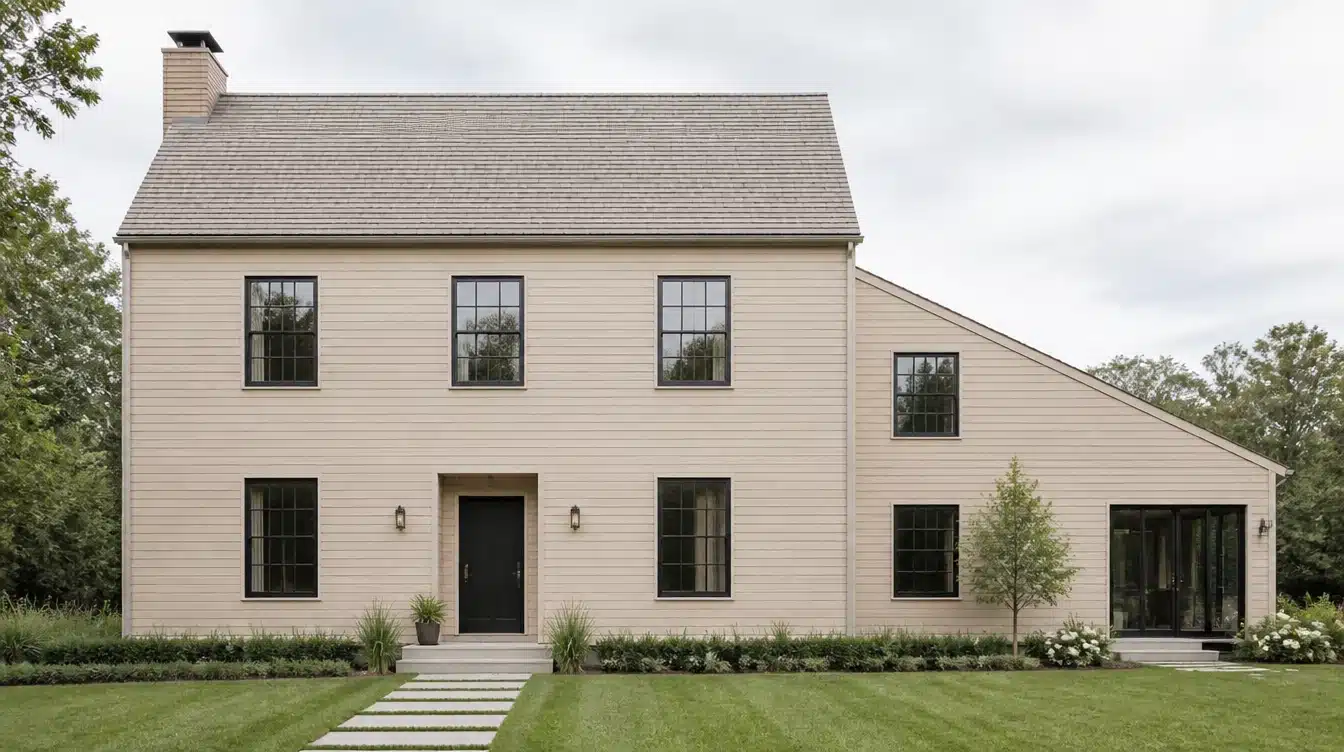
I’ll be honest, this is the most popular version I come across, and it’s easy to see why. White or cream board and batten siding, black window frames, a metal roof.

It feels familiar, but the saltbox roofline gives it an edge most farmhouse builds lack. Overdoing the shiplap inside to match the exterior. It gets heavy fast. Pick one or the other.

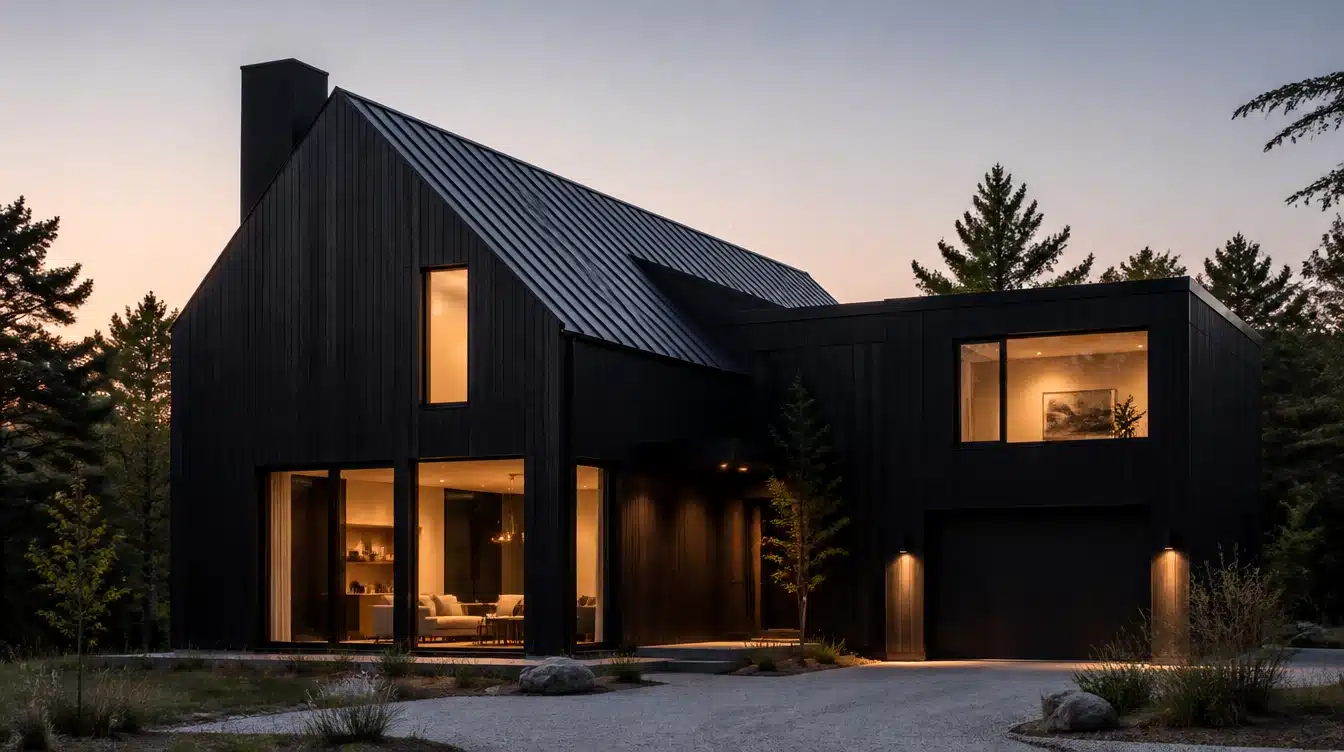
4. Black Contemporary Saltbox Homes

Black contemporary saltbox house with dark cladding, large windows, and minimalist modern design.

Nothing commands attention quite like a fully blacked-out saltbox. Dark fiber cement or charred wood cladding against a clean landscape looks sharp in a way few other styles pull off.

  • Matte black standing seam metal roof
  • Matching dark window frames flush with the cladding
  • Minimal landscaping to keep focus on the form

Exterior Materials and Saltbox Floor Plans

The material you choose changes how a saltbox reads from the street, and the floor plan determines whether the interior works with the roofline or against it.

Both decisions are more connected than most people realise.

  • Vertical Wood Cladding : Warm and natural, works beautifully with the long rear slope.
  • Fiber Cement Panels : Low maintenance and crisp for contemporary builds.
  • Architectural Concrete : Bold and raw, best for minimalist settings.
  • Mixed-Material Facades : Adds depth without overcomplicating the form.

Single level layouts use the tall front section for living and dining. Family plans tuck bedrooms into quieter rear zones.

Compact builds work well on smaller lots, and luxury layouts add double-height entries and outdoor spaces.

Interior Design Ideas for a Modern Saltbox House

The interior is where this house earns its reputation. Most people spend all their energy on the exterior and underplan what happens inside.

I think that’s a mistake because the roofline gives you so much to work with if you know how to use it.

1. Double-Height Living Spaces
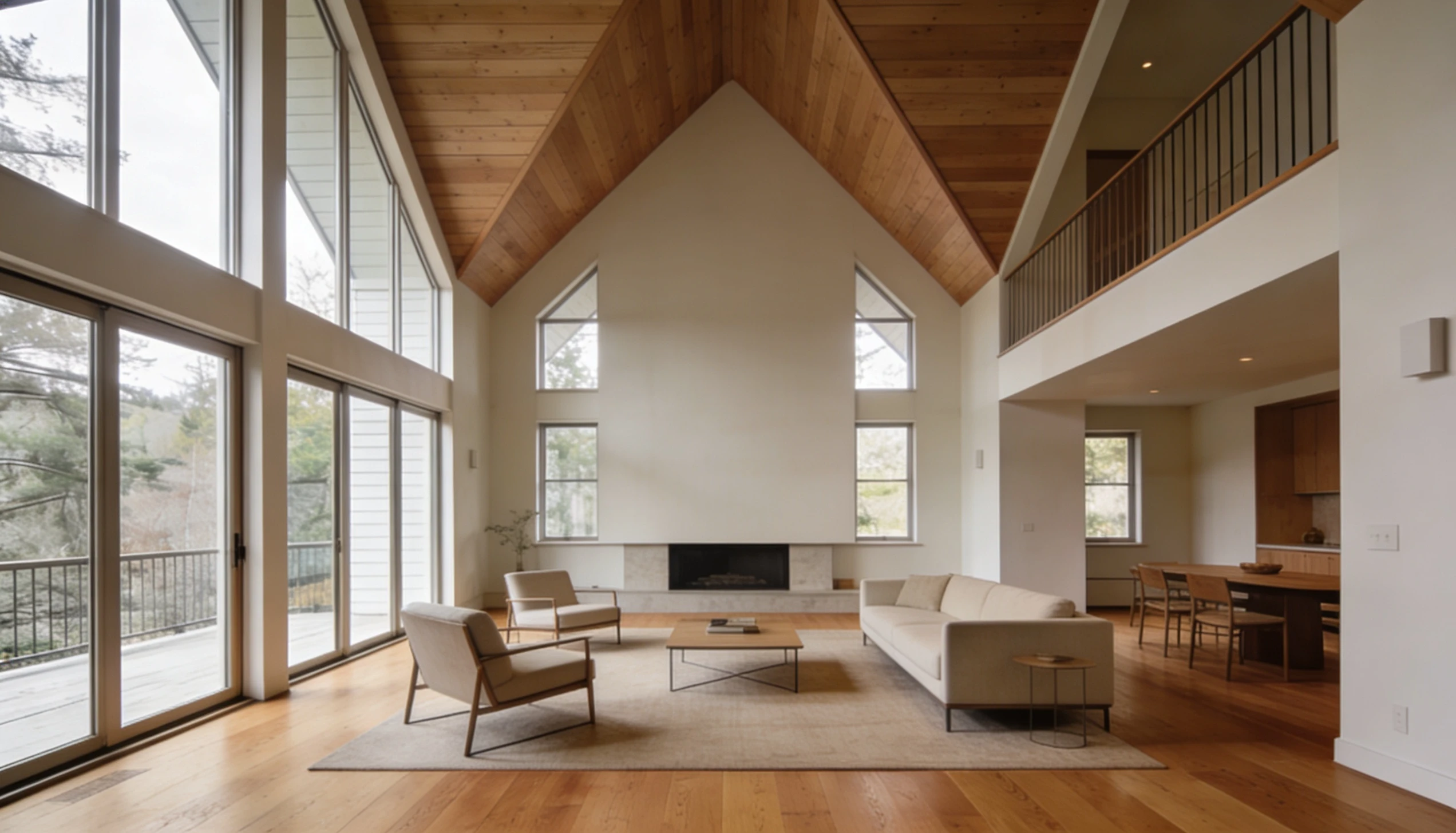
Double-height living room inside a modern saltbox house with vaulted ceilings and large windows.

That soaring front ceiling is the first thing people notice when they walk in, and it sets the tone for everything else.

The key is resisting the urge to fill the vertical space with oversized art or floating shelves. I made that mental note early, and I’m glad I did.

Let the height breathe. A single large pendant light and clean walls do far more for the space than anything busier ever could.

2. Statement Kitchen Concepts
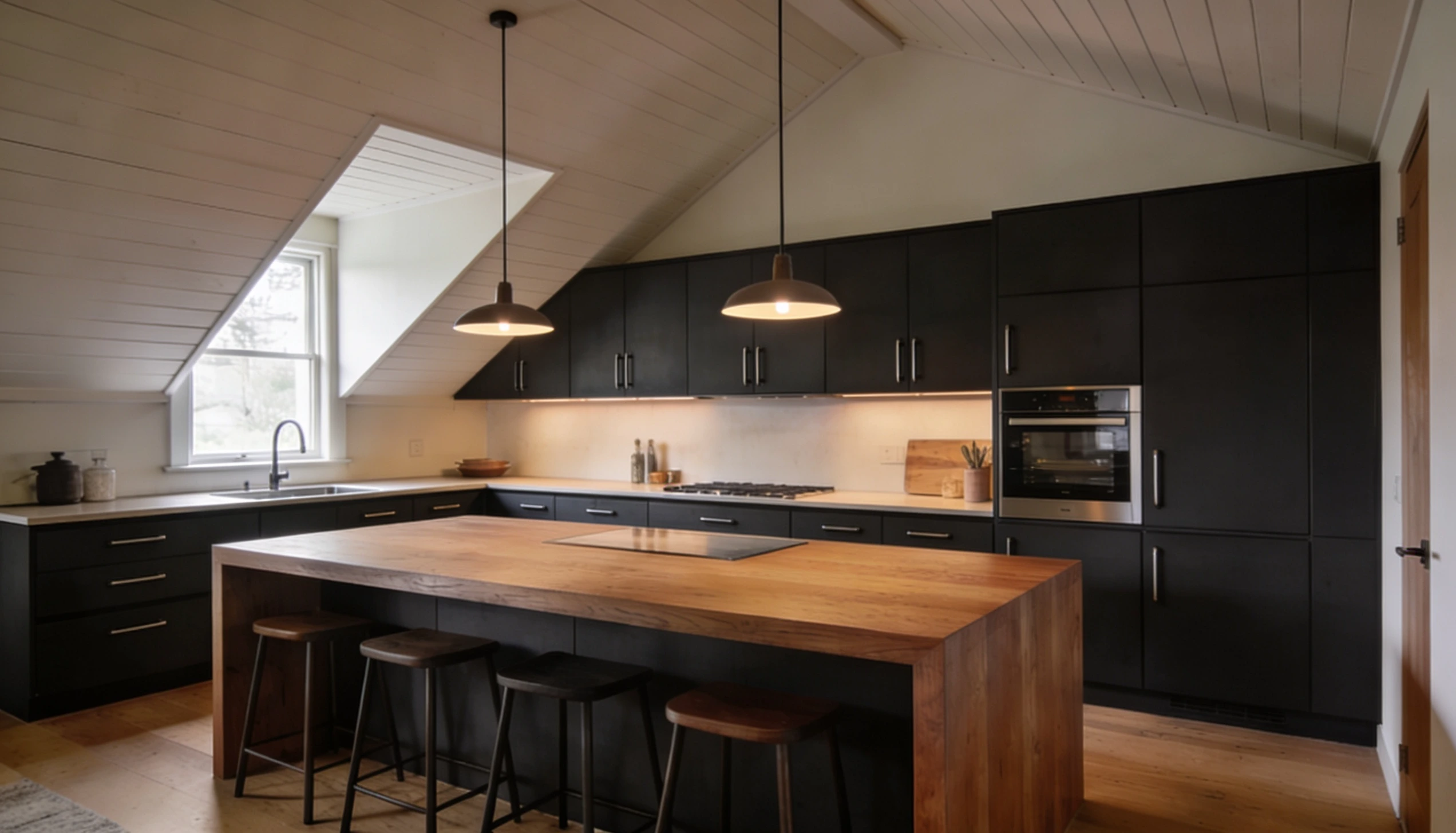
Modern saltbox kitchen with dark cabinets, stone island, and a sloped ceiling design.

The kitchen in a saltbox home sits naturally under the lower rear slope, which creates a more contained feel. That actually works in your favor.

  • Dark cabinetry paired with a light stone countertop balances the lower ceiling
  • A long island running parallel to the slope keeps sightlines clean
  • Integrated appliances reduce visual clutter where ceiling height is limited

I’ve seen people fight the low ceiling with bright colours and busy tiles. It never works. Lean into the intimacy instead.

3. Modern Bedroom Design Approaches
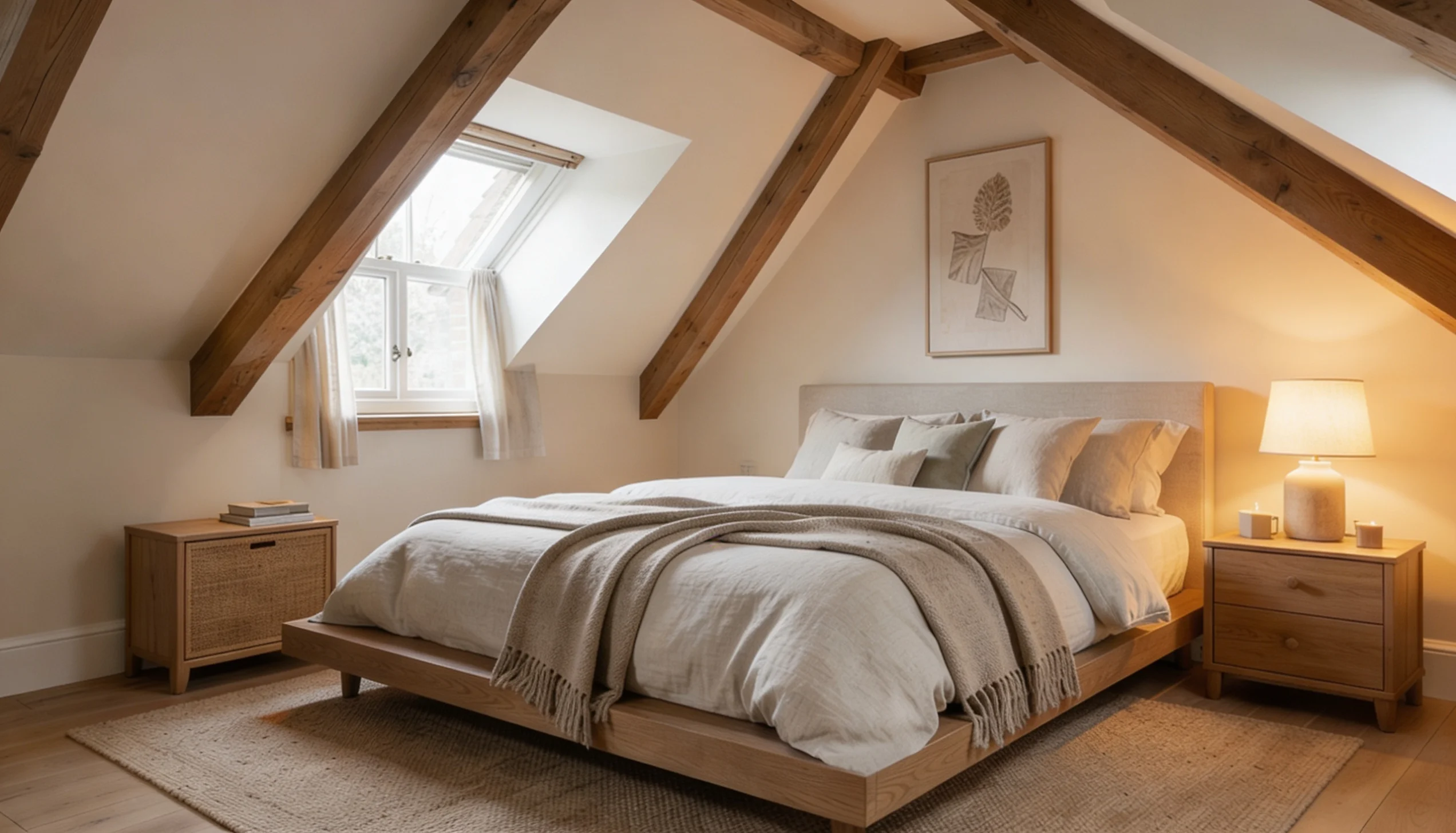
Modern saltbox bedroom with a sloped ceiling, minimalist furnishings, and natural wood accents.

Bedrooms under the rear slope feel naturally calm, and I think that’s something worth designing around rather than against.

Keep furniture low profile, avoid tall wardrobes that butt against the sloped ceiling, and let the room stay simple.

One mistake I keep seeing is people cramming in too much furniture, trying to replicate a standard bedroom layout. The saltbox bedroom works best when you treat it like a retreat, not a storage room.

4. Built-In Storage Solutions
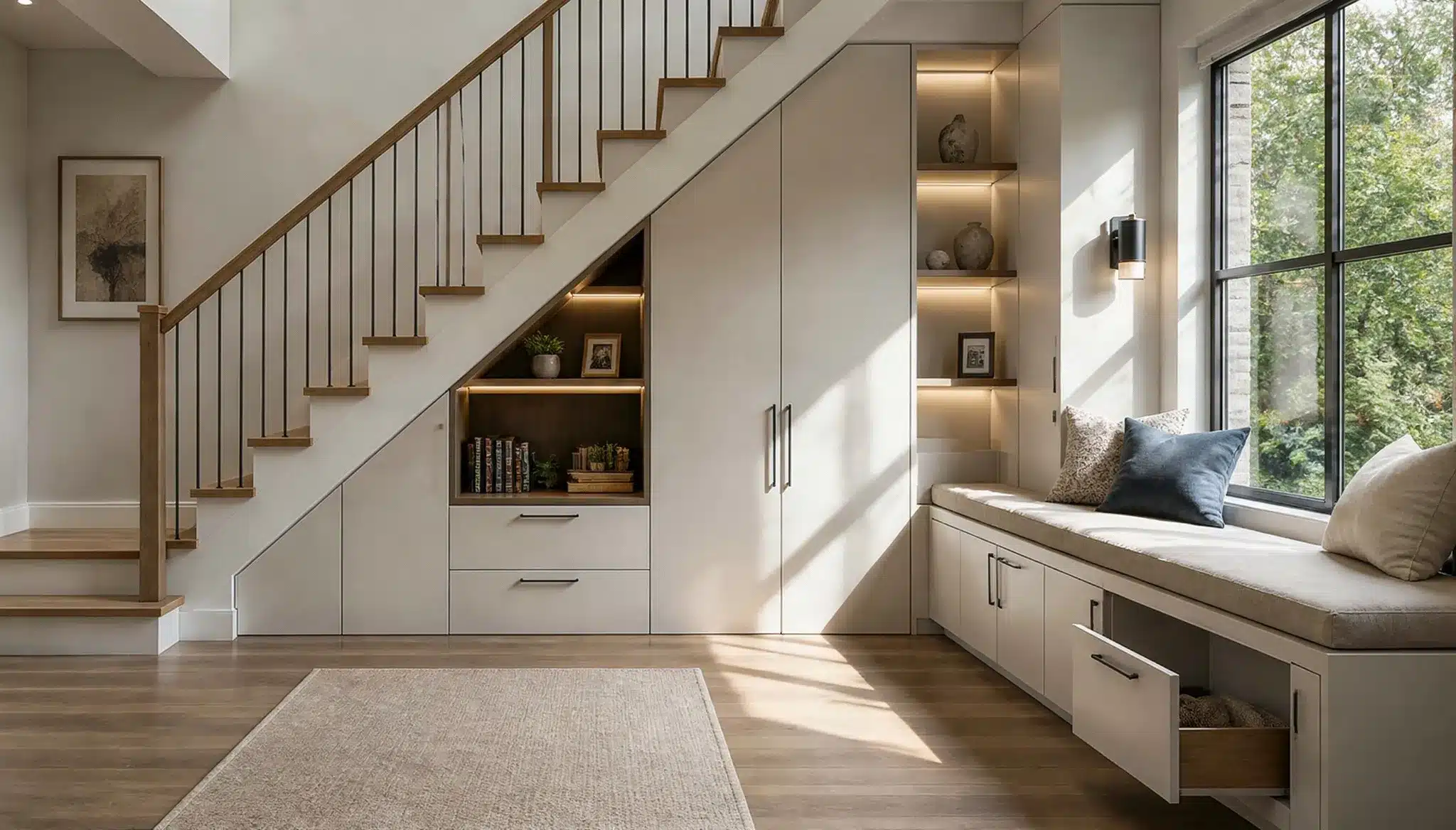
Built-in storage solutions in a modern saltbox home featuring custom cabinetry and window seat storage

Storage in a saltbox home needs more thought than a standard build, and skipping that planning early costs you later.

  • Built-in wardrobes fitted flush against sloped walls maximize every inch
  • Window seat storage in the front section uses dead space smartly
  • Under-stair cabinetry where the rear slope meets the ground floor

I once spoke to someone who finished their saltbox build and realised they had almost no practical storage left. Built-ins planned from the start would have solved every single one of those problems.

What a Saltbox House Actually Costs to Build

A saltbox house is not the cheapest build, but knowing where the money goes makes planning easier.

The asymmetrical roofline adds complexity to the framing and increases material waste compared to a standard gable build. Framing alone can run 15–20% higher than a comparable rectangular home.

Custom features like floor to ceiling glazing or charred wood cladding carry a real price premium, especially when added late.

Locking in these choices at the design stage, not mid-build, is how you avoid the biggest cost overruns.

Site preparation is where most budgets get surprised. Uneven lots and foundation work on sloped ground rarely show up in early estimates.

A detailed site assessment before finalizing the design saves more money than most people expect.

Cost Factor Impact Level
Size and Layout Complexity High
Material Selection Medium to High
Custom Architectural Features High
Site Preparation Requirements Medium to High

Conclusion

I’ve spent a lot of time looking at modern home designs, and very few hold up the way a modern saltbox house does.

Practical, distinctive, and quietly confident without needing to announce itself.

The more I learned about it, the more I respected the thinking behind every angle and material choice. Anyone seriously considering building one should take time with the planning.

The decisions made early are the ones that show up every single day you live in them.

Frequently Asked Questions

1. Can a Saltbox House Work in a Warm Climate?

Absolutely. With the right insulation, ventilation planning, and material choices, this design performs just as well in warmer regions as it does in colder ones.

2. How Long Does it Take to Build One?

Most builds run between 10 and 16 months depending on site conditions, material availability, and how complex the design is.

3. Do These Homes Hold Their Resale Value?

Yes, and often better than standard builds because the distinctive roofline and architectural character make them stand out in any property market.
Related posts

Leave a Reply

Your email address will not be published. Required fields are marked *

Hi there! I'm Esther

Esther modifies homes into stunning spaces that reflect personal style and functionality. With a background in Furniture Design, she understands how design elements, texture, color, and form work together to create beautiful interiors. Esther’s approach combines professional design expertise with a genuine passion for helping homeowners create spaces that are uniquely theirs.

Table of Contents

Weekly Newsletter

Get the latest DIY tips and home improvement ideas straight to your inbox!

Type in what you’re looking for!