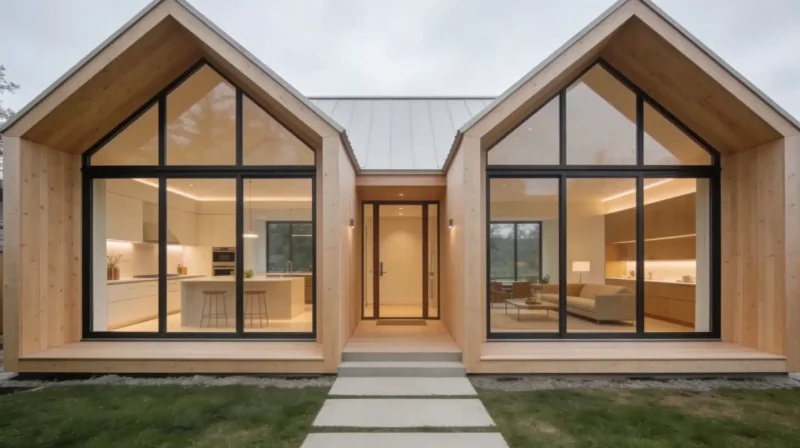
I never thought a roof shape could stop me in my tracks.
But the first time I spotted a modern saltbox house tucked between newer builds, I just stood there staring. That long, swooping rear slope. The clean lines.
The way it looked old and fresh at the same time.
It made no sense on paper, yet it worked perfectly. I dug into the history, talked to people who actually live in them, and pulled together everything worth knowing before you build or buy one.
What Makes a Modern Saltbox House Different
The saltbox house is one of those rare designs that actually gets better with time.
It keeps the asymmetrical roofline from colonial New England, but everything else has been rethought. Better materials, bigger windows, open interiors.
Unlike styles that chase trends, the saltbox shape has real bones.
A few features define the modern version:
- Clean Geometric Architecture: Asymmetrical roofline stripped of decorative excess, leaving sharp, purposeful lines
- Floor-to-Ceiling Windows: Tall glass panels pull in light and open up the space
- Minimalist Exterior Details: Raw materials like board and batten or dark metal let the roofline do the talking
- Strong Indoor-Outdoor Connection: Large sliding doors and low-profile decks blur the line between inside and outside
Modern Saltbox Exterior Styles Worth Knowing
What I find most interesting is how the saltbox shape adapts to completely different design languages without losing its identity, unlike a single slope roof.
I’ve seen it done four ways that genuinely work, and each one has its own personality worth knowing before you commit to anything.
1. Scandinavian Inspired Saltbox Homes
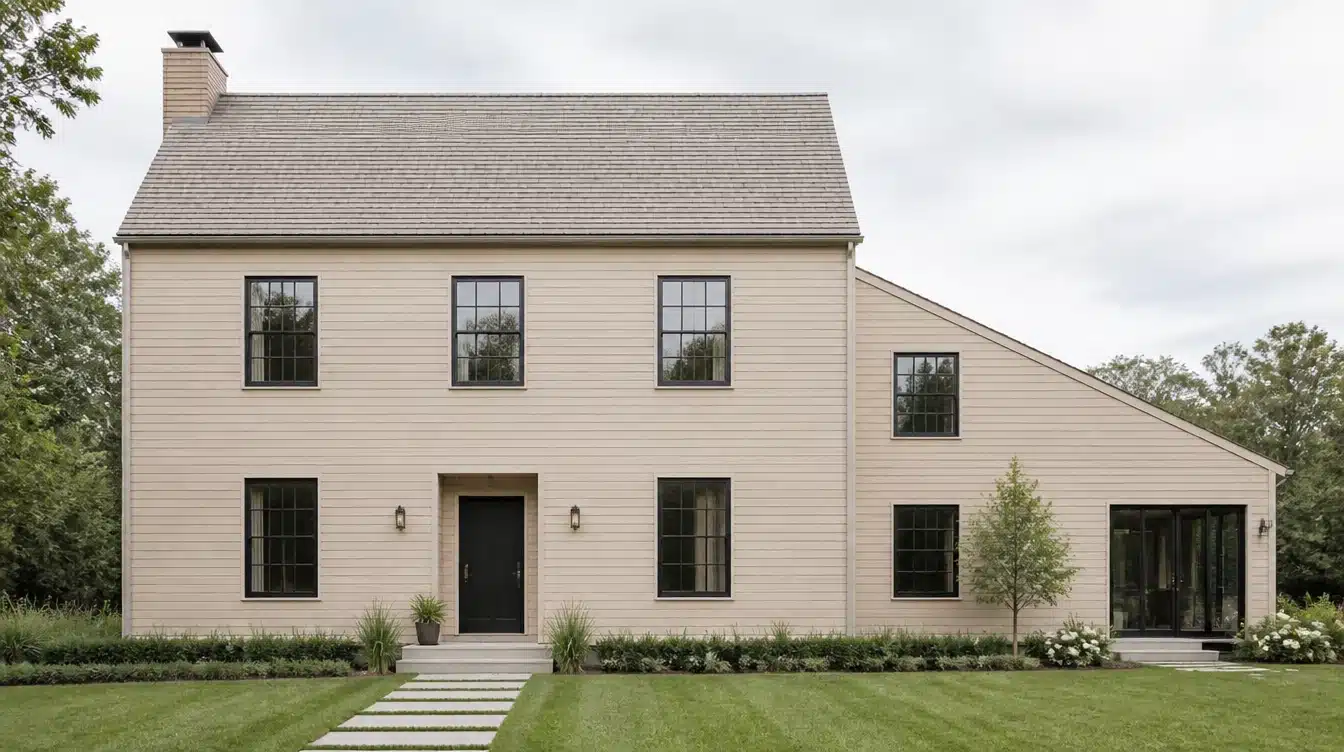
This is the version I personally gravitate toward. Light wood cladding, neutral tones, and zero clutter on the facade.
The Scandinavian approach strips the saltbox down to its bare geometry and lets the roofline carry everything.
One mistake I see often is people adding too many window variations, breaking the calm rhythm this style depends on. Keep the openings consistent and the palette tight.
2. Japandi Saltbox Designs
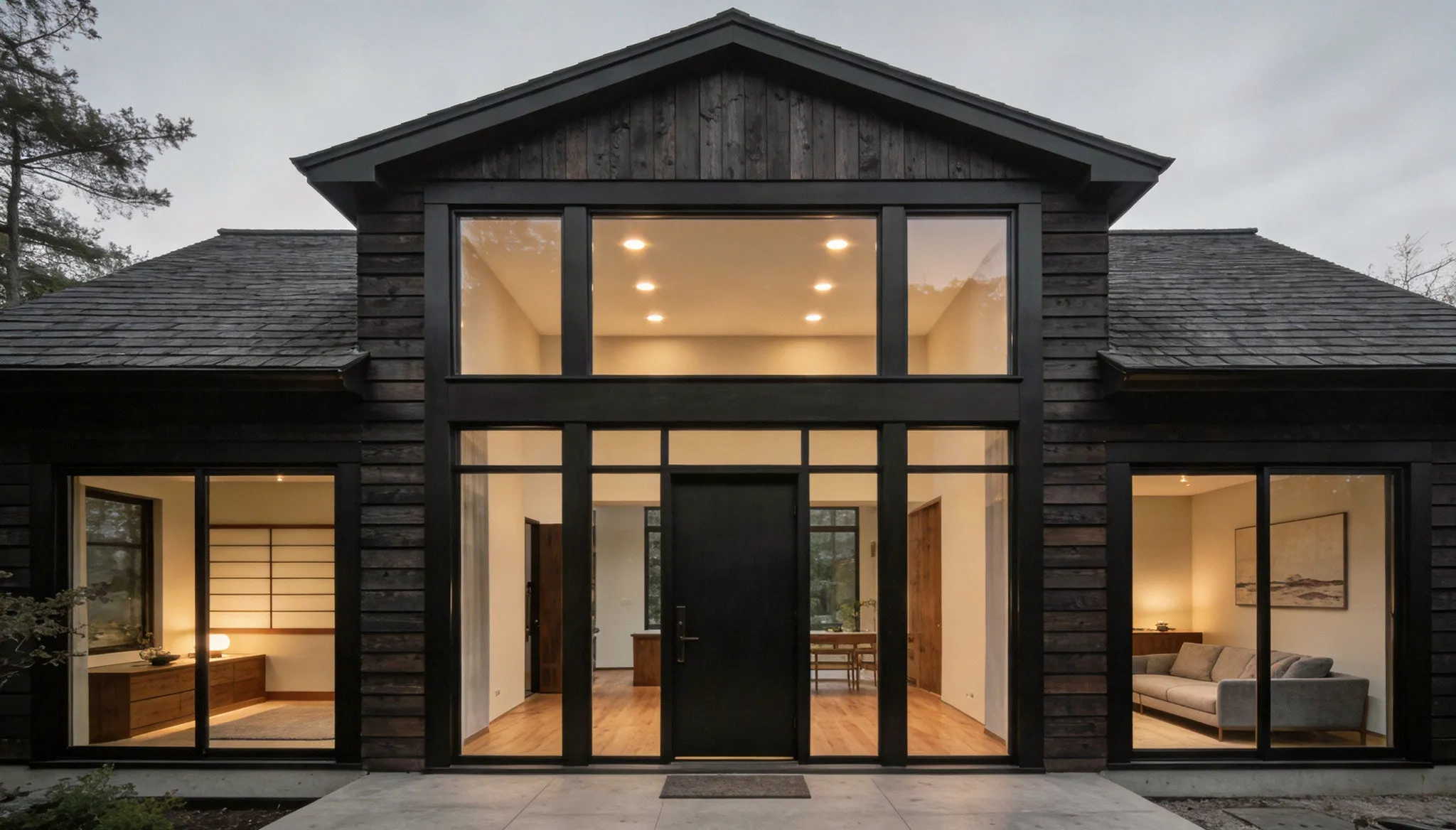
Japandi takes the saltbox somewhere quieter. Think dark timber, muted earthy tones, and very deliberate material choices. What makes it work is the balance between warmth and restraint.
- Natural wood paired with matte black accents
- Low horizontal landscaping that mirrors the long rear slope
- Minimal roofline detailing with clean cedar or composite finishes
When I first looked into Japandi saltbox builds, I kept wanting to add things. But every time I pulled back, the design looked stronger. Trust the restraint.
3. Modern Farmhouse Saltbox Houses

I’ll be honest, this is the most popular version I come across, and it’s easy to see why. White or cream board and batten siding, black window frames, a metal roof.
It feels familiar, but the saltbox roofline gives it an edge most farmhouse builds lack. Overdoing the shiplap inside to match the exterior. It gets heavy fast. Pick one or the other.
4. Black Contemporary Saltbox Homes
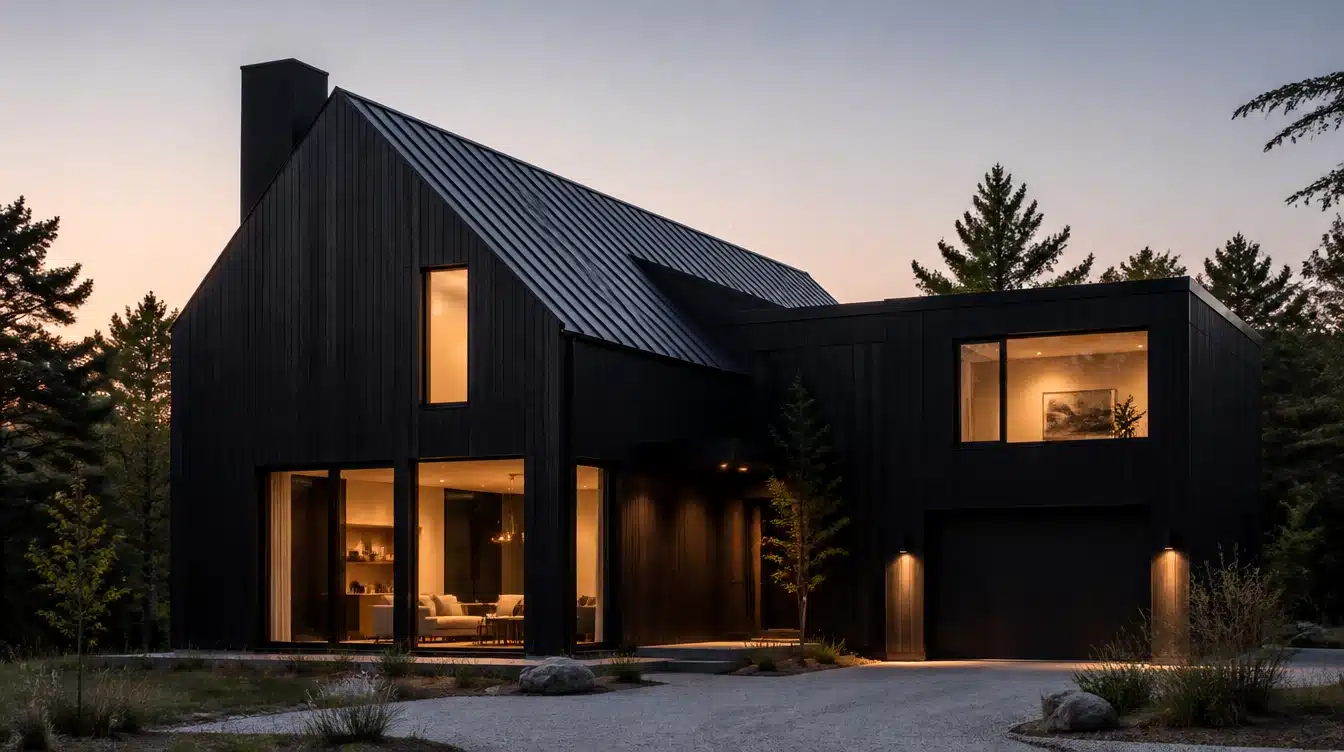
Nothing commands attention quite like a fully blacked-out saltbox. Dark fiber cement or charred wood cladding against a clean landscape looks sharp in a way few other styles pull off.
- Matte black standing seam metal roof
- Matching dark window frames flush with the cladding
- Minimal landscaping to keep focus on the form
Exterior Materials and Saltbox Floor Plans
The material you choose changes how a saltbox reads from the street, and the floor plan determines whether the interior works with the roofline or against it.
Both decisions are more connected than most people realise.
- Vertical Wood Cladding : Warm and natural, works beautifully with the long rear slope.
- Fiber Cement Panels : Low maintenance and crisp for contemporary builds.
- Architectural Concrete : Bold and raw, best for minimalist settings.
- Mixed-Material Facades : Adds depth without overcomplicating the form.
Single level layouts use the tall front section for living and dining. Family plans tuck bedrooms into quieter rear zones.
Compact builds work well on smaller lots, and luxury layouts add double-height entries and outdoor spaces.
Interior Design Ideas for a Modern Saltbox House
The interior is where this house earns its reputation. Most people spend all their energy on the exterior and underplan what happens inside.
I think that’s a mistake because the roofline gives you so much to work with if you know how to use it.
1. Double-Height Living Spaces
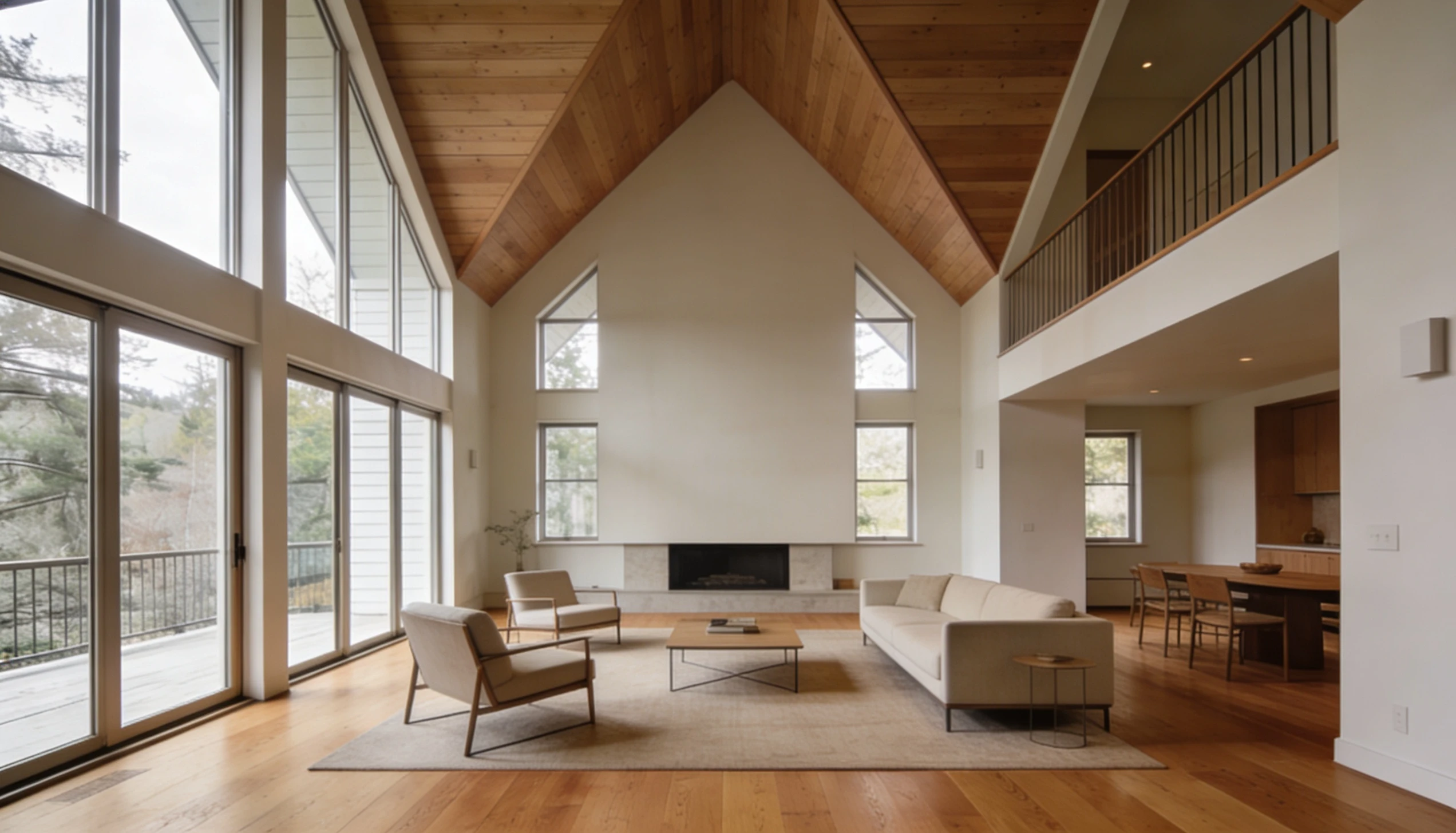
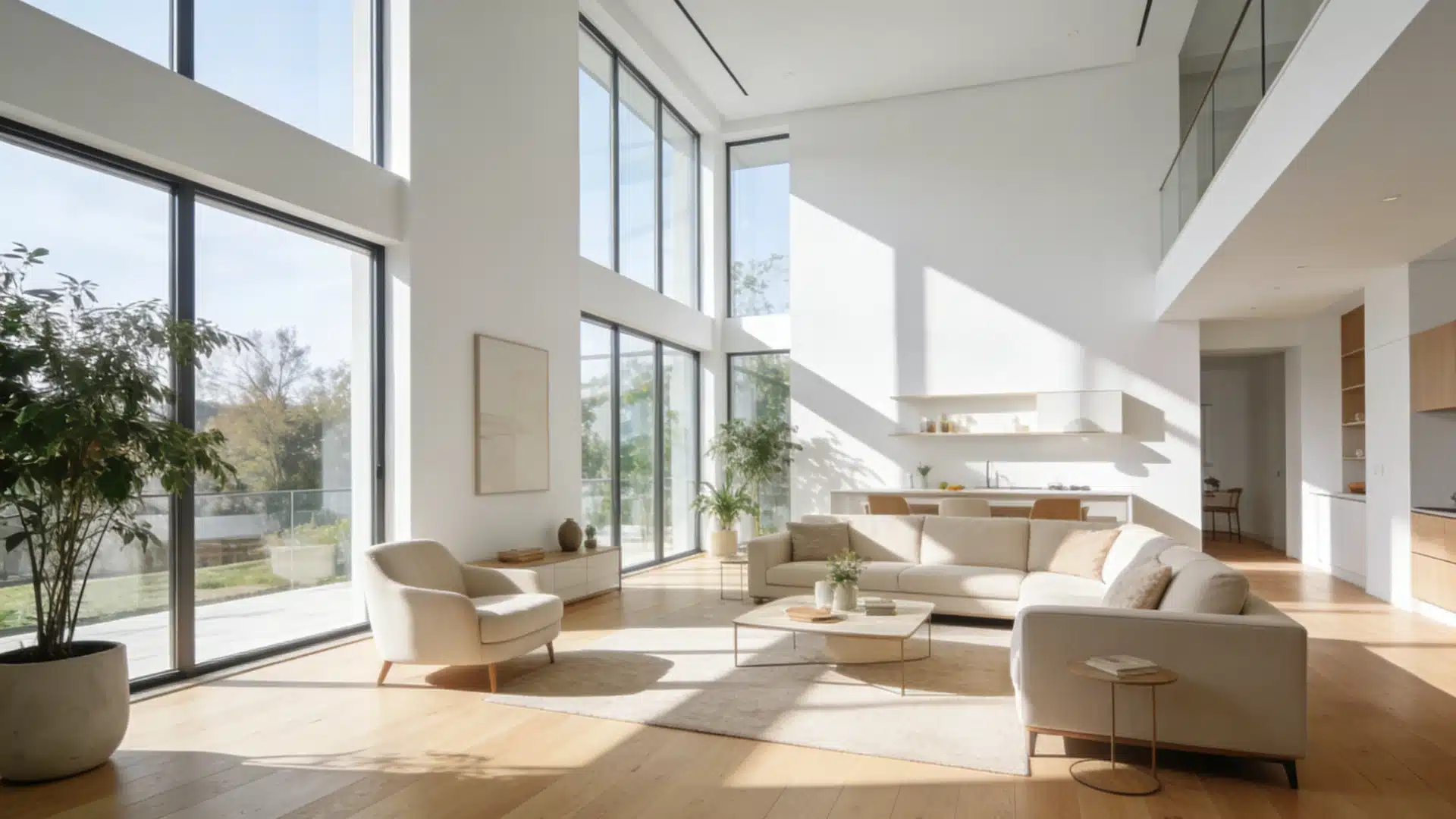
That soaring front ceiling is the first thing people notice when they walk in, and it sets the tone for everything else.
The key is resisting the urge to fill the vertical space with oversized art or floating shelves. I made that mental note early, and I’m glad I did.
Let the height breathe. A single large pendant light and clean walls do far more for the space than anything busier ever could.
2. Statement Kitchen Concepts
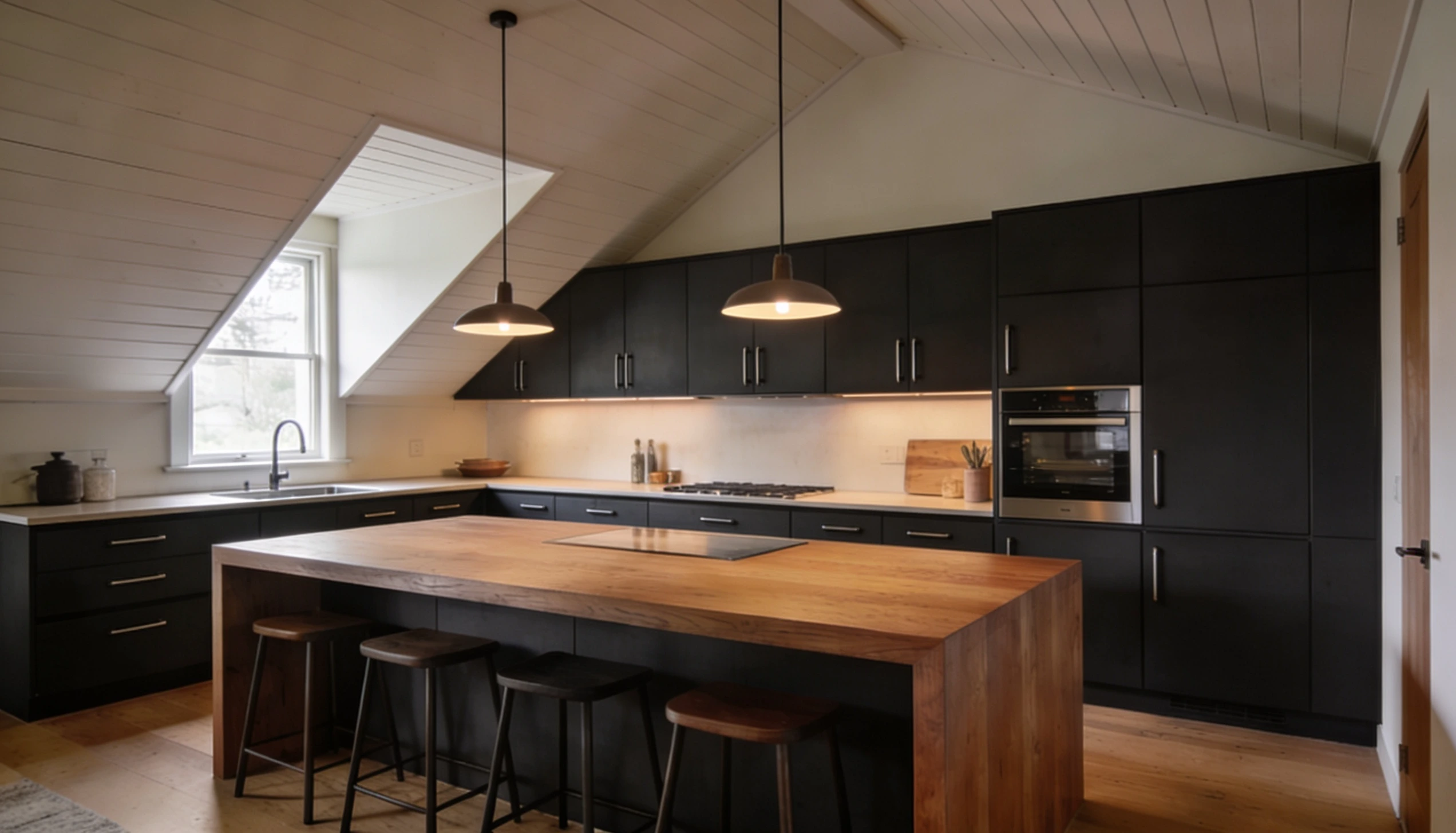
The kitchen in a saltbox home sits naturally under the lower rear slope, which creates a more contained feel. That actually works in your favor.
- Dark cabinetry paired with a light stone countertop balances the lower ceiling
- A long island running parallel to the slope keeps sightlines clean
- Integrated appliances reduce visual clutter where ceiling height is limited
I’ve seen people fight the low ceiling with bright colours and busy tiles. It never works. Lean into the intimacy instead.
3. Modern Bedroom Design Approaches
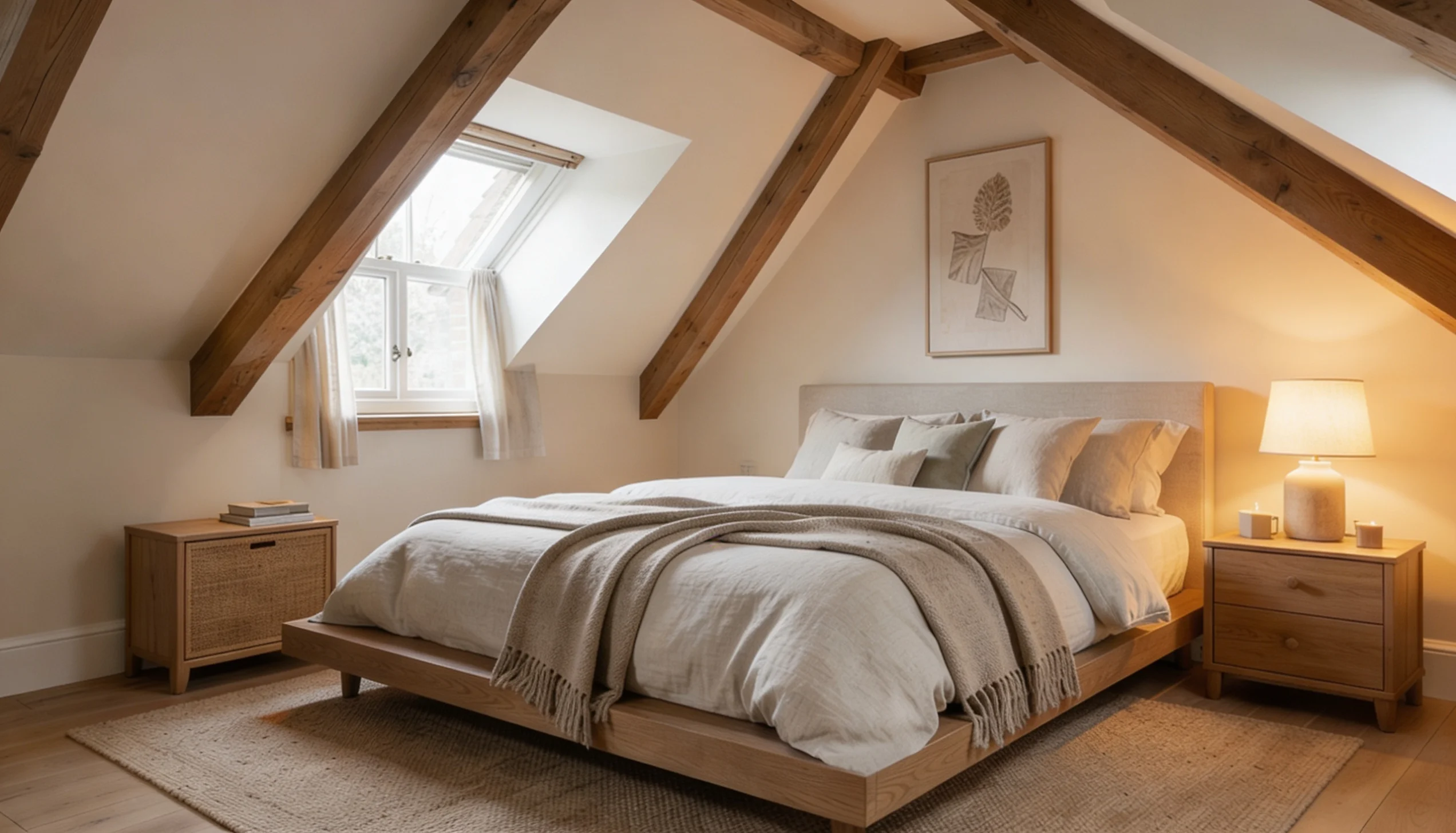
Bedrooms under the rear slope feel naturally calm, and I think that’s something worth designing around rather than against.
Keep furniture low profile, avoid tall wardrobes that butt against the sloped ceiling, and let the room stay simple.
One mistake I keep seeing is people cramming in too much furniture, trying to replicate a standard bedroom layout. The saltbox bedroom works best when you treat it like a retreat, not a storage room.
4. Built-In Storage Solutions
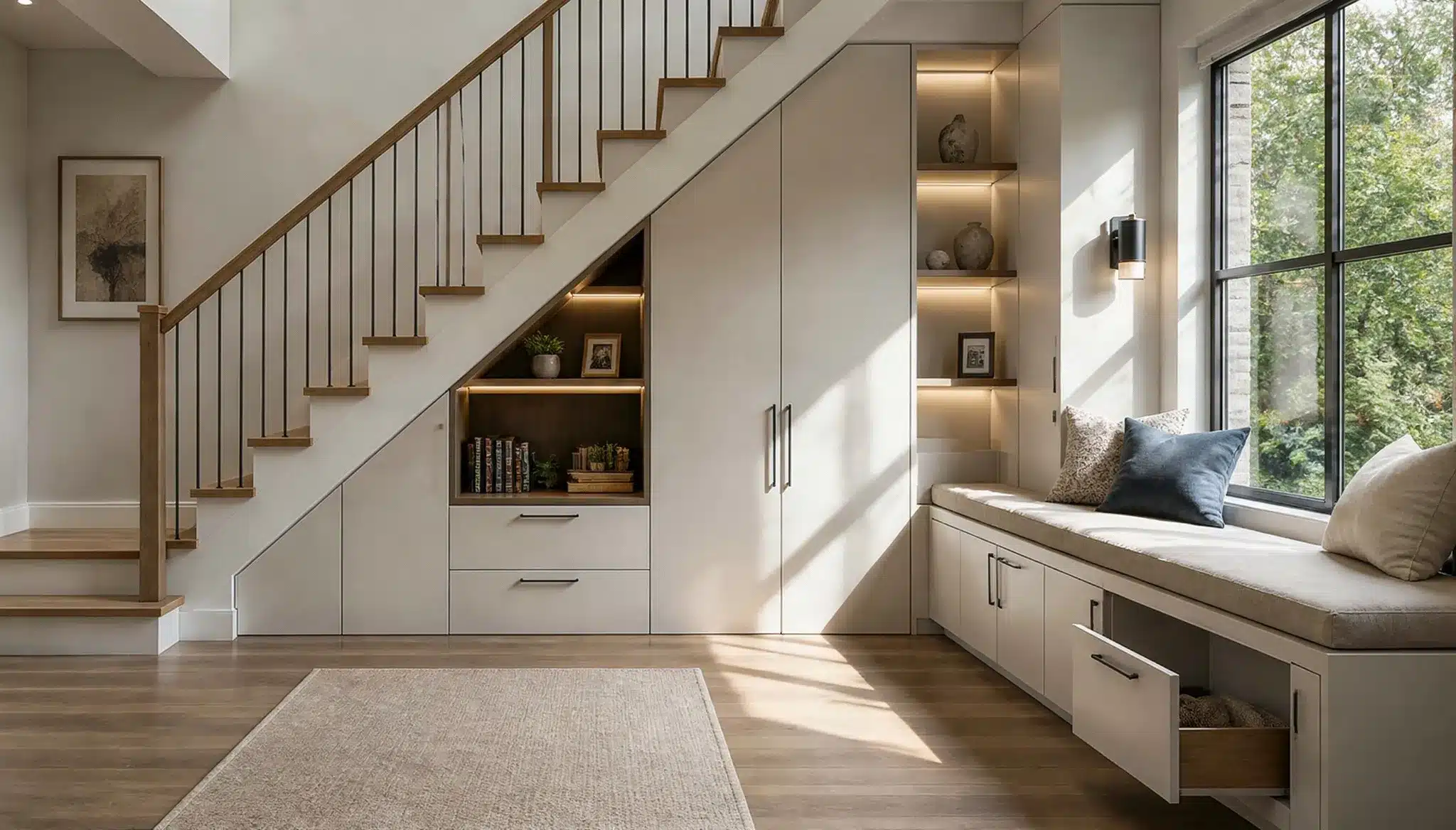
Storage in a saltbox home needs more thought than a standard build, and skipping that planning early costs you later.
- Built-in wardrobes fitted flush against sloped walls maximize every inch
- Window seat storage in the front section uses dead space smartly
- Under-stair cabinetry where the rear slope meets the ground floor
I once spoke to someone who finished their saltbox build and realised they had almost no practical storage left. Built-ins planned from the start would have solved every single one of those problems.
What a Saltbox House Actually Costs to Build
A saltbox house is not the cheapest build, but knowing where the money goes makes planning easier.
The asymmetrical roofline adds complexity to the framing and increases material waste compared to a standard gable build. Framing alone can run 15–20% higher than a comparable rectangular home.
Custom features like floor to ceiling glazing or charred wood cladding carry a real price premium, especially when added late.
Locking in these choices at the design stage, not mid-build, is how you avoid the biggest cost overruns.
Site preparation is where most budgets get surprised. Uneven lots and foundation work on sloped ground rarely show up in early estimates.
A detailed site assessment before finalizing the design saves more money than most people expect.
| Cost Factor | Impact Level |
|---|---|
| Size and Layout Complexity | High |
| Material Selection | Medium to High |
| Custom Architectural Features | High |
| Site Preparation Requirements | Medium to High |
Conclusion
I’ve spent a lot of time looking at modern home designs, and very few hold up the way a modern saltbox house does.
Practical, distinctive, and quietly confident without needing to announce itself.
The more I learned about it, the more I respected the thinking behind every angle and material choice. Anyone seriously considering building one should take time with the planning.
The decisions made early are the ones that show up every single day you live in them.
Frequently Asked Questions
1. Can a Saltbox House Work in a Warm Climate?
Absolutely. With the right insulation, ventilation planning, and material choices, this design performs just as well in warmer regions as it does in colder ones.
2. How Long Does it Take to Build One?
Most builds run between 10 and 16 months depending on site conditions, material availability, and how complex the design is.
3. Do These Homes Hold Their Resale Value?
Yes, and often better than standard builds because the distinctive roofline and architectural character make them stand out in any property market.