A portable stool works. So does standing the whole time. But a built-in shower bench is the kind of addition that makes your shower feel complete, not just functional.
It’s permanent, it’s practical, and it looks like it belongs there.
Built into the walls and finished with tile or stone, it holds up for years without much maintenance.
Whether you want a full-width seat, a corner option, or something more minimal, the style and material you pick will shape how the whole shower looks and feels.
If you’re mid-renovation, now is the right time to sort out those details before anything gets tiled over.
What is a Built in Shower Bench?
Its a bench that is a permanent seat constructed directly inside your shower.
It’s framed into the walls, solid underneath, and finished with tile or stone, not a stool you move around or a fold-down bracket you flip when needed.
It looks like it was always part of the design.
Most people assume it’s only for the elderly or injured. That’s a fair assumption, but it misses the point. Plenty of homeowners add one for shaving, steam sessions, or simply because standing the whole time gets old.
Choosing the Right Material for Your Built in Shower Bench
Okay so, the right material choice comes down to three things: looks, durability, and how much upkeep you’re willing to do.
Here’s how the main options stack up:
Ceramic or Porcelain Tile
It’s affordable, water-resistant, and comes in hundreds of colors and finishes. You can match it to your shower walls for a seamless look.
The downside is grout lines collect soap scum and need regular cleaning.
Natural Stone (Marble, Granite, Slate)
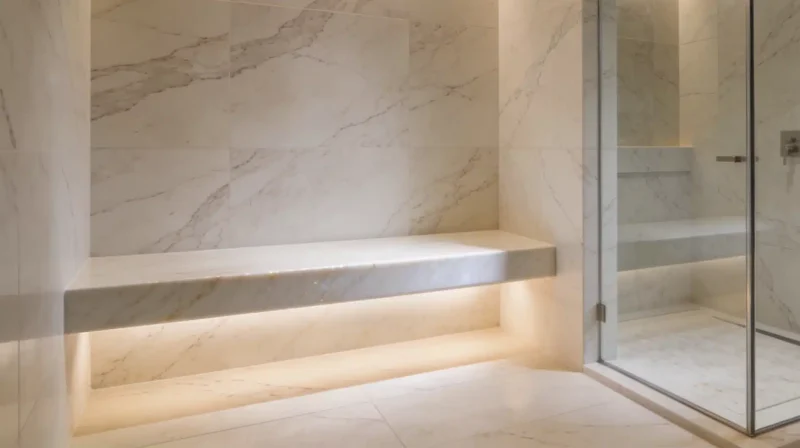
Looks stunning. Marble especially gives that high-end spa feel. But natural stone is porous, which means it needs sealing to prevent water damage.
Skip the maintenance, and it stains.
Teak or Treated Wood
Adds warmth that tile and stone can’t match. But wood in a wet space needs proper moisture treatment and occasional upkeep.
Done right, it holds up well. Ignored, it warps.
Quartz or Solid Surface
The best option for the actual sitting surface.
No grout lines, no sealing, easy to wipe down. Many designers use tile on the sides and front of the bench but switch to quartz on top, exactly where you sit.
Acrylic
Lightweight, retains heat, and is comfortable to sit on.
Not the most premium look, but a solid, practical choice, especially for accessible bathrooms.
Types of Built-in Shower Benches Explained
Not every bench works in every shower. The right style depends on your space, how you use it, and what you want it to look like.
1. Full-Width Wall Bench
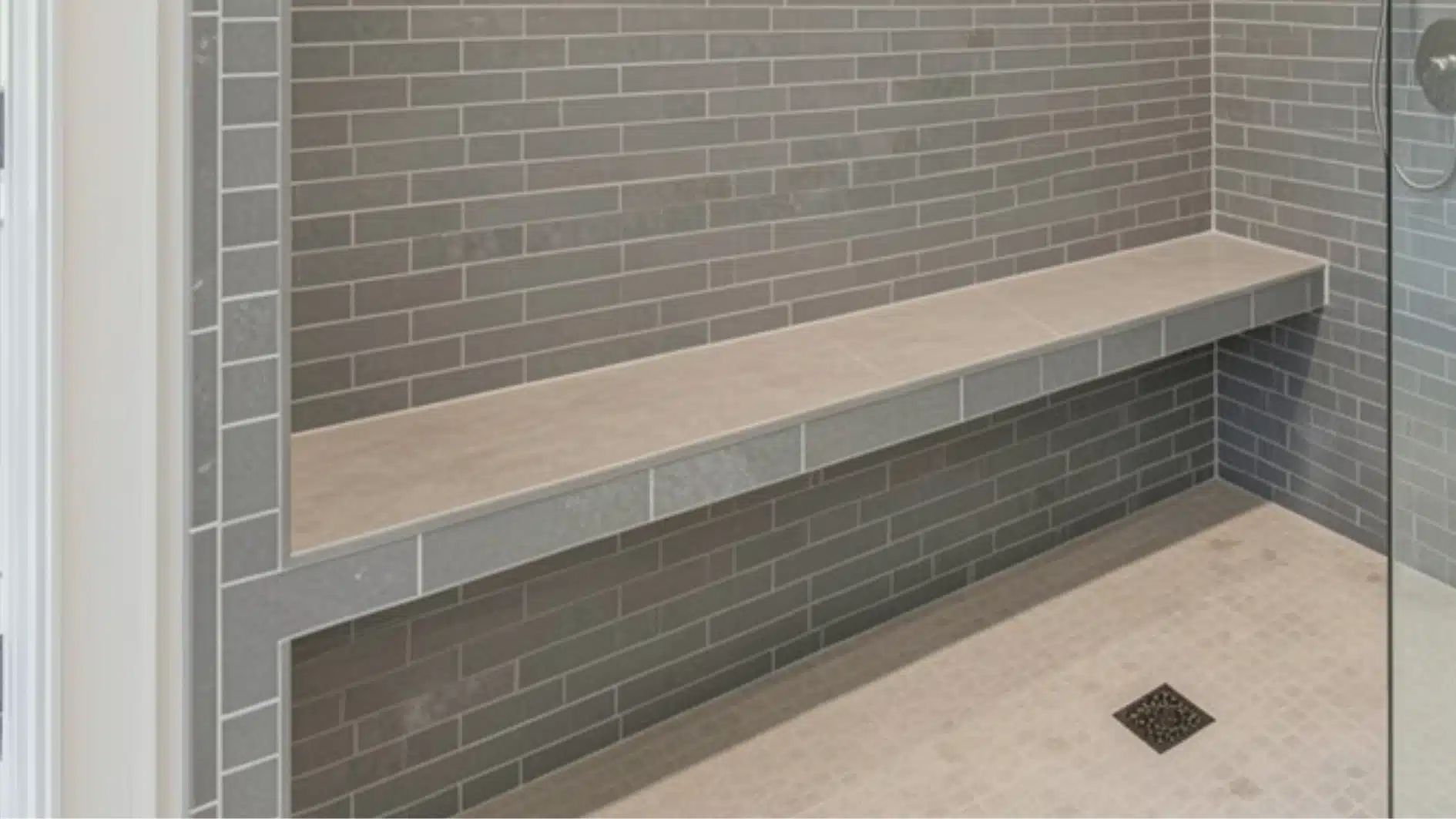
Runs the entire length of one shower wall. Maximum seating space and the most comfortable option for long showers. Works best in larger showers, at least 48 × 36 inches.
It also doubles as a ledge for toiletries. If you want a bench that feels generous and purposeful, this is it.
Tip: Plan your bench during the renovation. Adding it after means tearing out tile and waterproofing. Build it in from the start, it costs a fraction of retrofitting.
2. Corner Bench
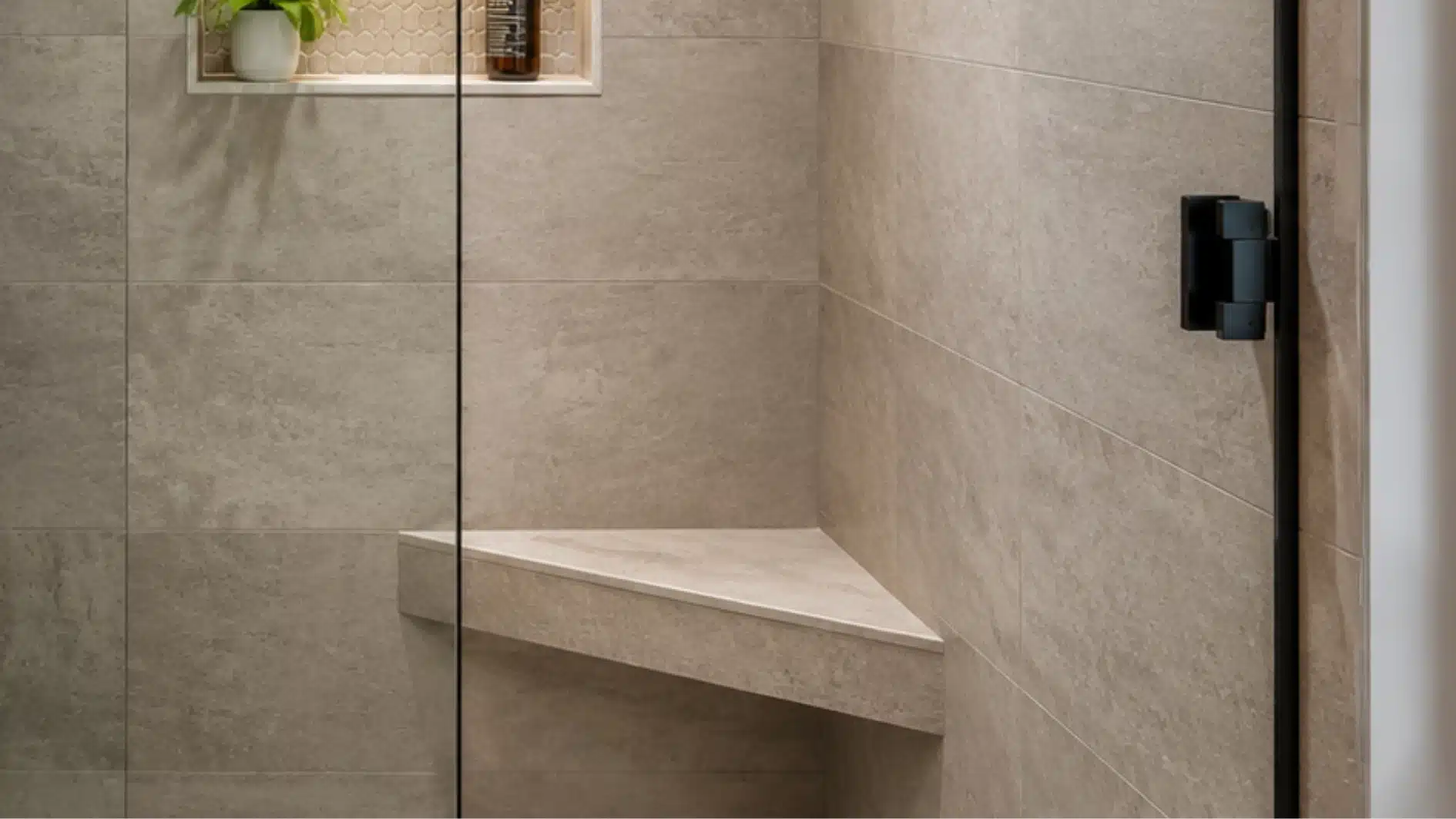
Fits snugly into the corner of your shower. A clean combination that works especially well in smaller showers where every inch matters.
It gives you a place to sit without eating into your standing room. It is simple to build, easy to tile, and works in almost any shower layout.
3. Floating Bench
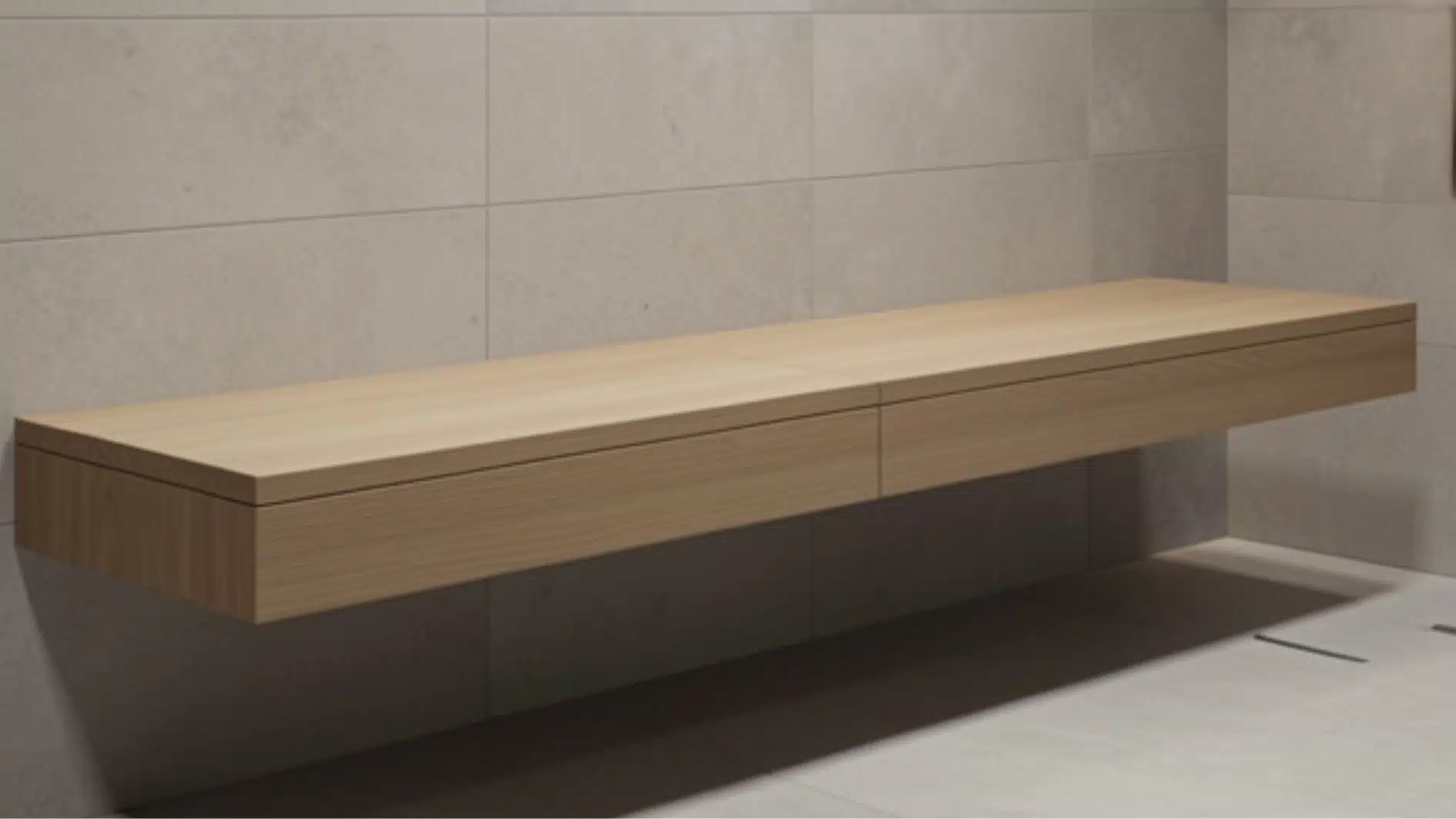
Mounted directly to the wall with no legs underneath. It is minimal, and very easy to clean around since nothing is blocking the floor.
The open space beneath makes the shower feel bigger than it actually is. It is a popular choice for modern, minimalist bathrooms.
Tip: Slope the seat slightly toward the drain. A flat bench holds water. Even a small pitch stops mold and soap buildup over time.
4. L-Shaped Bench
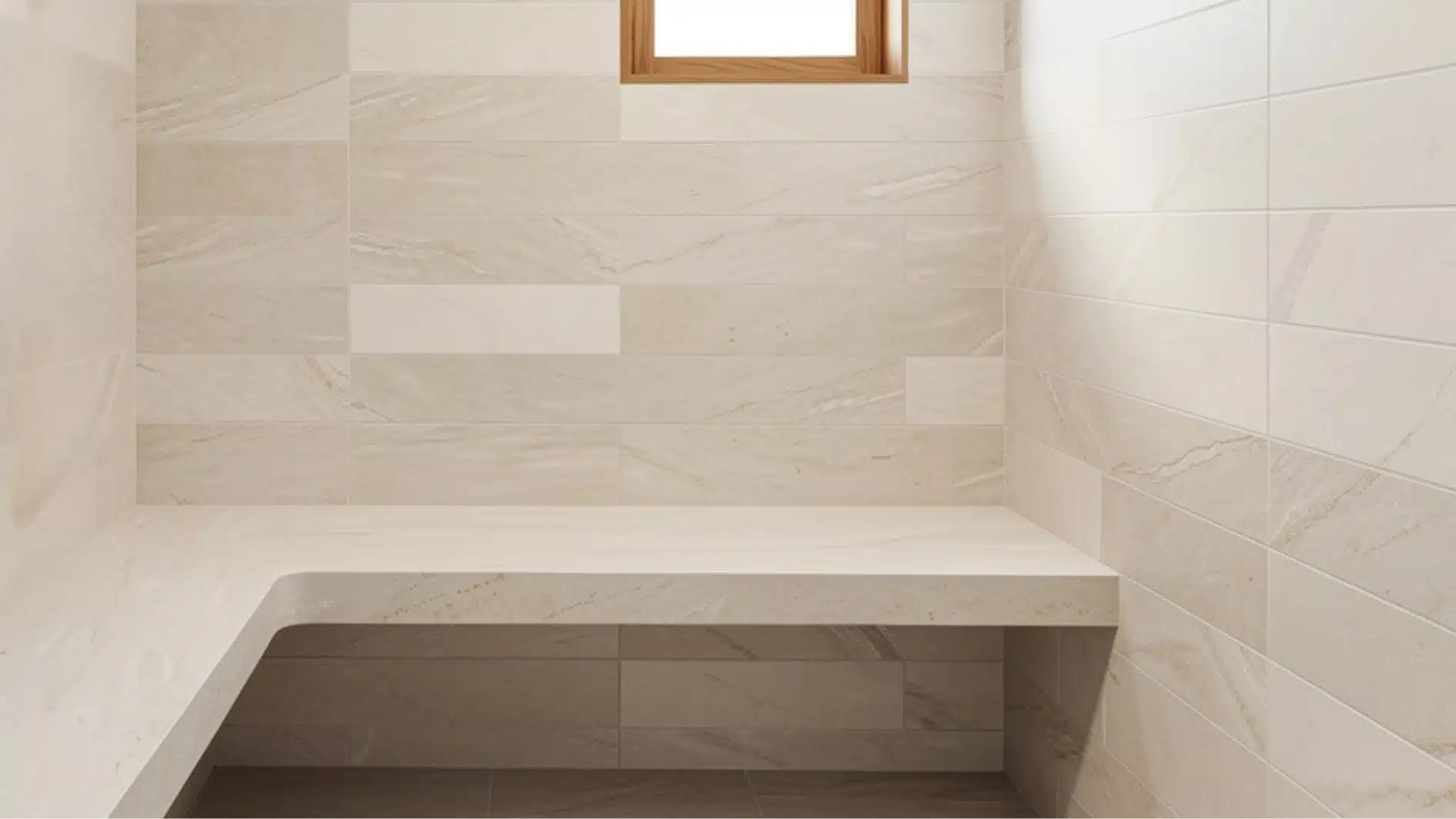
Wraps around two walls instead of one. It is great for larger showers where you want extra seating or a surface on both sides to place things.
It works well in walk-in showers and gives the space a custom, high-end feel without much extra cost.
5. Niche Bench
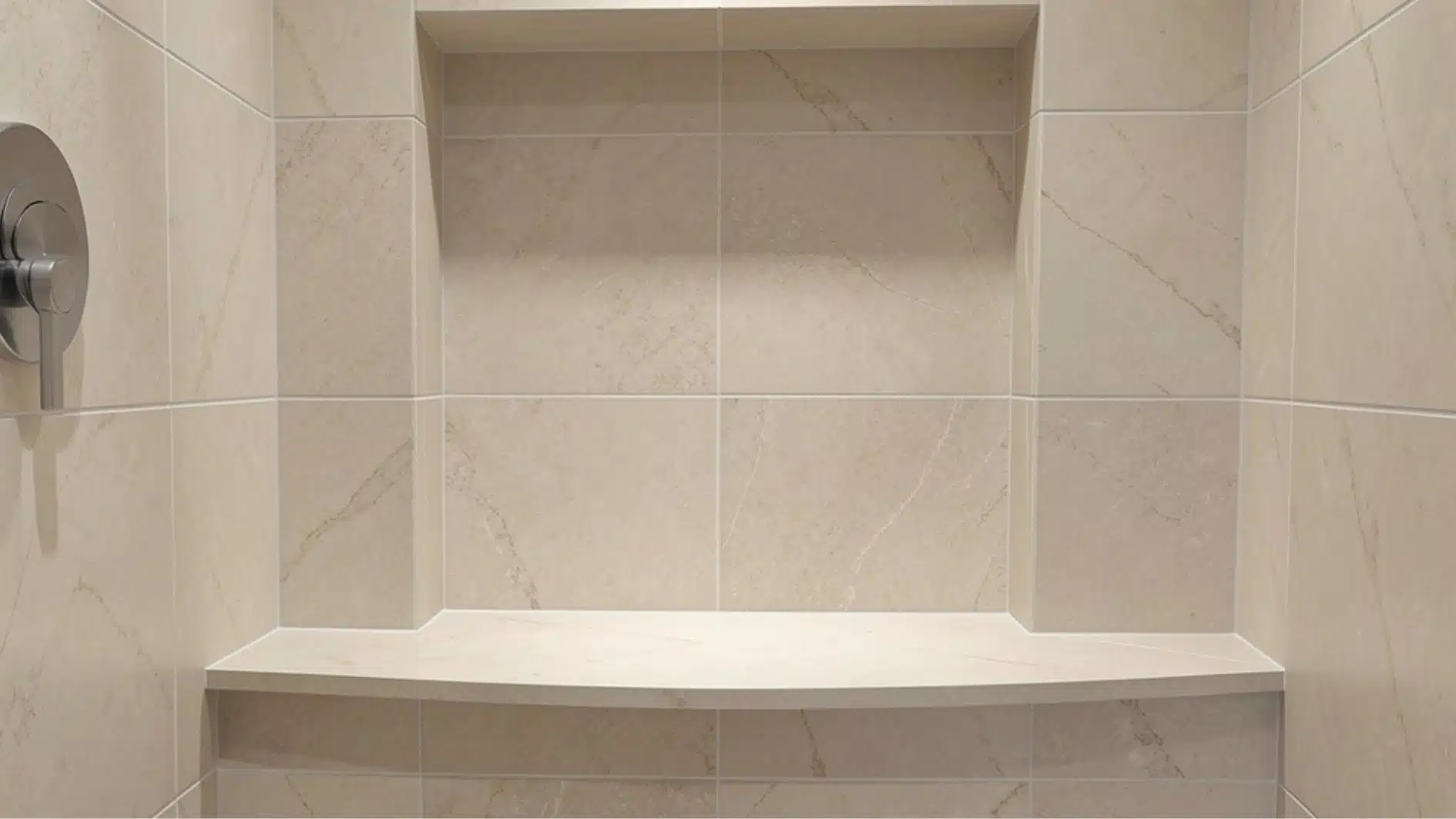
Recessed into the wall rather than sitting out from it. It saves the most floor space of any style. It looks completely seamless, like it was always part of the wall.
Best planned during the initial build because cutting into a finished wall later is a big job.
Tip: Add a recessed niche directly above the bench. It keeps everything within arm’s reach, two features, one wall space.
6. Compact Built-in Bench
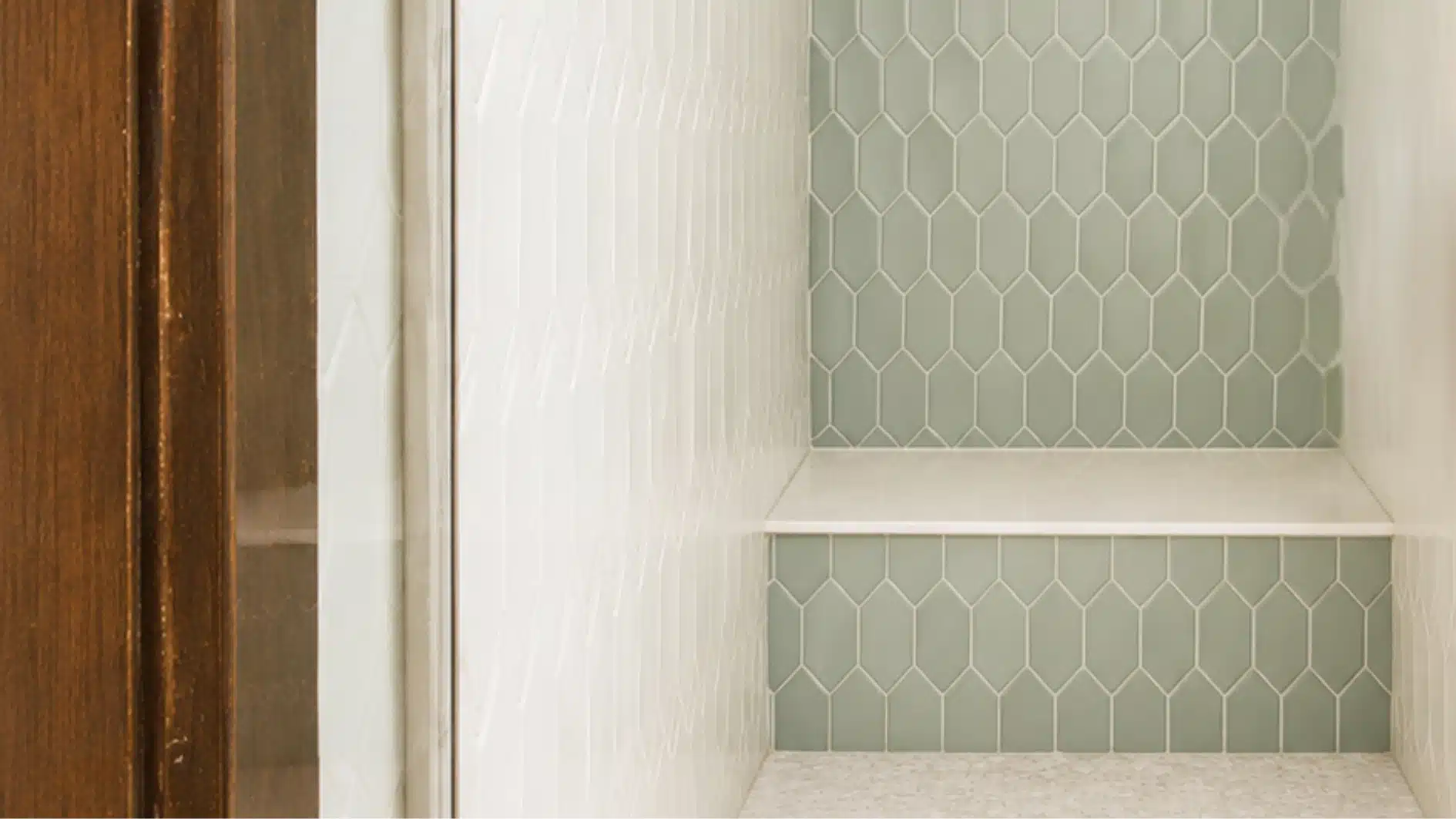
A compact built-in bench is a smaller, fixed seat built directly into the shower, designed to fit tight spaces without taking over the floor.
It usually runs along one wall and stops well short of the full width, so you still have plenty of standing room.
The depth is shallower than a standard bench, typically around 12 to 14 inches, which is enough to sit comfortably without feeling like the bench owns the shower.
7. Curved or Angled Bench
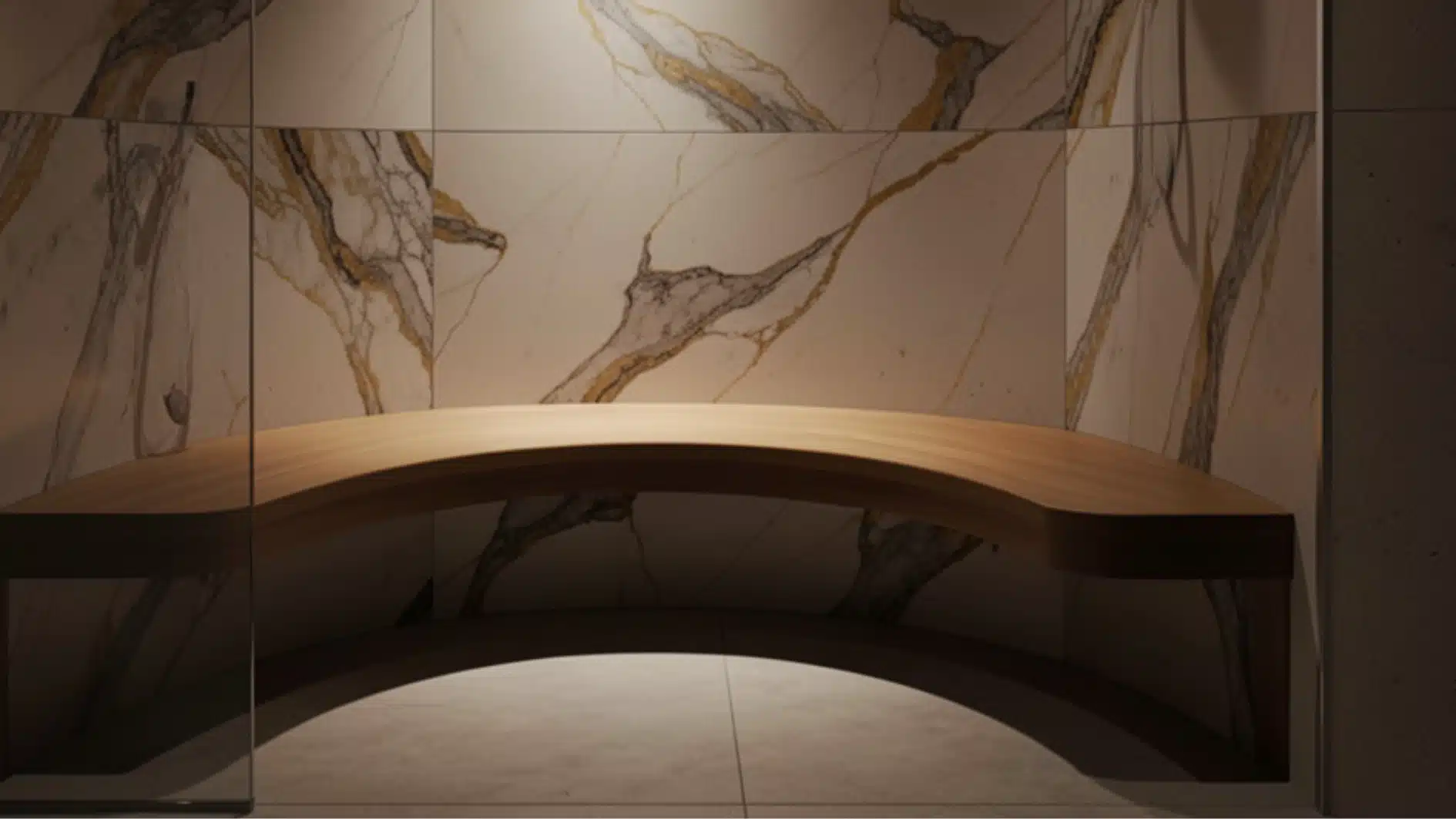
It is shaped to fit non-rectangular showers or to add a custom design detail in larger ones.
The curve softens the look of the shower and makes the space feel less boxy. It takes more planning and skill to build, but the result looks like no other bench in the room.
8. Double-Tier Bench
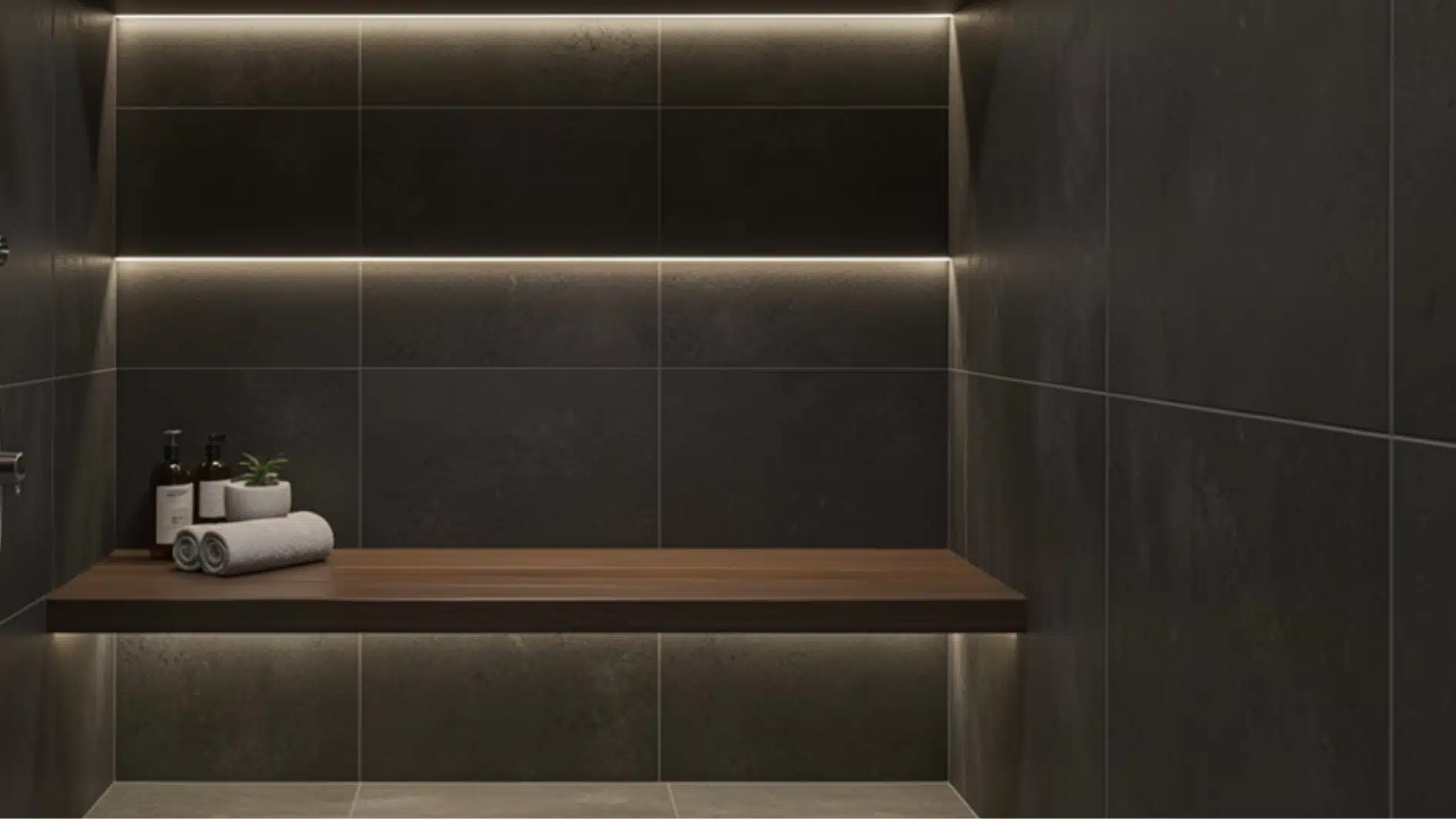
Two levels instead of one, a lower seat and a higher ledge above it.
You sit on the lower tier and use the upper one for shampoo, soap, and razors. Everything stays within reach without cluttering the floor.
It is functional and visually interesting at the same time.
9. Bench with Built-in Niche
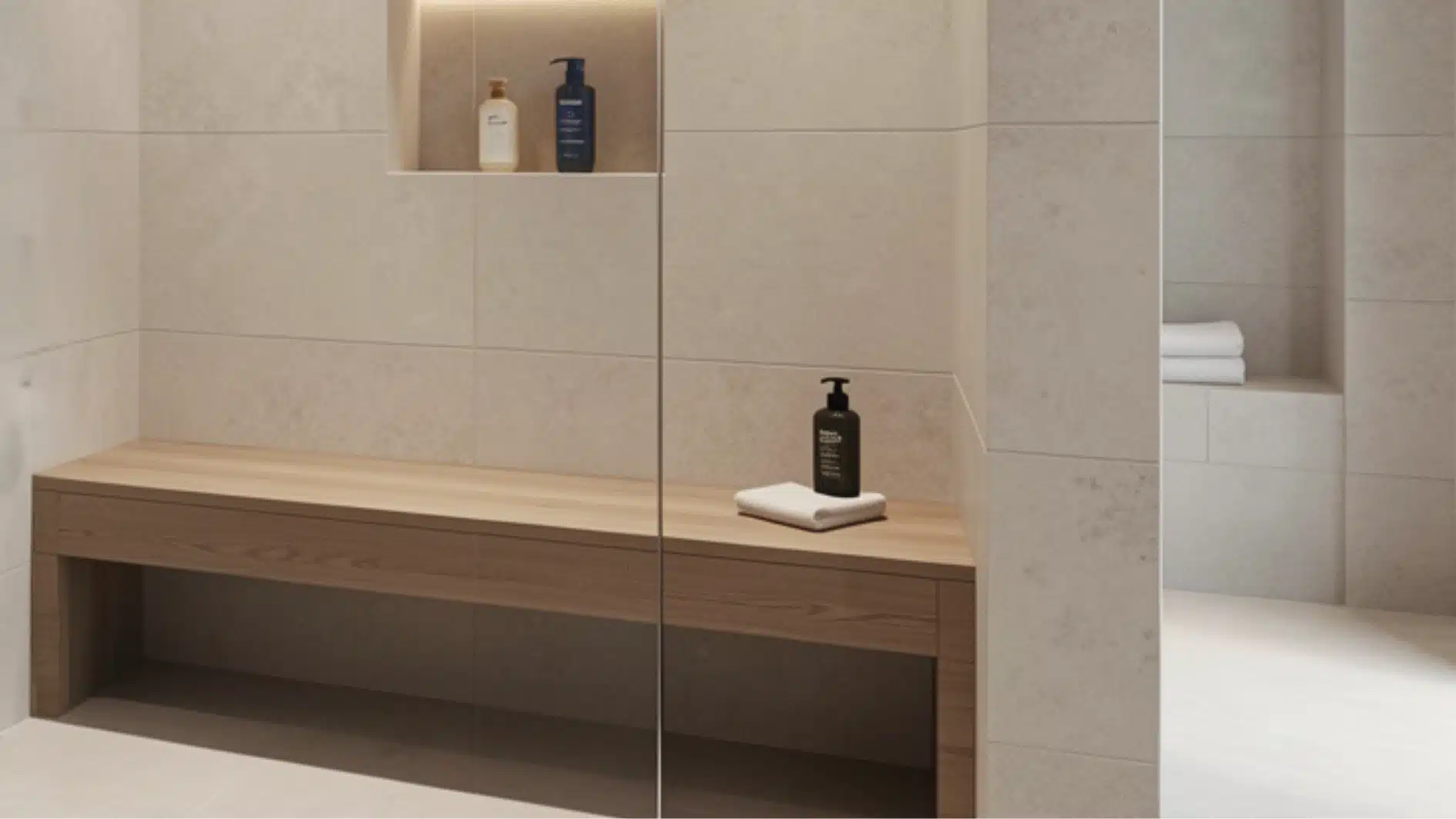
A bench with a recessed storage niche built directly above it. Everything in one spot, somewhere to sit, somewhere to store.
No separate shelf needed, no extra wall space used. A smart combination that works especially well in smaller showers where every inch matters.
10. Teak Slatted Bench
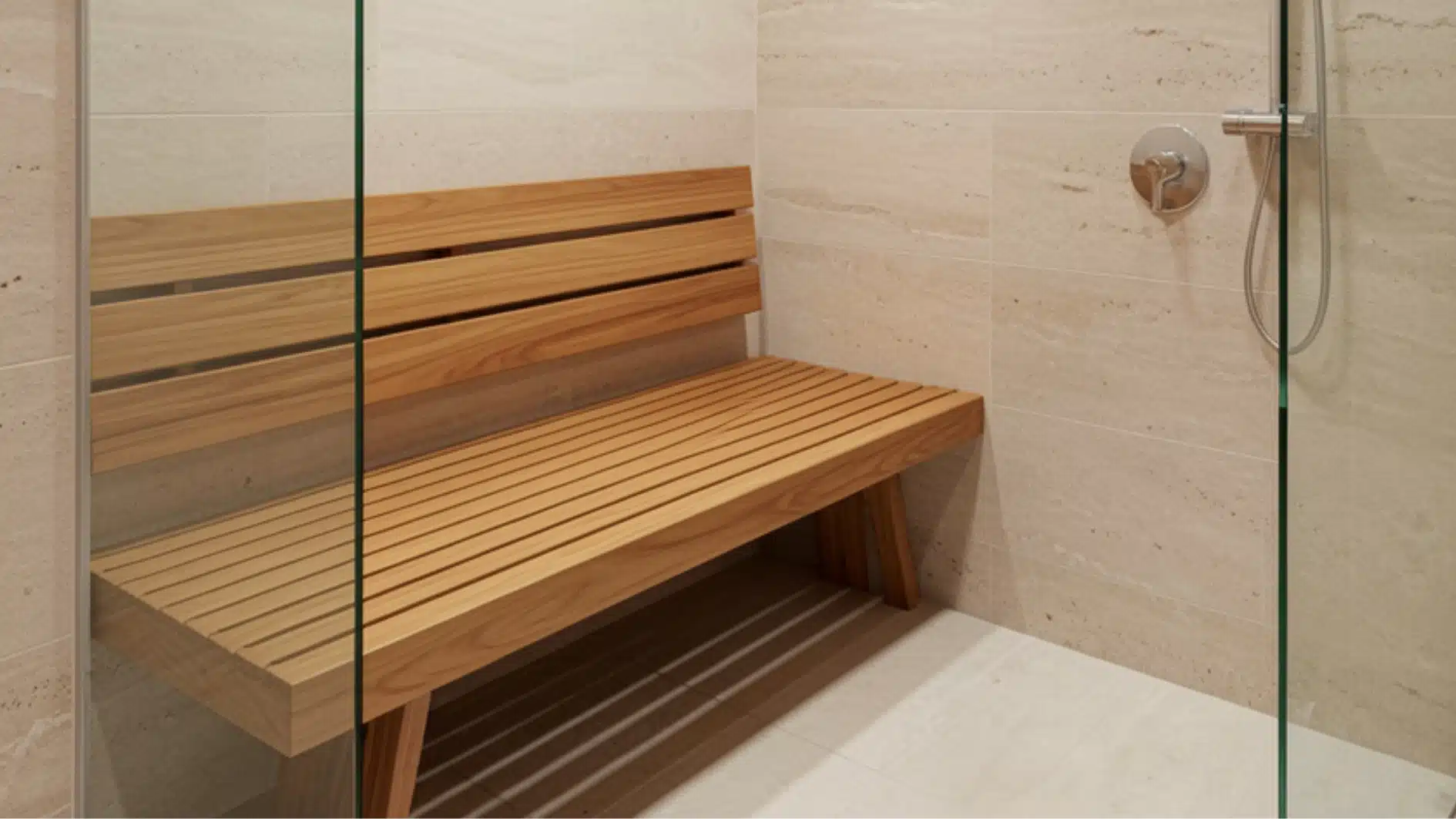
Built with treated teak wood slats instead of tile or stone.
Water drains through the gaps between the slats, which means less pooling and faster drying. It adds natural warmth and texture that tile simply can’t replicate.
It needs occasional oiling to stay in good condition, but holds up well in wet environments.
11. Cantilevered Bench
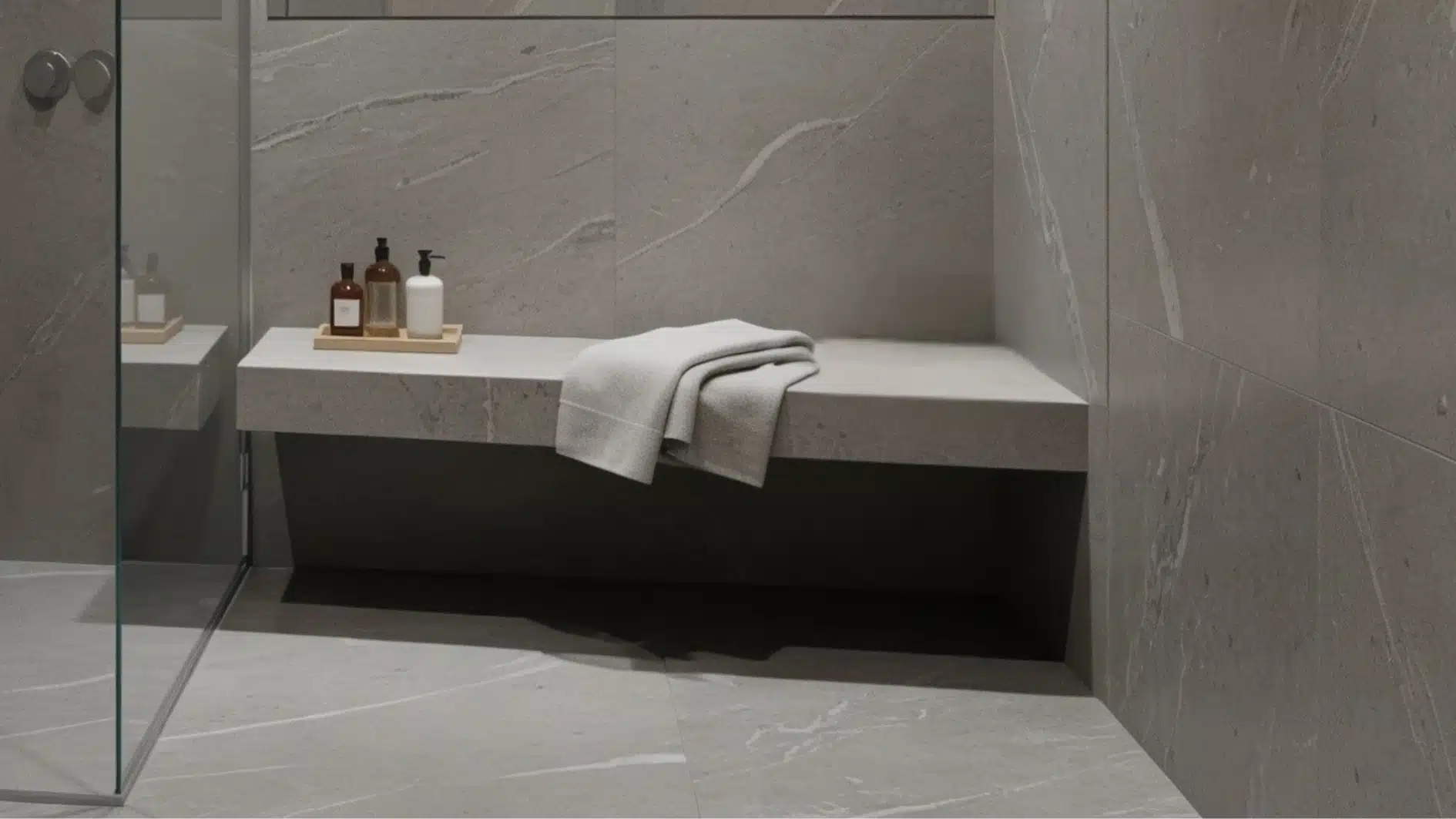
Extends out from the wall with no visible support underneath. It looks like it’s floating but is anchored deep into the wall structure with heavy-duty brackets.
Sleek, architectural, and always a conversation starter. Works best when the wall behind it is solid enough to carry the load.
12. Full-Corner Wrap Bench
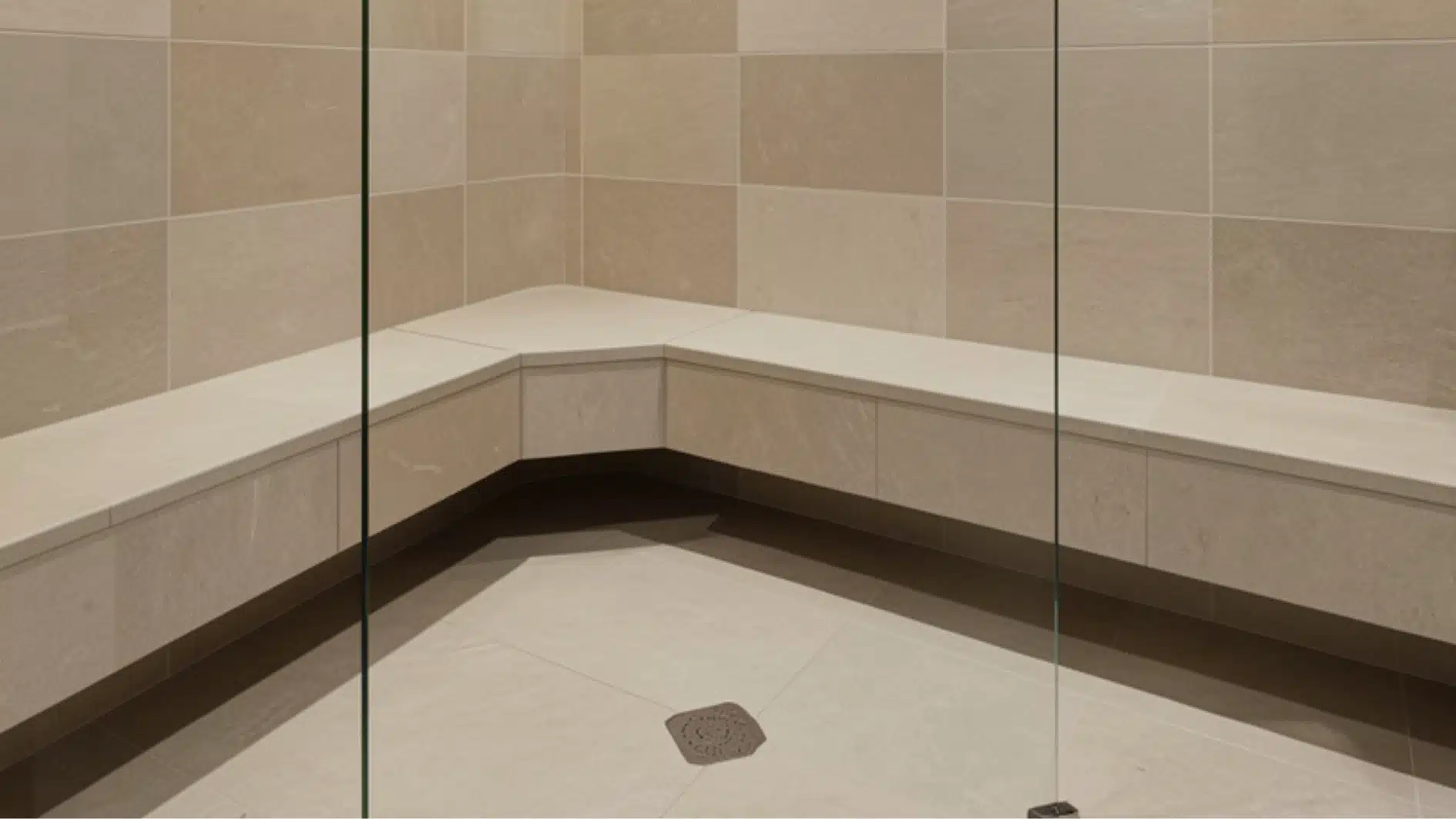
Extends along two full walls meeting at a corner, larger than an L-shaped bench.
It offers generous seating and plenty of surface space for toiletries. It works best in walk-in showers with plenty of room to spare.
Gives the shower a spa-like feel that’s hard to achieve with a standard bench.
13. Monochrome Seamless Bench
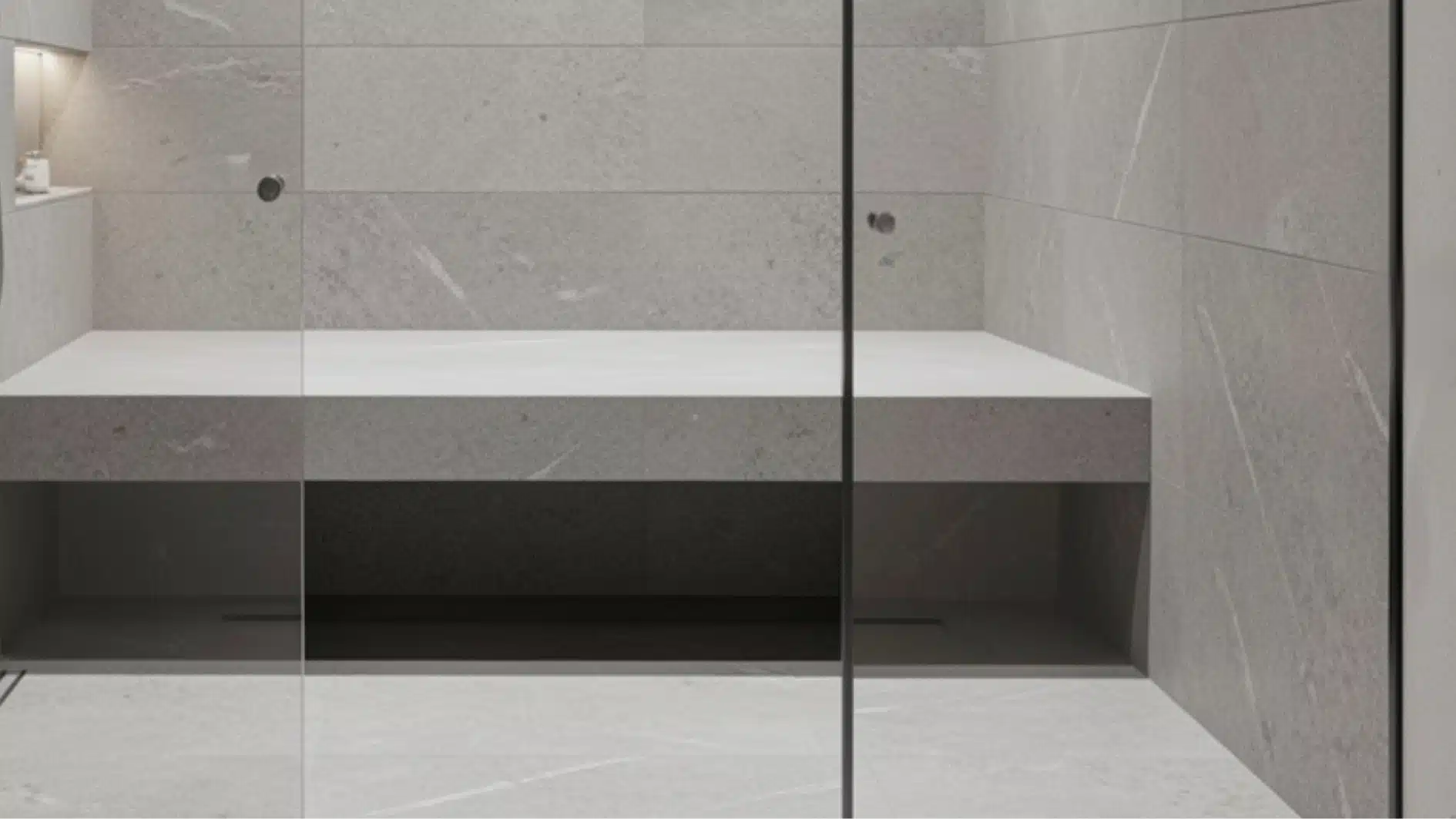
Not a shape, a design approach. The bench is tiled in the same material as the walls and floor, so it disappears into the space.
No visual break, no contrast, no hard edges. The shower looks bigger, cleaner, and more considered.
Works best with large-format tiles and minimal grout lines.
Tip: Skip tile on the sitting surface. Use quartz or solid surface on top instead. It’s smoother to sit on, easier to clean, and looks more finished.
14. Contrast Statement Bench
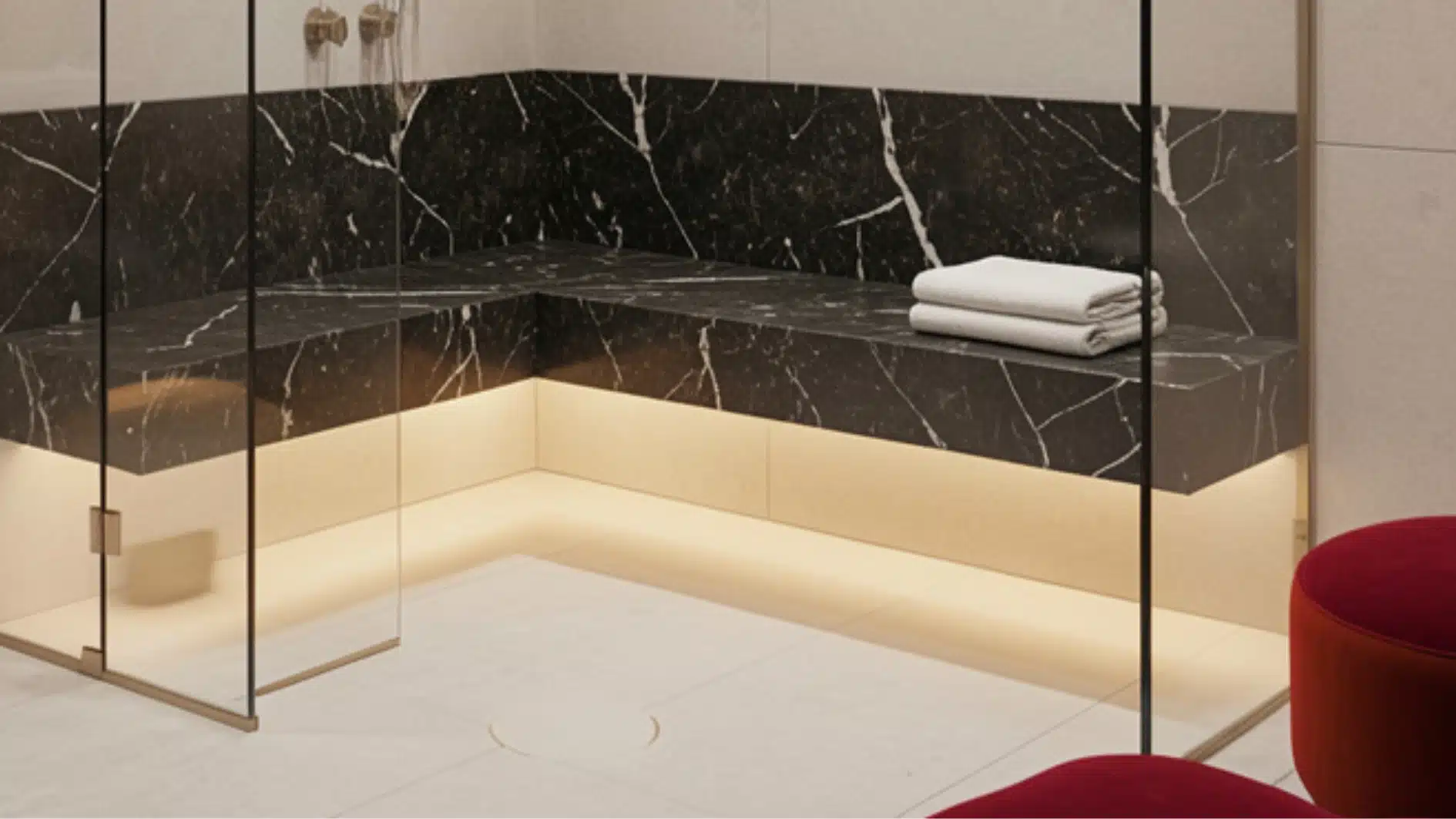
The opposite of seamless. The bench is finished in a different tile, stone, or color from the rest of the shower.
It works well when the bench material ties into another element in the bathroom, like the vanity or floor.
Tip: Always go honed or textured on any surface you sit or step on. Polished stone looks great, but wet, it’s a safety risk.
15.Reclining Built-In Shower Bench
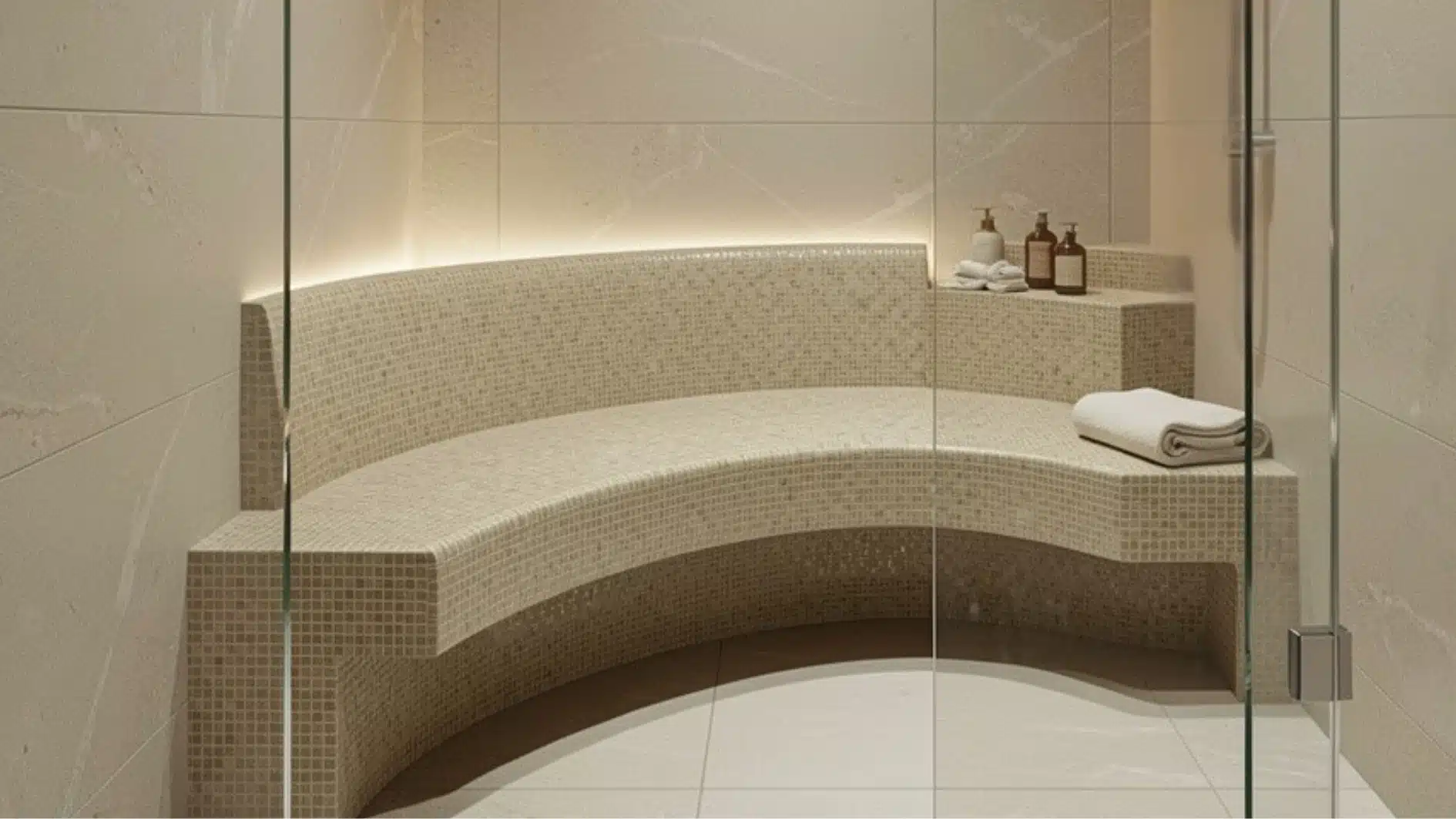
A reclining bench has a gently angled seat. It supports your back and legs at the same time.
The angle is built into the structure during construction. A handheld showerhead pairs really well with this style. You stay leaned back while the water reaches you.
It works best in larger showers with plenty of standing room.
The Bottom Line
A built in shower bench isn’t a luxury reserved for high-end hotels or spa retreats.
It’s a practical, long-lasting addition that makes your shower more comfortable, safer, and better looking, all at once.
Pick the right material, get the dimensions right, and build it during your renovation, not after. Do those three things, and you’ll never look at your shower the same way again.
If you’re already planning a bathroom renovation, this is the one feature worth adding to the list.
Frequently Asked Questions (FAQ’s)
1. Are Built in Shower Benches a Good Idea?
Yes, they add comfort, improve safety, and look great in almost any shower.
2. What is the Best Bench to Put in a Shower?
A built in tile or quartz bench is the best option. It’s durable, water-resistant, and looks like it belongs there permanently.
3. Can You Build Your Own Shower Bench?
Technically, yes, but it’s not recommended. Waterproofing has to be done correctly; one mistake and water gets into your walls, leading to costly repairs down the line.