
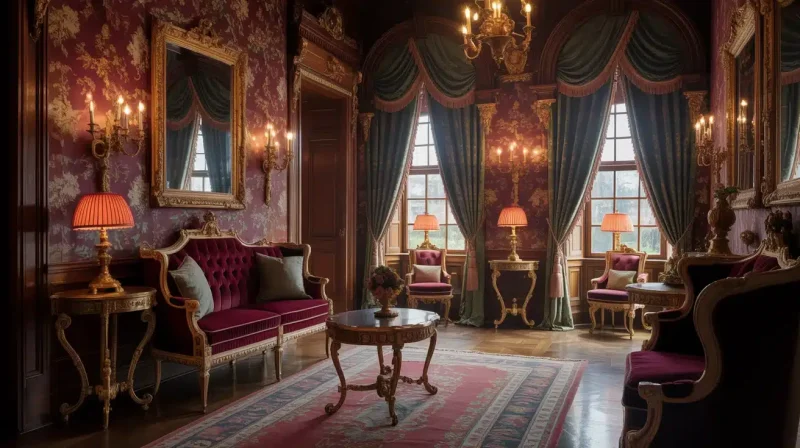
Not every home has a story. But a Victorian house interior almost always does.
There’s a warmth to it that’s hard to explain. The deep colors, the layered textures, the furniture that looks like it actually belongs there.
I’ve always loved that feeling. And over time, I’ve learned it doesn’t happen by accident.
Getting it right takes a few key decisions, made in the right order.
This post covers all of it. Wall colors, furniture styles, fabrics, and the small details that make a Victorian interior feel complete.
Let’s get started.
What Defines a Victorian House Interior?
Victorian interiors come from the Victorian era design history, which ran from 1837 to 1901.
It was the period when Queen Victoria ruled Britain, and the design style that came out of that time is unlike anything else.
The look is bold, layered, and full of detail.
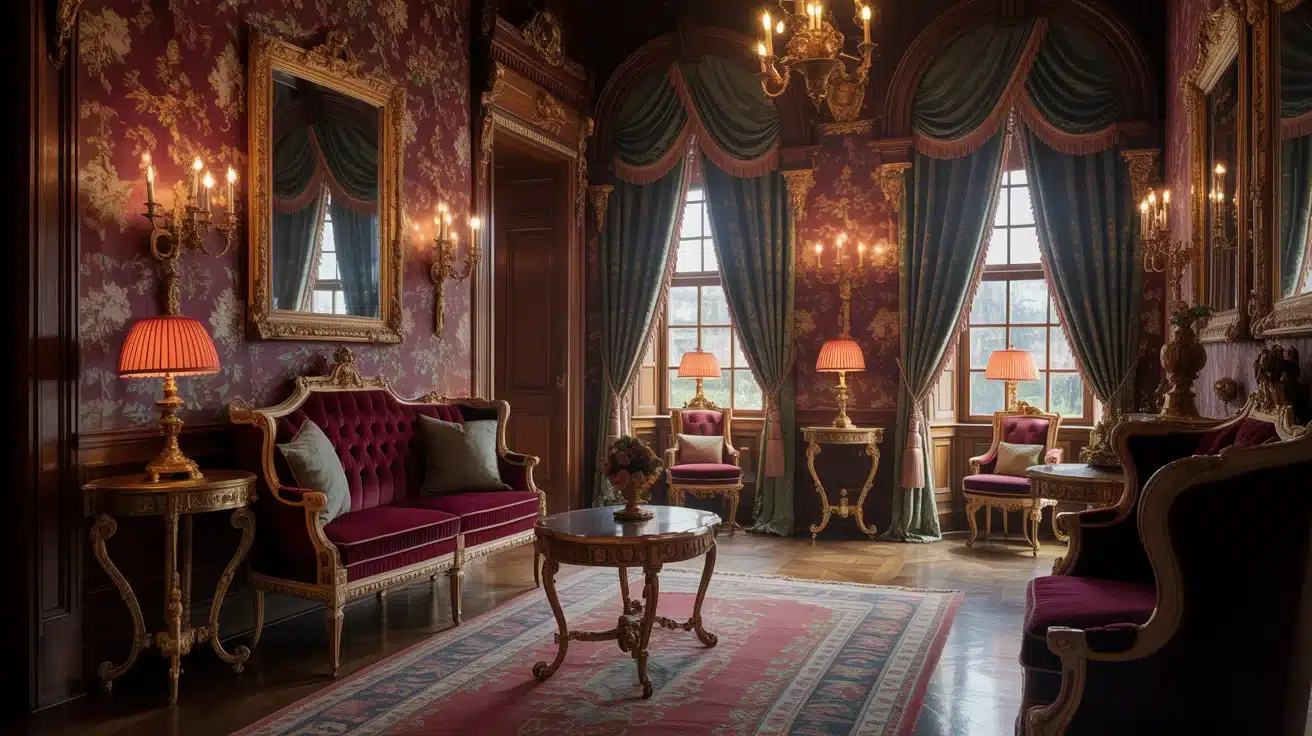
Dark, rich colors cover the walls, heavy fabrics drape the windows, and the furniture is ornate and solid.
Pattern plays a big role, too. Floral wallpaper, patterned rugs, tiled floors, and decorative moldings were all staples.
Victorian interior spaces were designed to feel comforting and lived-in, and that’s exactly what sets this interior apart from cleaner, more minimal designs.
Early Victorian (1837–1860) VS High Victorian (1860–1880) VS Late Victorian/Aesthetic (1880–1901)
Each had distinct moods, literally.
Early Victorian interiors (1837–1860) leaned heavily Gothic: dark, heavy, and deeply religious in influence.
Think pointed arches, somber tones, and thick drapery that barely let light in.
By the High Victorian period (1860–1880), prosperity was at its peak.
Rooms became even more layered, pattern-on-pattern was normal, and the parlour was essentially a showroom for the family’s wealth and taste.
Late Victorian (1880–1901) softened things considerably.
The Aesthetic Movement, led by figures like William Morris, pushed back against excess and argued that beauty and usefulness should go hand in hand.
Colours grew lighter, Japanese influences crept in, and rooms started to breathe a little more.
Most of what people picture as “classic Victorian” sits in that High Victorian middle period.
But knowing where your own home falls, or which era you’re drawn to, makes every design decision that follows much easier to get right.
Elements of a Victorian House Interior
Victorian interiors are built on layers, detail, and a strong sense of character.
Every element, from the walls to the furniture, works together to create a rich, considered look.
1. Decorative Moldings and Architectural Details
Crown moldings, ceiling roses, and decorative cornices are the backbone of Victorian architecture.
These details frame every room and give it structure. Dado rails divide walls into sections, adding visual depth. Plaster ceiling medallions were common above light fixtures.
The National Park Service notes that retaining original cornices and moldings is key to rehabilitating historic interior features in any period home.
2. Classic Victorian Color Palettes
Victorian walls were never plain.
Deep greens, burgundy, navy, and mustard were popular choices, and each one brought a different mood to the room.
| Color | Best Used In | Pairs Well With |
|---|---|---|
| Deep Forest Green | Living room, study | Gold, cream, dark wood |
| Burgundy Red | Dining room, bedroom | Navy, brass, walnut |
| Navy Blue | Hallway, library | Mustard, white trim, oak |
| Mustard Yellow | Parlor, sitting room | Brown, terracotta, green |
| Plum Purple | Bedroom, bathroom | Silver, charcoal, ivory |
| Terracotta | Kitchen, entrance hall | Sage green, cream, copper |
Color sets the entire tone of the room, so start there.
These deep tones weren’t just aesthetic choices; they helped conceal soot and dust in an era before central heating, which is why you rarely see pale Victorian walls in original period homes.
3. Luxurious Fabrics and Textiles
Fabric was everywhere in a Victorian interior. Velvet cushions, wool throws, embroidered table runners, and fringed lampshades all added texture.
Layering different fabrics in complementary tones was common practice. A Victorian room without textiles feels unfinished.
It’s one of the easiest ways to bring the look together quickly.
4. Patterned Wallpaper and Wall Treatments
Wallpaper was a staple in Victorian homes. Floral prints, geometric patterns, and botanical designs were everywhere.
William Morris prints are among the most recognized Victorian wallpaper styles. The patterns were detailed and layered, never subtle.
A single feature wall with a strong print can anchor an entire room.
5. Antique and Ornate Furniture
Victorian furniture was built to last and designed to be noticed. Dark woods like mahogany and walnut were common.
Pieces featured carved legs, button-tufted upholstery, and curved silhouettes. Sofas and armchairs were substantial and well-padded.
Each piece looked like it had a purpose and a permanent place in the home.
6. Lighting Fixtures
Lighting in a Victorian home was never purely functional. Chandeliers, wall sconces, and ornate table lamps were all part of the look.
Brass and bronze finishes were common. Glass shades with etched or frosted details added warmth to the light.
The right lighting fixture can pull an entire Victorian room together.
How I Turned my Living Room into a Victorian House Interior

alt text: Before and after images of a Victorian house living room, highlighting the dramatic interior makeover
It started with a feeling, not a plan.
My home already had high ceilings, wide hallways, and original skirting boards. The bones were already there. All it needed was the right direction.
So my approach was simple. I started small and didn’t rush it.
Flat white walls were out, and a deep sage green went up in the living room.
The difference was immediate, moodier, and far more interesting than anything that was there before.
Weekend antique markets became part of my routine.
But, truth be told – I found most of my pieces at salvage yards and estate sales rather than antique shops. The pricing is far better and the pieces tend to be more authentic.
A carved wood side table here, a button-tufted armchair there.
Nothing matched perfectly, and that was never the goal. That slightly collected, lived-in quality is exactly what makes Victorian interiors feel real.
This made the biggest difference for me, more than any furniture or paint color.
Velvet cushions, a wool throw, heavy curtains in a deep plum tone. Layering textures fills in the gaps that paint and furniture alone simply cannot.
Framed botanical prints, a ceramic vase on the mantlepiece, a patterned runner in the hallway. None of it cost much.
But every piece had a place, and together they made the whole thing finally feel like it belonged.
Victorian House Interior Ideas by Room
Each room in a Victorian home tells its own story, with details and character that make the whole house feel complete.
1. Victorian Living Room

alt text: A Victorian living room featuring a cozy fireplace and an elegant couch, showcasing classic design elements
The living room is where Victorian design really shines.
A carved marble fireplace surrounded by built-in shelving sets the tone immediately.
Add a tufted velvet sofa, a patterned rug, and a brass chandelier overhead. It feels warm and intentional, even in smaller spaces.
2. Victorian Bedroom

alt text: A Victorian bedroom featuring a four-poster bed adorned with a rich red and gold bedspread
A Victorian bedroom should feel like a retreat, and honestly, it’s one of my favorite rooms to style.
Start with a dark wood four-poster bed dressed in rich, layered bedding. Add heavy curtains, a decorative mirror, and a vintage bedside table.
3. Victorian Kitchen

alt text: A Victorian kitchen featuring wooden cabinets and a classic sink, showcasing elegant design and traditional charm.
Victorian kitchens leaned on warm wood cabinetry and practical design, and I think that’s what makes them so livable.
Open shelving displaying ceramic dishes, brick or tile backsplashes, and brass hardware throughout.
A few well-chosen vintage-inspired details bring real comfort to even a modern kitchen layout.
4. Victorian Entrance Hall

alt text: A Victorian entry hall featuring a staircase and a large mirror along the wall, showcasing elegant architectural details
First impressions matter, and in a Victorian home, the entrance hall does a lot of the work.
Geometric encaustic tiles on the floor are a classic starting point.
Add a dark wood console table, a large framed mirror, and a decorative coat rack. It sets the tone before anyone steps further inside.
5. Victorian Bathroom

alt text: Victorian bathroom featuring a classic tub and a stylish sink, showcasing elegant design and vintage decor
The Victorian bathroom is one I always enjoy putting together. A clawfoot bathtub near a window feels instantly period-appropriate.
Pair it with black-and-white encaustic floor tiles, a pedestal sink, and brass fixtures. Small details like a framed mirror or a vintage towel rail make a real difference.
6. Victorian Dining Room

alt text: A long dining table set in a Victorian dining hall, showcasing elegant decor and rich wood finishes
Victorian dining rooms were made for gathering, and you can feel that in the design.
A large, dark-wood dining table with upholstered chairs sets the foundation. Deep red or forest green walls add drama, and a statement chandelier overhead ties it all together
Modern Victorian House Interior

alt text: A modern Victorian living room featuring a stylish couch and an ornate mirror on the wall
Victorian style and modern living are not as hard to mix as most people think.
The key is knowing what to keep and where to draw the line.
-
Keep the architectural bones: Original cornicing, dado rails, and ceiling roses should stay wherever possible. These details are what give a Victorian home its character.
-
Update the essentials: Kitchens and bathrooms can be modern in function while still feeling Victorian in style. Brass hardware, ceramic tiles, and wood accents do the heavy lifting.
-
Mix old and new furniture: A Victorian sideboard next to a simple modern sofa works better than most people expect. The contrast is actually part of the appeal.
-
Keep technology out of sight: Televisions and cables can break the visual flow. Tucking them behind cabinet doors keeps the look intact without sacrificing comfort.
-
Let natural light in: Balance heavy curtains with lighter sheers underneath. It stops rooms from feeling too dark while keeping that layered Victorian feel.
Old Victorian House Interior vs Modern Victorian House Interior
Having seen both done well, the difference really comes down to how much you adapt the look to the way people actually live today.
| Element | Old Victorian Interior | Modern Victorian Interior |
|---|---|---|
| Wall Colors | Dark, heavy tones like burgundy and forest green | Softer versions like sage or dusty rose |
| Wallpaper | Bold, all-over floral prints | Single feature wall with a Victorian-inspired print |
| Furniture | Heavy, ornate dark wood pieces | Mix of antique and modern with cleaner lines |
| Flooring | Encaustic tiles and large Persian rugs | Restored original floors with smaller vintage rugs |
| Lighting | Candelabras and heavy chandeliers | Brass fixtures with modern bulbs |
| Window Treatments | Thick velvet drapes layered with sheers | Lighter fabrics in deep tones, less layering |
| Accessories | Every surface is styled and filled | Curated groupings, fewer but considered pieces |
| Overall Feel | Formal, layered, and richly decorated | Comfortable and livable with a period nod |
The most common mistake I see is mixing too many Victorian elements too quickly.
The room starts to feel like a prop set rather than a home. One or two strong anchor pieces do more than a room full of ornate details competing for attention.
Final Thoughts
Getting a Victorian house interior right is really about patience and paying attention to the right details.
Start with one room. Get the walls right, add the architectural details, and let the furniture and textiles follow.
When I started on my own home, I didn’t think it would come together the way it did. But it did, slowly and steadily.
The entrance hall was my first step, and it set the tone for everything else.
Take your time with it, make small changes, and trust the process. It always rewards patience.
Frequently Asked Questions
1. What Colors Work Best in a Victorian House Interior?
Deep greens, burgundy, navy, and mustard are the most authentic choices.
2. How do I Make a Modern Home Look Victorian?
Start with dado rails, rich wall colors, and ornate lighting fixtures.
3. What Type of Furniture Suits a Victorian Interior?
Dark wood pieces with carved details, tufted upholstery, and curved silhouettes work best.
4. Can I Mix Victorian Style with Contemporary Decor?
Yes, contrast old and new pieces thoughtfully, and the two styles balance well.