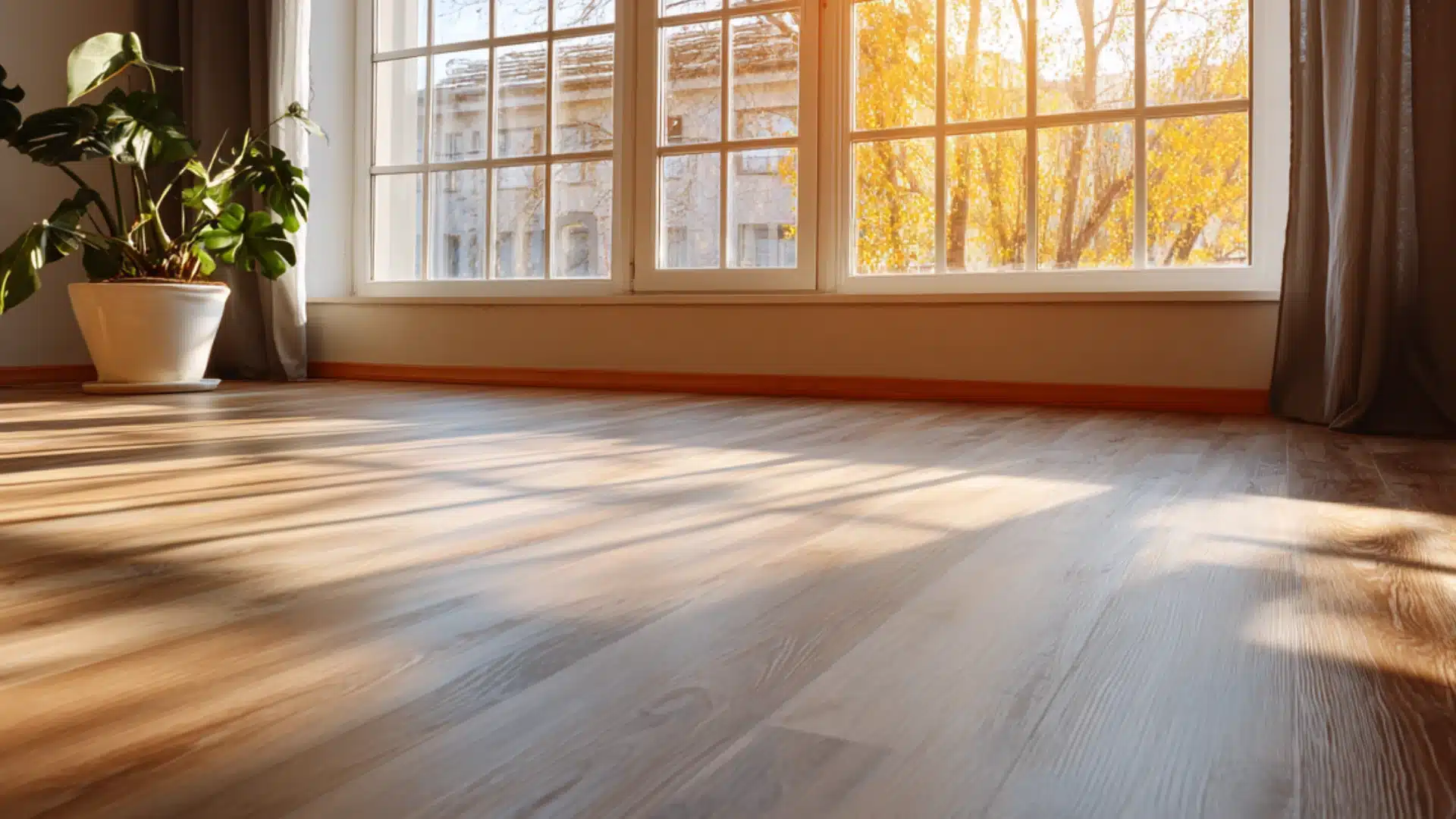


A good floor does more than cover the ground. It sets the tone for the entire room.
Most people nail the color choice but completely overlook direction.
That one overlooked choice can make a room feel cramped and off, or open and well put together.
I made that mistake on my first install and had to rethink the entire layout. Figuring out which direction to lay vinyl plank flooring before you start is the kind of decision that saves you.
Get it right, and everything else falls into place!
Understanding Why Flooring Direction Matters
The direction of your planks does a lot more heavy lifting than most people realize.
It shapes how a room reads visually before anyone notices the color or texture of the floor itself.
The EPA recommends paying attention to indoor building materials, as flooring can directly affect indoor air quality.
How Plank Direction Changes the Way a Room Looks?
Plank direction controls how a room feels.
Run them lengthwise, and the space instantly looks longer and more open.
Which Direction to Lay Vinyl Plank Flooring?
Two things tell you almost everything: where your light comes from and which wall runs longest.
Where does natural light enter, and which wall is the longest?
Those two answers point you in the right direction before a single plank goes down.
The Most Recommended Direction to Lay Vinyl Plank Flooring
Most professionals recommend running planks parallel to the longest wall.
It creates a clean look and makes planning the installation easier. Light direction plays an equally important role in that decision.
Following the Direction of Natural Light
- Window placement: Planks running perpendicular to the light catch every seam, making the floor look busy.
- Light reflection: Planks parallel to the light reflect more evenly and appear as a single smooth surface.
- More seamless look: Light skims across seams rather than cutting into them, making joints far less visible.
Running Planks Along the Longest Wall
- Rooms appear larger: Long parallel lines draw the eye toward the far wall.
- Natural layout flow: The floor guides movement rather than stopping your eye mid-step.
- Easier planning: A straight baseline means predictable cuts and less waste.
Which Direction to Lay Vinyl Plank Flooring in Multiple Rooms
Every room has its own layout quirks, but the planning process stays the same.
Work through these four steps before committing to a direction in any space.
| Step | What to Do | Why It Matters |
|---|---|---|
| Step 1: Longest Wall | Find the room’s longest wall | Sets your layout baseline |
| Step 2: Light Direction | Note where natural light enters | Parallel planks hide seams better |
| Step 3: Room Flow | Walk through connecting spaces | Keeps direction consistent throughout |
| Step 4: Dry Lay First | Place planks without adhesive | Catches problems before installation |
1. Kitchen
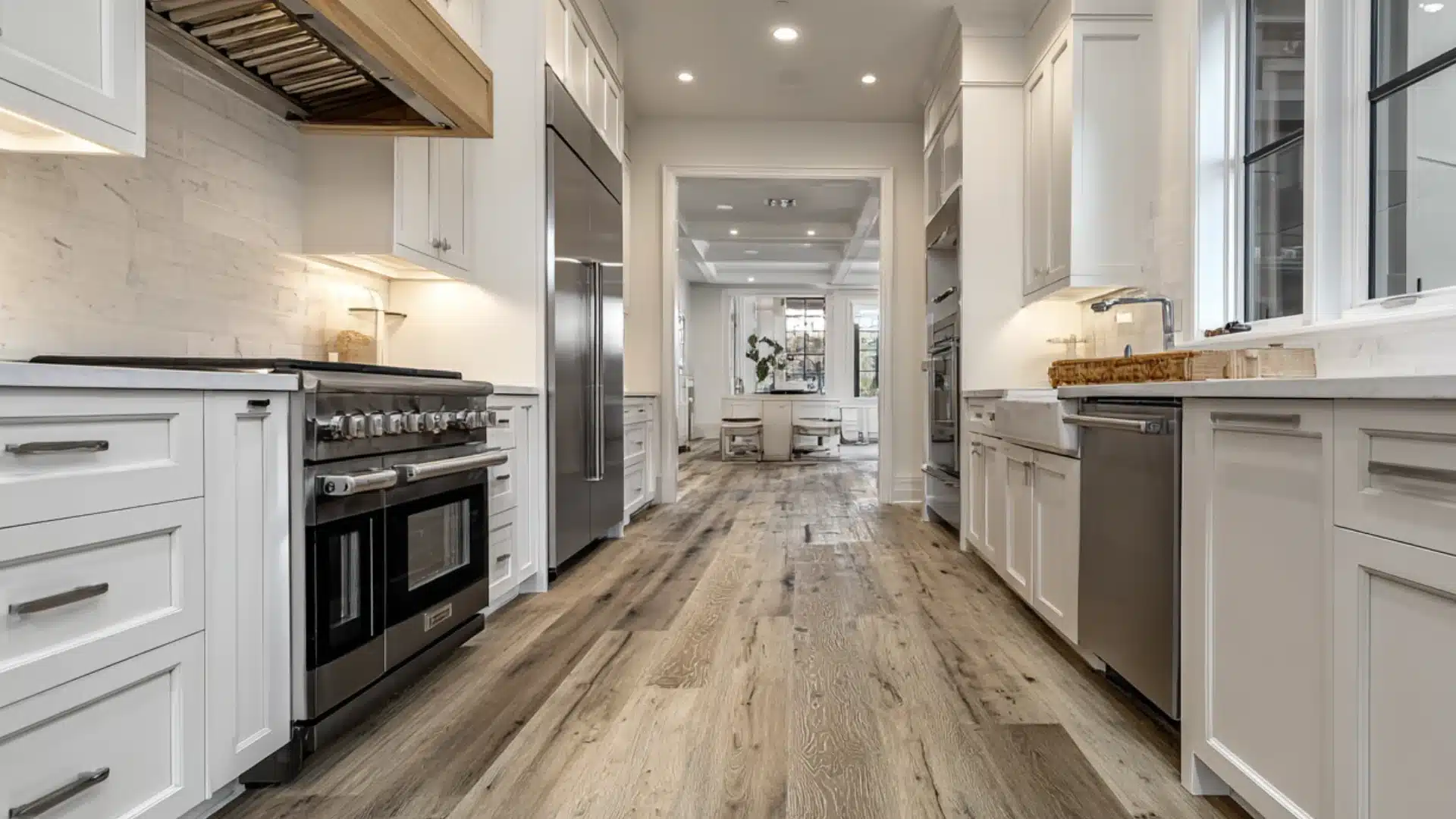
Run planks lengthwise from the main entry toward the back wall.
Kitchens take a beating with foot traffic, and this direction guides movement naturally through the space.
Quick tip: In a galley kitchen, lengthwise planks visually stretch the space and help the layout avoid feeling like a corridor.
2. Bedroom

Run planks away from the main window toward the opposite wall.
I stayed in a furnished apartment in Lisbon once, where the floor ran the wrong way across a narrow room.
It made the whole space feel restless. Running planks with the light keeps things calm and elongated.
3. Hallway

Lengthwise. Always. No debate.
Running planks across a hallway visually cuts the space into slices. Lengthwise planks pull the eye forward and make even the tightest hallway feel like it goes somewhere.
Decor tip: Pair lengthwise planks with a narrow runner rug to double down on that stretched effect.
4. Bathroom

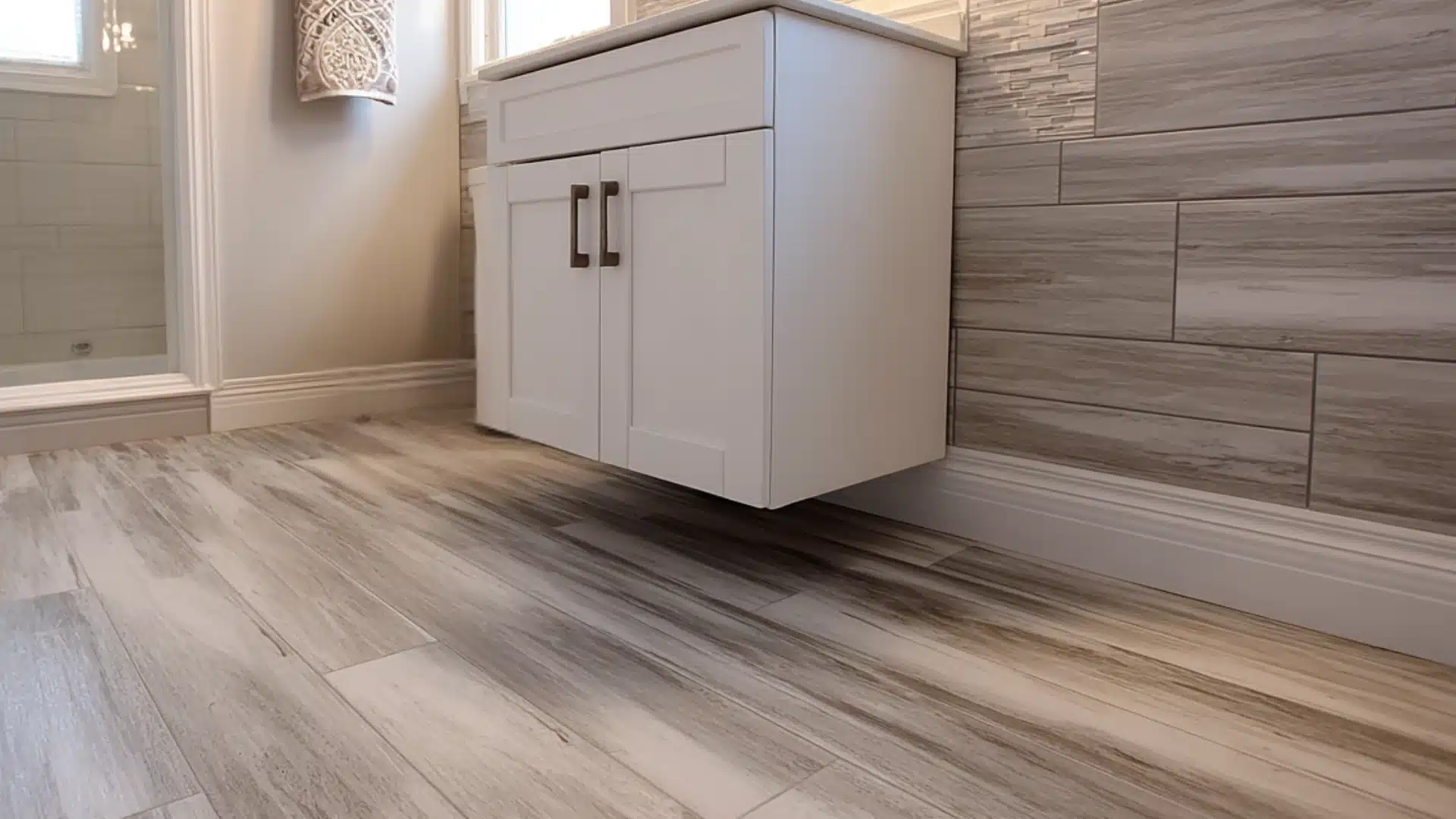
Run planks lengthwise toward the vanity or bathtub wall.
It draws the eye forward and makes the room feel longer. In a small bathroom, stick to the longest wall, and the space opens right up
Running them widthwise only compresses what little room you already have.
Always leave moisture expansion gaps around every edge since bathrooms shift with humidity.
5. Basement
Start from the staircase and run planks along the longest wall. Basements get little natural light, so every visual trick counts.
- Avoid diagonal layouts, as uneven subfloors make angled cuts a headache
- Straight lengthwise runs are forgiving and easier to execute cleanly
6. Square Room

Square rooms have no obvious longest wall, so the usual rule does not give a clear answer.
Run planks parallel to the main light source, or match the direction of the adjoining room.
Knowing which direction to lay vinyl plank flooring in a square room comes down to light and flow, not geometry.
Common Mistakes When Installing Vinyl Plank Flooring
Learned most of these the hard way!
Some came from rushing, some from overconfidence, and a couple from just not knowing better.
- Skipping acclimation. Ripped open boxes in a Porto apartment and started laying immediately. By morning, three planks were curling at the edges. Let them sit for 48 hours first.
- Ignoring the subfloor. That small bump you think you can get away with? You cannot. It creaks underfoot and drives you mad six months later.
- Forgetting expansion gaps. Planks need space to move as temperatures change. Press them too tightly against the wall, and they will buckle, guaranteed.
- Laying planks the wrong way. This only hurts after the whole floor is down. Figure out which direction to lay vinyl plank flooring before the first plank goes in, not halfway through.
- Flipping direction between rooms. Laid two connected rooms in opposite directions once. The transition looked like two different homes collided.
- Skipping the dry-lay. Ten minutes of testing beats two hours of fixing every single time.
Final Thoughts
Flooring direction is one of those decisions that seems small but can change everything.
Follow the longest wall, respect the natural light, and keep the flow consistent across rooms. Those three rules cover most situations you will run into.
Before committing to anything permanent, dry lay a few planks and live with it for a day.
What looks right in your head does not always match what your eyes see on the ground.
Getting which direction to lay vinyl plank flooring right from the start saves money and even time.
Frequently Asked Questions
1. Can You Change the Direction of Vinyl Plank Flooring Between Rooms?
You can, but use a transition strip at the doorway to make the change look intentional rather than accidental.
2. Do You Need Underlayment Under Vinyl Plank Flooring?
Some vinyl planks come with underlayment pre-attached, but if yours do not, adding a separate layer helps with sound and comfort underfoot.
3. Can Vinyl Plank Flooring be Installed Over Existing Tile?
Yes, as long as the tile is firmly attached, level, and has no cracked or raised edges that would affect the new surface.
4. How Much Waste Should You Account for When Buying Vinyl Plank Flooring?
Order ten percent more than your measured square footage to cover cuts, mistakes, and any future repairs.
5. Does the Subfloor Type Affect Which Direction You Lay Vinyl Plank Flooring?
Concrete subfloors with moisture issues may limit your layout options, so always test for moisture before choosing your direction and starting installation.