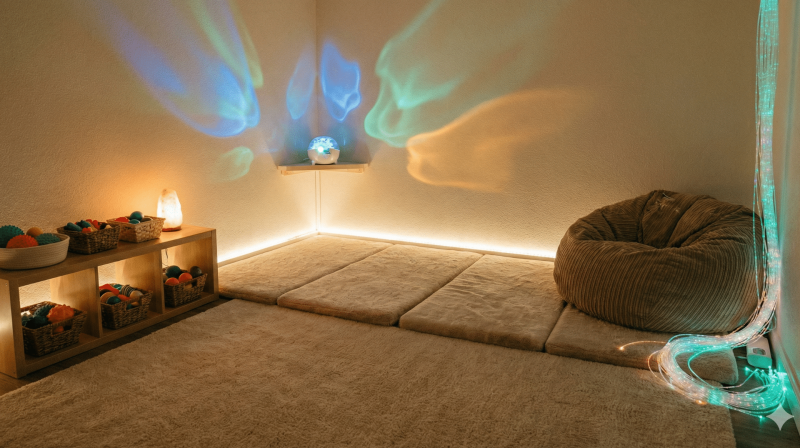
Bubble tubes with changing lights, fiber optic lights, soft mats, textured panels, projectors, sound systems, swings, and weighted blankets.
Purpose
- Provides controlled sensory input in manageable amounts
- Gives users control over experiences and intensity
- Reduces anxiety by eliminating unpredictable input
- Regulates the nervous system, preventing overload or under-stimulation
- Creates a calm, focused state for better engagement
- Improves sensory processing over time with repeated use
Key Elements of a Sensory Room
Key elements of a sensory room include calming lights, soothing sounds, tactile tools, movement options, and cozy seating to support sensory needs.
- Visuals: Soft LED lights, bubble tubes, and gentle projectors that create a calming or engaging atmosphere without overwhelming the senses.
- Sound: Background music, nature sounds, or white noise to help with focus, relaxation, or sensory grounding.
- Touch: Textured panels, fidget tools, soft rugs, and weighted blankets that offer comfort and steady sensory input.
- Movement: Swings, rocking chairs, balance boards, and crash pads that support motion needs and help the body regulate.
- Comfort Seating: Beanbags, floor cushions, or padded corners that give users a safe space to relax and decompress.
- Scents (optional): Light aromatherapy, such as lavender or chamomile, to enhance calm—used carefully for scent-sensitive individuals.
Different Types of Sensory Rooms
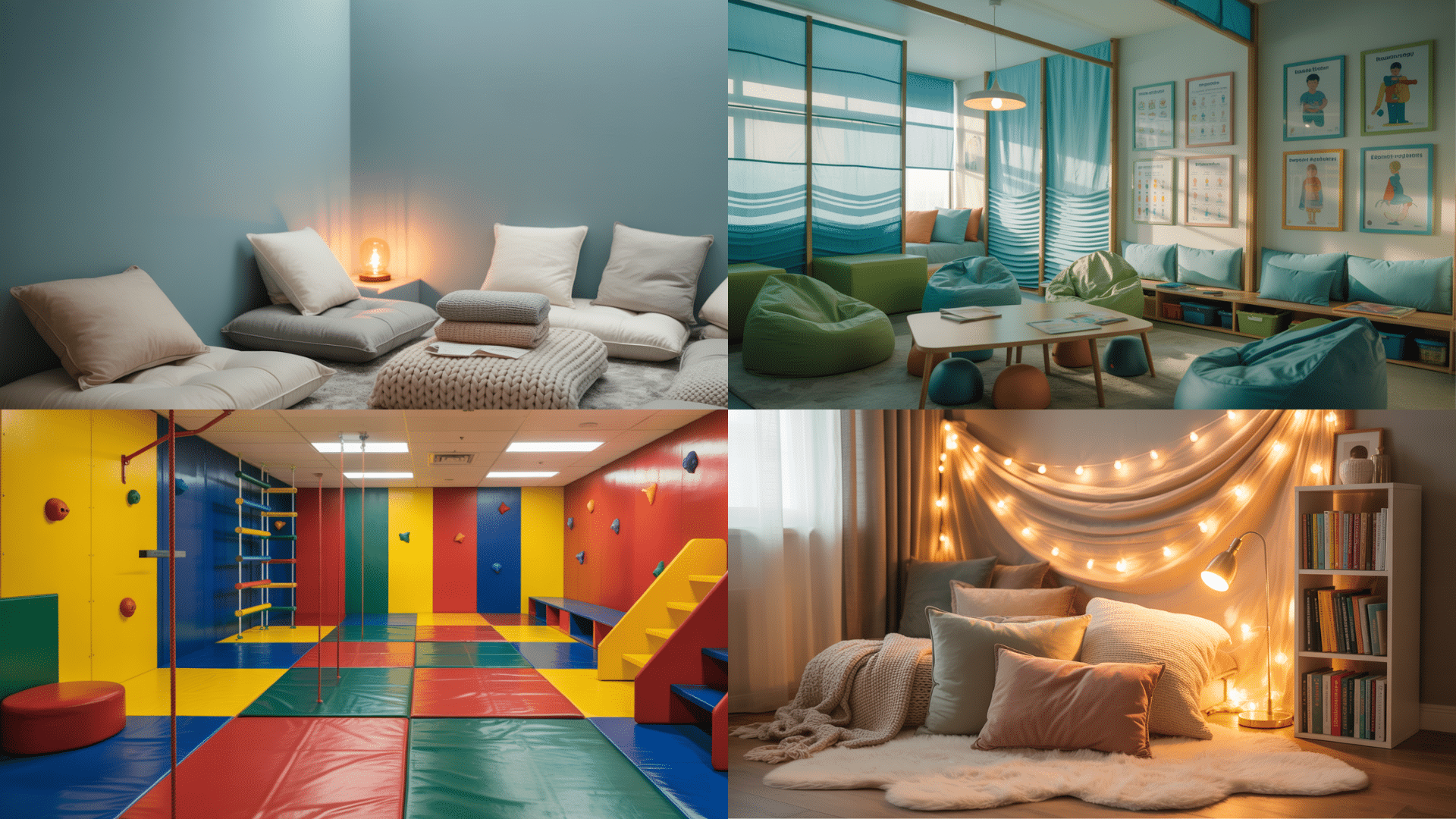
A sensory room is a therapeutic space with equipment targeting sight, sound, touch, smell, and movement.
Sensory rooms come in different types, each designed for specific purposes and needs.
Calming Sensory Rooms
Help people experiencing sensory overload, anxiety, or stress.
Features include soft, dim lighting, quiet sounds like nature recordings, comfortable seating, weighted blankets, and minimal visual stimulation.
Use muted colors and peaceful environments to bring someone from heightened stress to a calm state.
Alerting or Stimulating Sensory Rooms
Provide more sensory input for people who need to feel alert and focused. Include bright, colorful lights, upbeat music, movement equipment like swings or trampolines, interactive bubble tubes, and textured materials.
Energize people who are understimulated or have difficulty focusing.
Multi-Sensory Environments (MSEs)
Offer a wide range of sensory experiences in one space with equipment for visual, auditory, tactile, vestibular, and proprioceptive input.
Include bubble tubes, fiber optic lights, projectors, swings, and adjustable lighting. Allow users to choose calming or stimulating activities based on current needs.
Snoezelen Rooms
Specialized multi-sensory environments for gentle, non-directive sensory exploration. Emphasize relaxation without structured activities.
Feature soft lighting, calming sounds, aromatherapy, and gentle tactile experiences.
It works well for people with severe cognitive impairments or dementia.
Therapeutic Sensory Rooms
Used by therapists during treatment sessions with equipment chosen for specific therapeutic goals. Include swings, climbing structures, fine motor stations, and sensory bins.
Therapists guide activities to support treatment plans for improving motor skills and sensory processing.
Sensory Pods or Personal Spaces
Small, enclosed spaces for one person providing privacy and containment. Include soft seating, noise-blocking features, dim lighting, and minimal clutter.
Appear in schools, airports, and workplaces for quick sensory breaks.
Mobile Sensory Rooms
Portable setups that move between locations with collapsible tents, portable lighting, battery-operated tools, and storage carts.
Make sensory support accessible where permanent space isn’t available.
Outdoor Sensory Spaces
Use natural elements for sensory input with gardens featuring different textures and scents, water features, textured pathways, outdoor swings, and natural materials.
Offer unique experiences like wind, sunlight, and natural sounds.
Different types serve different purposes. The best choice depends on who will use the space and their sensory needs.
Main Elements Commonly Used in These Rooms
The equipment in these spaces isn’t chosen randomly.
Each piece targets specific sensory needs and serves a clear purpose in helping regulate your nervous system.
| Element | Sensory Target | Primary Function |
|---|---|---|
| Bubble tubes | Visual | Provides calming movement and soft light |
| Weighted blankets | Tactile/Proprioceptive | Delivers deep pressure for grounding |
| Fiber optic lights | Visual | Creates gentle, non-harsh illumination |
| Textured panels | Tactile | Offers varied touch experiences |
| Beanbags | Proprioceptive | Supports the body and provides comfort |
| Sound machines | Auditory | Blocks distractions with white noise |
| Swing chairs | Vestibular | Adds movement for body awareness |
| Projectors | Visual | Displays calming or engaging images |
How to Build a Basic Sensory Area at Home?
You don’t need a vast budget or extra room to create a helpful sensory space. A corner of a bedroom or living room can work just fine if you set it up thoughtfully.
Step 1: Pick Your Location
Choose a quiet spot away from high-traffic areas. It should feel separate from the rest of the room, even if it’s just a designated corner.
Step 2: Control the Lighting
Add dimmable lamps or string lights that you can adjust. Avoid harsh overhead lighting. Natural light with curtains for control works well, too.
Step 3: Add Comfortable Seating
A beanbag, a floor cushion, or a soft mat gives the space a grounded feel. Make sure it’s inviting enough that someone actually wants to sit there.
Step 4: Include Tactile Options
Textured pillows, soft blankets, or a small rug with interesting fabric provide touch-based input without taking up much space.
Step 5: Manage Sound
A small speaker for calming music or white noise helps block out household distractions. Headphones work too if the space is shared.
Step 6: Keep It Simple
Don’t overcrowd the area. Three to five well-chosen items beat a cluttered space filled with too many options.
Places Where Sensory Rooms are Common
These specialized spaces have moved beyond therapy clinics into everyday settings.
Schools and Educational Centers
- Help students reset between classes
- Support kids with behavioral challenges or attention issues
Healthcare Facilities
- Reduce patient anxiety before procedures
- Provide stimulation for residents with dementia
Workplaces and Offices
- Offer quiet areas for employees dealing with stress
- Provide practical mental health resources
Public Spaces
- Available in airports, museums, and shopping centers
- Give families breaks during outings without leaving
Sensory Rooms for Different Ages
Sensory rooms adapt equipment and activities to match developmental stages.
Infants and Toddlers (0-3 Years)
Soft mats and fabric panels, simple cause-and-effect toys, mirrors, gentle music, and safe crawling spaces. Keep lighting soft and sounds quiet, and supervise constantly.
Preschoolers (3-5 Years)
Sensory bins with rice or beads, bubble tubes, fiber optic lights, small swings, musical instruments, playdough, and colorful projections. Encourage curiosity and sensory awareness.
School-Age Children (6-12 Years)
Larger swings or hammocks, weighted blankets, fidget toys, balance boards, adjustable lighting, and quiet reading corners. Offer choices for self-regulation.
Teenagers (13-18 Years)
Comfortable bean bags, adjustable lighting, music systems with headphones, stress-relief tools, art supplies, and calming visuals. Use mature designs and prioritize privacy.
Adults
Meditation cushions, yoga mats, adjustable lighting, sound systems with nature sounds, aromatherapy diffusers, weighted blankets, and comfortable seating. Focus on relaxation and mindfulness.
Seniors
Familiar objects from their era, soft music from their youth, gentle lighting, supportive chairs, tactile items, and photo displays. Prioritize safety with easy access and calm environments.
Different ages need different sensory experiences tailored to their developmental stage and needs.
Closing Thoughts
Sensory rooms aren’t a luxury.
They’re a practical solution for anyone whose nervous system needs support. Whether you’re managing autism, anxiety, or just daily stress, these spaces offer real relief.
The science backs it up, and the results speak for themselves. You don’t need a massive budget to start, either. A small corner at home can make a significant difference.
Ready to create your own calming space?