Want to add more space to your attic? Dormers might be your answer. These window structures pop out from your roof. And they’re not just pretty to look at.
Dormers bring in natural light, add headroom, and boost your home’s value.
But note that not all dormers are the same. Choosing the wrong style can mess up your home’s look. It might even create structural problems down the line. That’s a headache you don’t need.
In this blog, you will see the main types of dormers.
You’ll learn its characteristics, types, cost, and how they can be used in some architecture, and how to choose the right dormer.
Why People Consider Dormers
People choose dormers for a few solid reasons. They need more usable space. Attics with sloped ceilings feel cramped. Dormers create standing room where you couldn’t stand before.
Light is another important factor. Dark attics aren’t fun to be in. A dormer window floods the space with sunlight.
Your attic transforms from a storage dump into a real room. Then there’s the money angle.
Adding a dormer costs less than building an extension. You’re working with space you already own.
Dormers look good; they give your roofline character. A plain roof becomes something people notice when they drive by.
These benefits illustrate why dormers remain popular with people.
Dormer Roof vs Wall Dormers
These two types of dormers differ in where they sit and how much space they create.
| Feature | Roof Dormer | Wall Dormer |
|---|---|---|
| Location | Projects from the roof slope | Extends from the exterior wall |
| Space Added | Increases headroom | Adds full floor height |
| Cost | Less expensive | More expensive |
| Structural Impact | Minor roof changes | Major wall extension |
| Installation Time | Few weeks | Several months |
| Interior Height | Limited by the roof pitch | Full ceiling height |
| Best Use | Small rooms, bathrooms | Complete room additions |
| Permits Required | Standard dormer permit | Full addition permit |
| Exterior Change | Subtle roofline bump | Entire story addition |
Characteristics of Various Types of Dormers
Before you pick a dormer style, you need to know what sets them apart.
Window placement and size
The window is the dormer’s main feature. Some dormers have single windows, while others fit multiple panes.
Larger windows mean more light but also higher costs. Your choice depends on how much brightness you want and what your budget allows.
Roof structure
Each dormer type has its own roof design. Some use gable roofs with two sloping sides. Others have flat tops or curved shapes.
The roof structure affects both appearance and how well rain runs off. It also determines installation complexity.
Wall configuration
Dormers extend out from your main roof. The side walls can be vertical or angled.
Vertical walls give you more interior space. Angled walls blend better with specific architectural styles but sacrifice some room inside.
Size and scale
Dormers range from small single-window units to large structures spanning multiple rooms. Bigger dormers add more space but change your home’s profile.
You need to match the dormer size to your house proportions. An oversized dormer looks out of place.
How to Pick the Right Dormer for Your Home
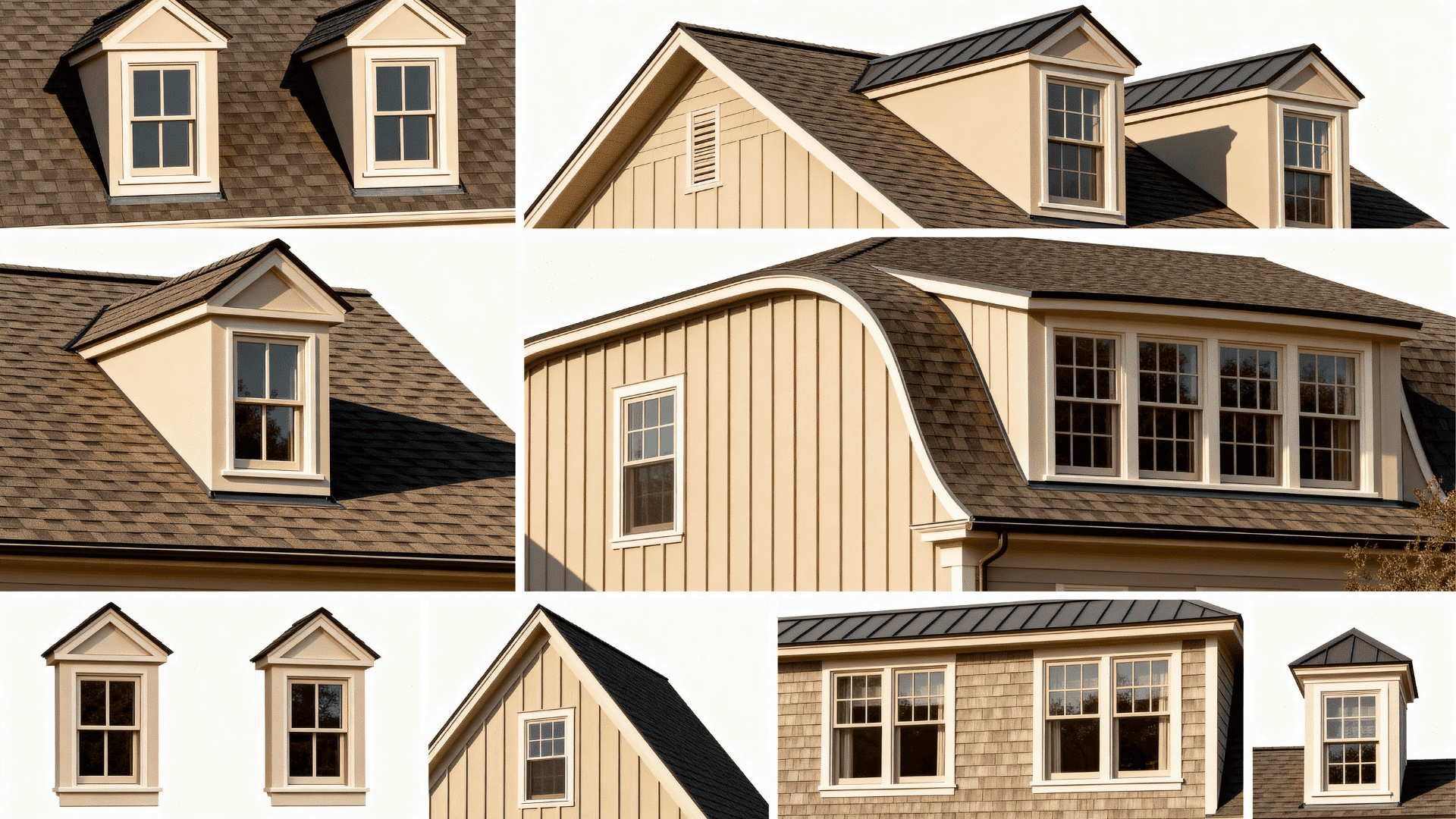
Match your home style with the right dormer and budget accordingly.
| Architectural Style | Best Dormer Type | Estimated Cost Range |
|---|---|---|
| Cape Cod | Gable or Shed | $8,000 – $15,000 |
| Colonial | Hipped | $12,000 – $20,000 |
| Victorian | Gable or Pointed | $10,000 – $18,000 |
| Craftsman | Gable | $9,000 – $16,000 |
| Modern | Flat Roof | $11,000 – $19,000 |
| Ranch | Shed | $7,000 – $14,000 |
| Cottage | Eyebrow | $6,000 – $12,000 |
| Tudor | Gable | $10,000 – $17,000 |
| French Country | Lucarne | $13,000 – $22,000 |
Disclaimer: Cost may vary based on location and other factors.
Main Types of Dormers
Here are the most common dormer windows that give your space a refined look.
1. Gable Dormer
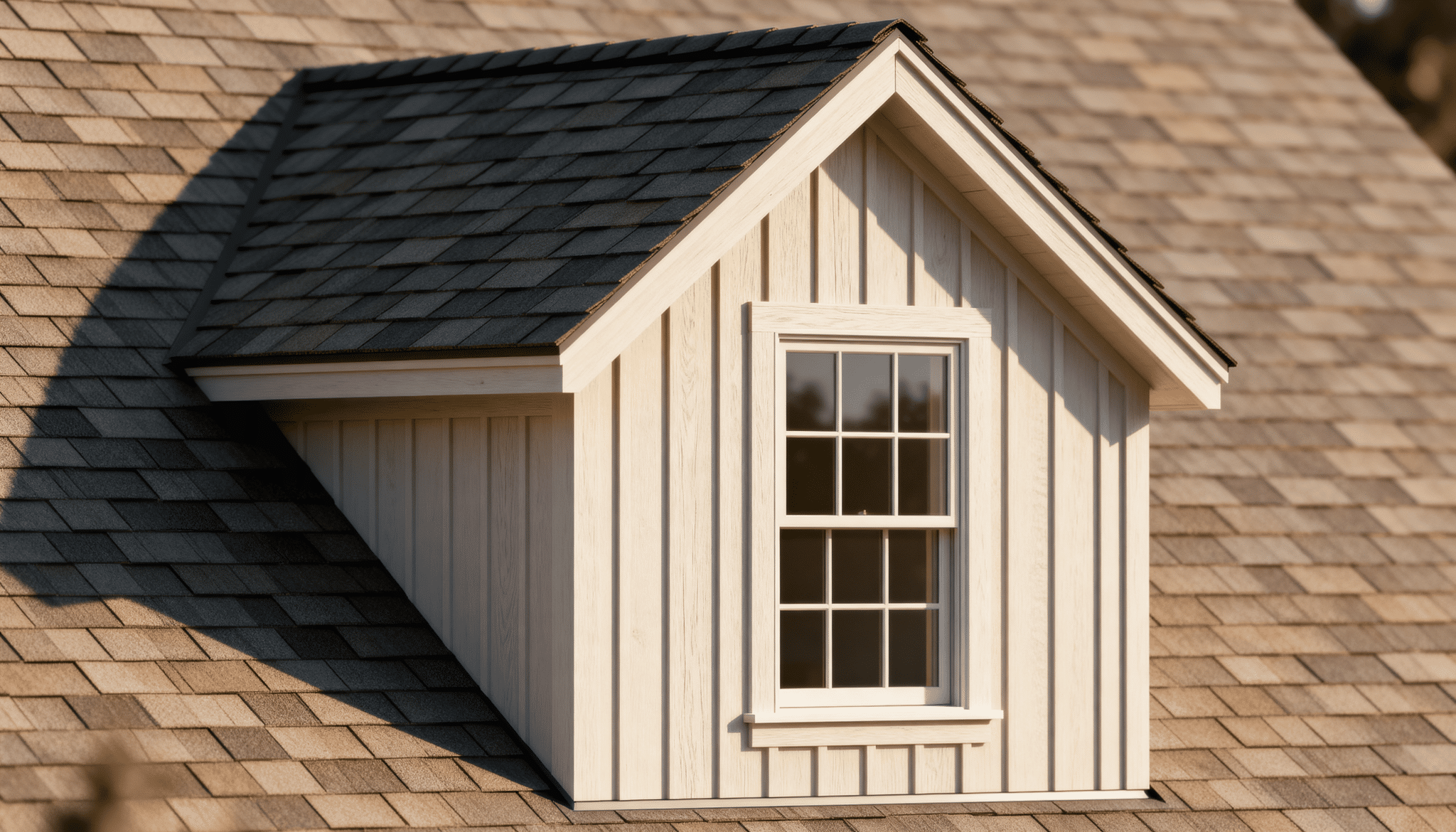
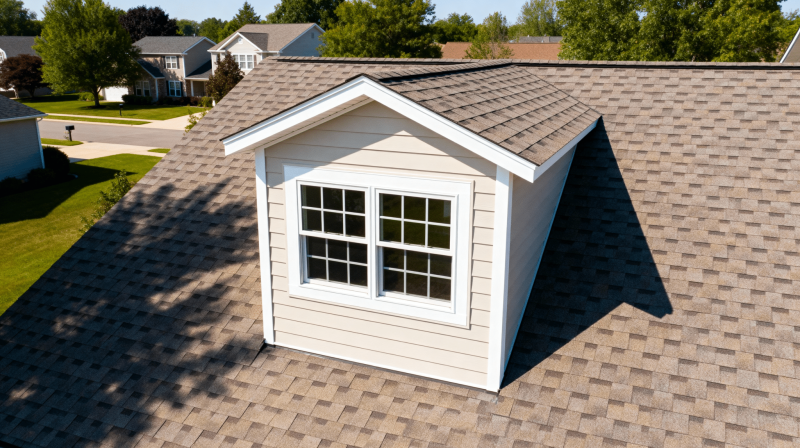
This is the classic dormer you see everywhere. It has a peaked roof with two sloping sides that meet at a ridge.
The front wall sits perpendicular to your main roof. Gable dormers work well in traditional neighborhoods and add notable headroom inside your attic space.
Perfect for creating a full-height bedroom or home office in your attic conversion.
2. Shed Dormer
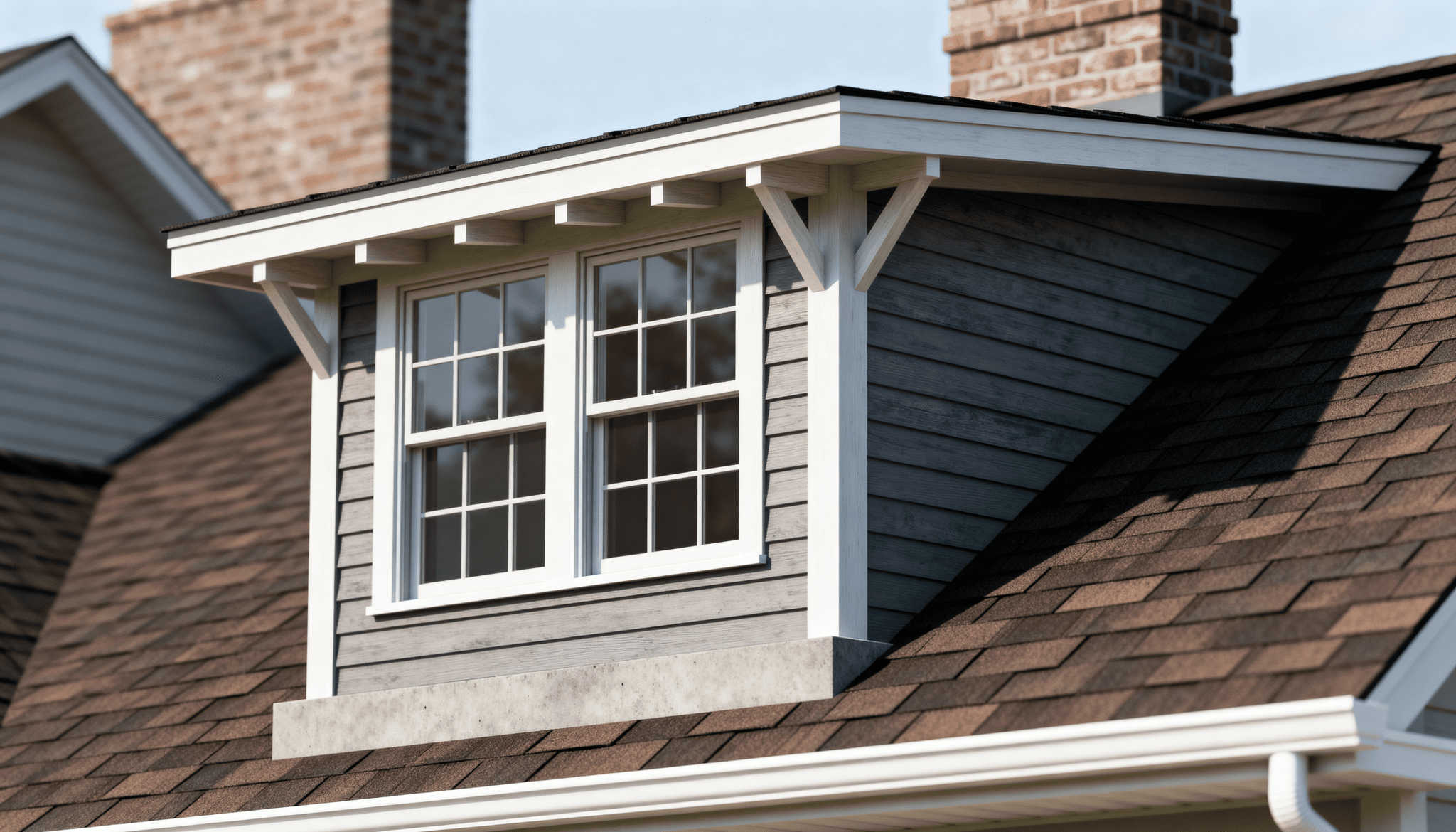
A shed dormer has a single sloping roof that extends from your main roofline.
It’s longer and wider than most other types. This design gives you the most interior space for your money. Shed dormers often span the entire length of your roof.
Ideal for bathroom additions where you need maximum floor space and standing room.
3. Hipped Dormer
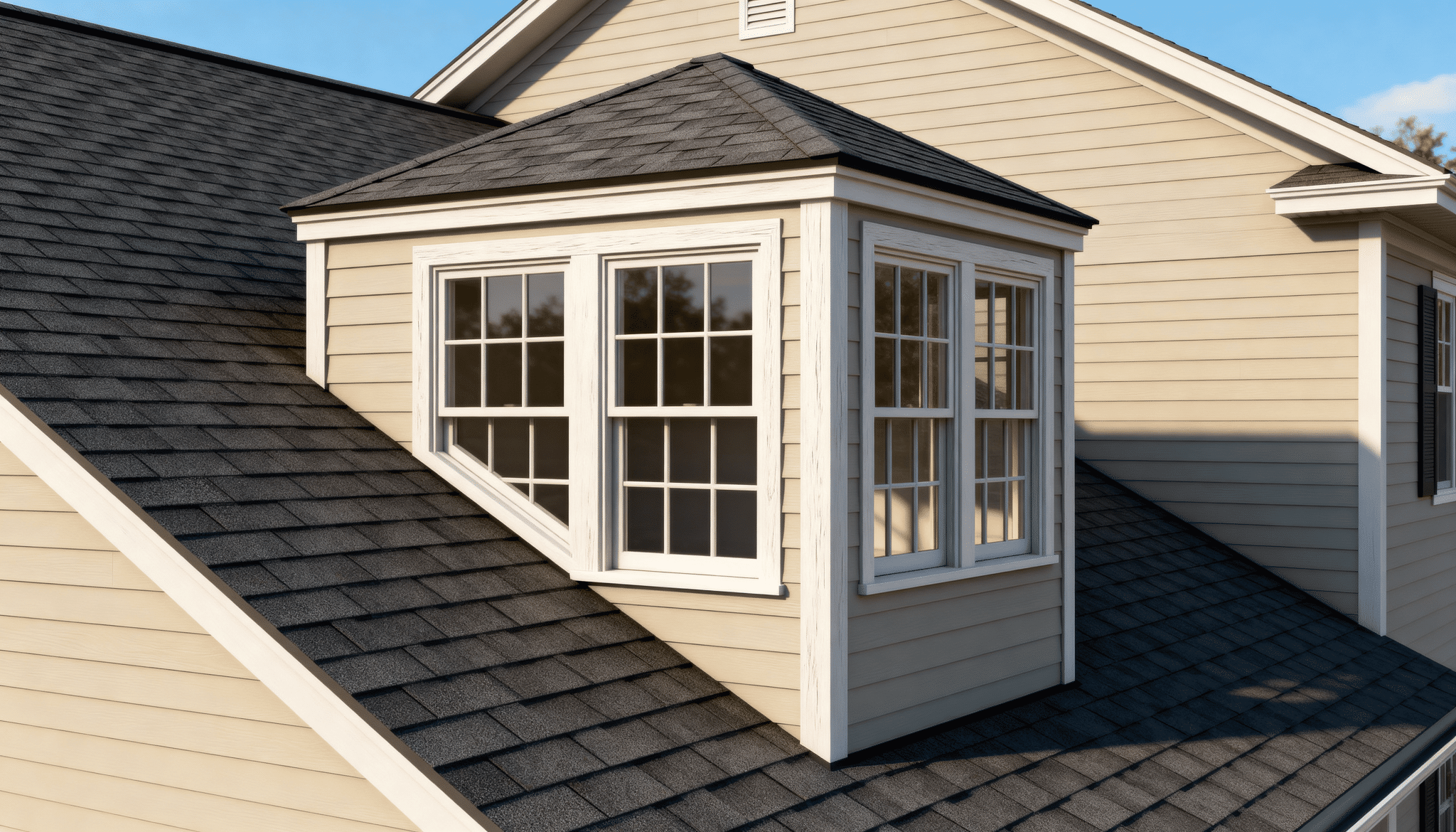
The hipped dormer has three sloping roof planes instead of two. The sides and front all slope inward to meet at the top. This creates a pyramid-like appearance.
Hip dormers handle weather better than gable types because water runs off all sides.
Great for formal dining rooms or master suites in Colonial-style homes.
4. Eyebrow Dormer
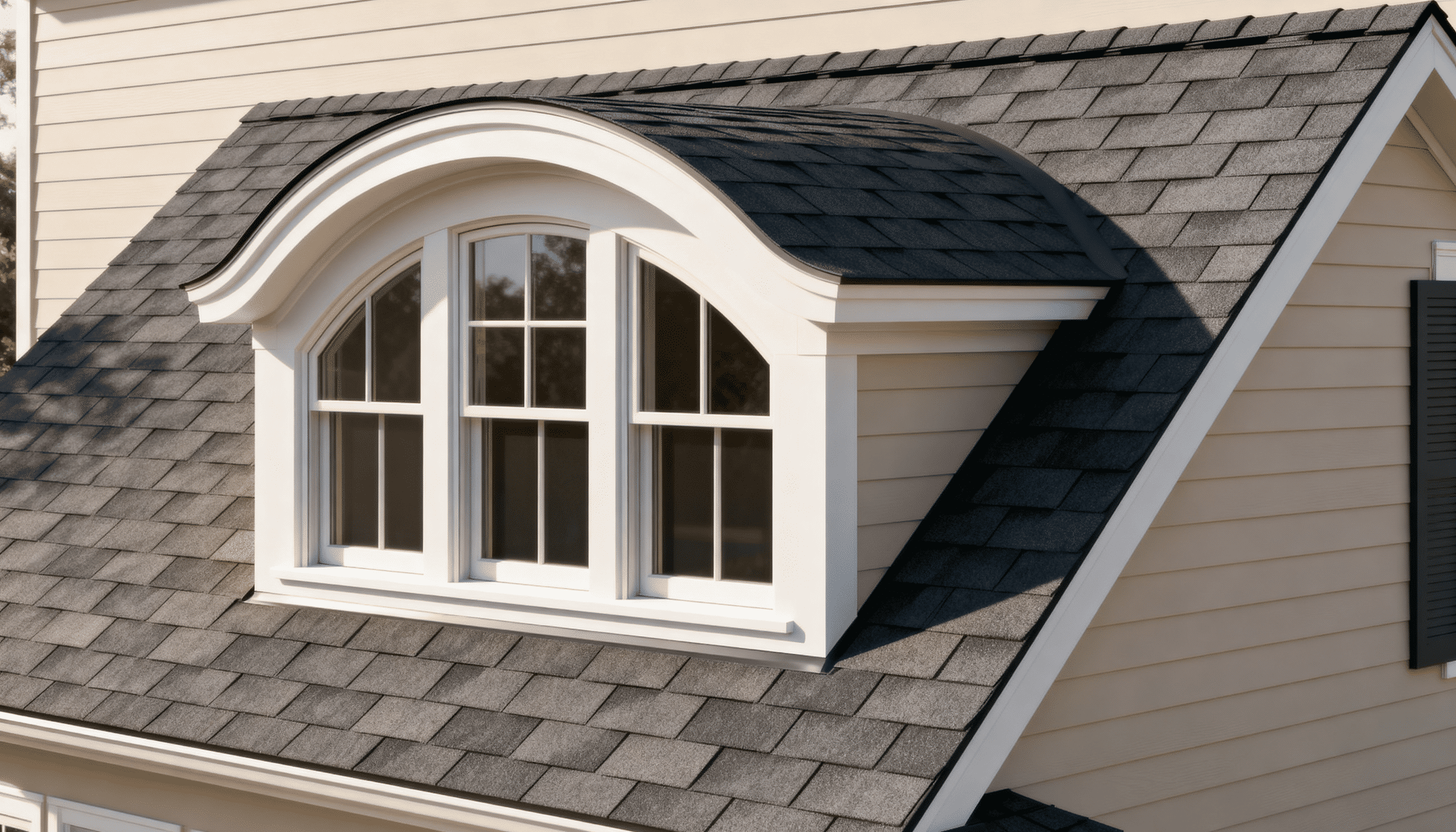
This small, curved dormer creates a gentle wave in your roofline. It has no sides, just a rounded bump with a window.
Eyebrow dormers add character without meaningful structural changes. They’re more about looks than adding usable space inside.
Adds vintage charm to reading nooks or cozy window seats in historic homes.
5. Wall Dormer
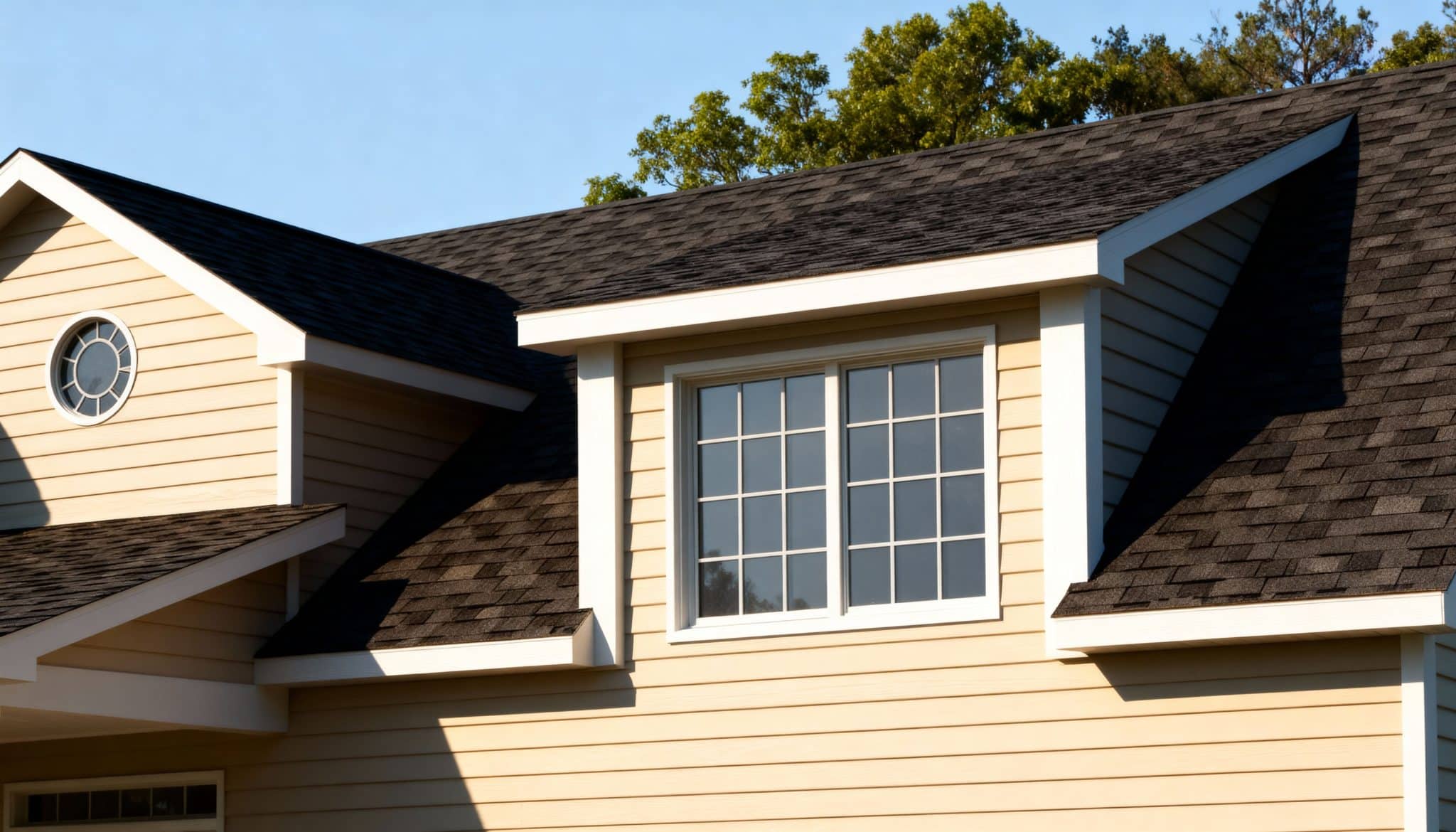
A wall dormer sits on an exterior wall. Breaking through the roof slope. It rises straight up from the wall below.
This type creates an entire additional story instead of just popping out from the roof. Wall dormers are the most important commitment.
Best for complete floor additions when you want full-sized rooms with standard ceiling heights.
6. Flat Roof Dormer
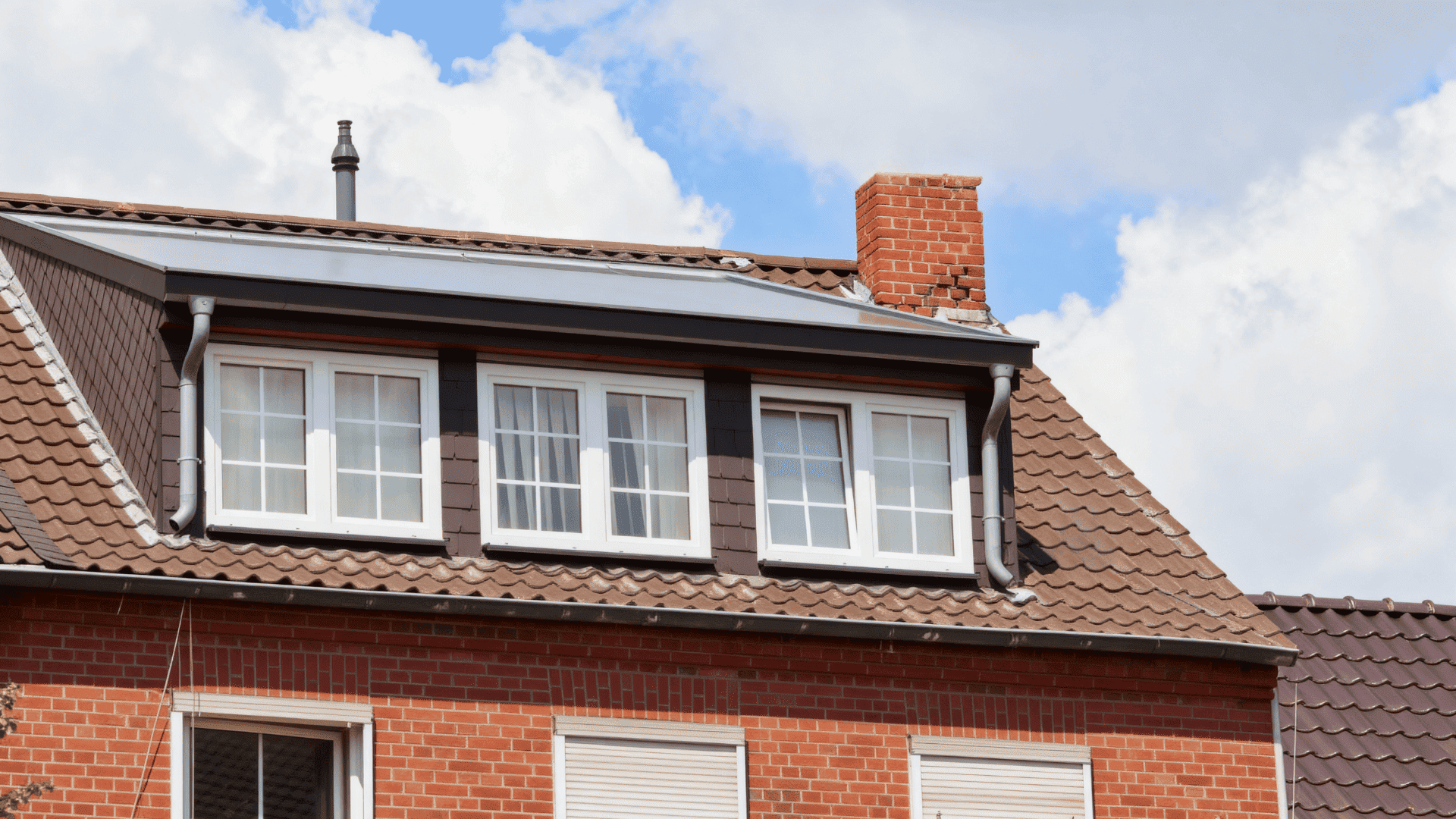
This dormer has an entirely flat or nearly flat top. The roof has just enough pitch to drain water. Flat roof dormers look modern and boxy.
They’re common in stylish architecture where clean lines matter more than traditional styling.
Works well in modern home gyms or studio spaces with modern decor.
7. Segmental Dormer
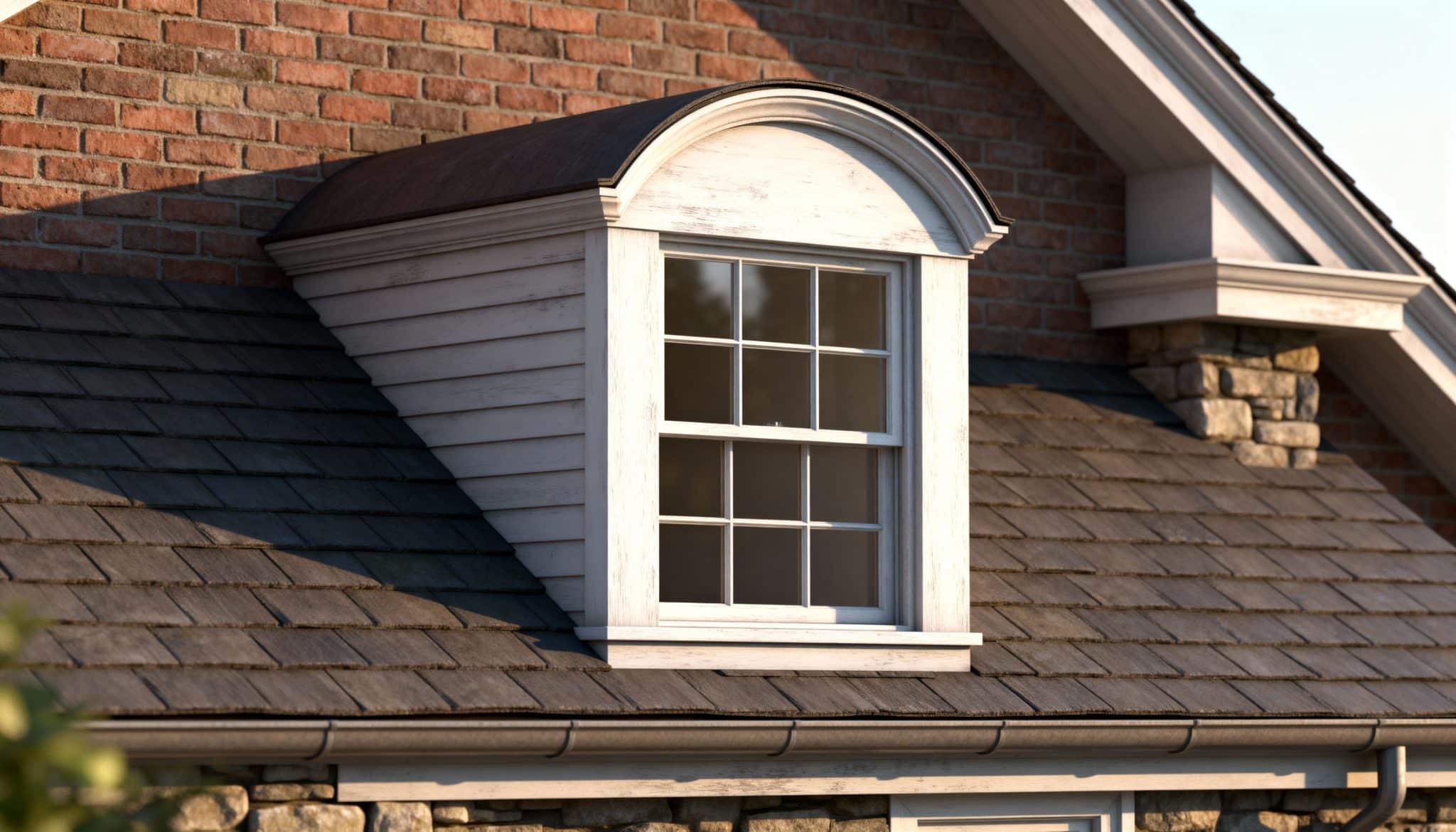
The segmental dormer features a curved, barrel-shaped roof. Think of it as a stretched archway.
The curve is gentler than an eyebrow dormer and covers more area. This style softens the roofline while still adding functional space inside your attic.
Creates a luxury nursery or craft room with a softer, less angular feel.
8. Pointed Dormer
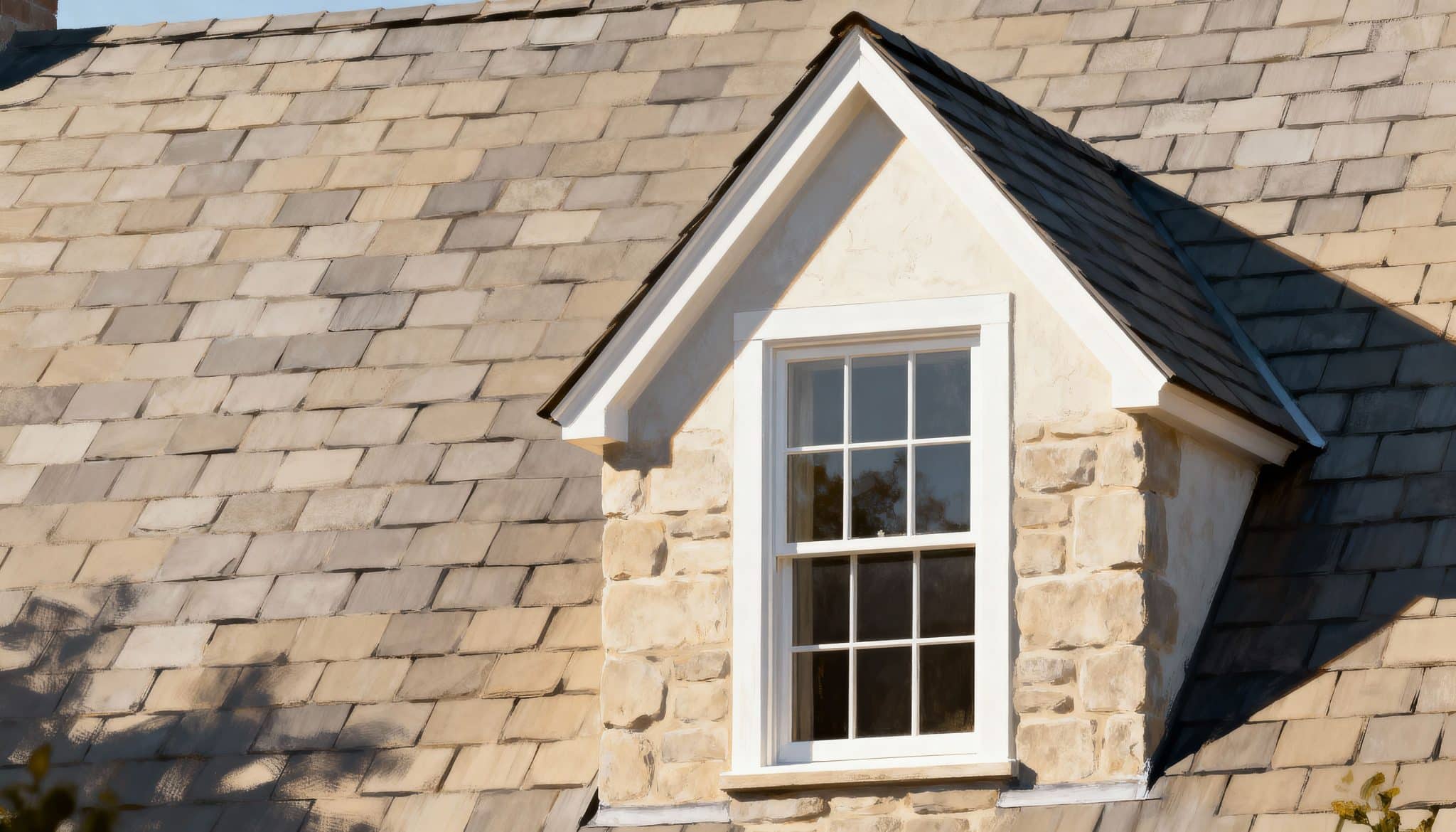
Also called a Gothic dormer, this type has a steeply pitched roof that comes to a sharp point.
The sides meet at a dramatic angle, creating a church-like appearance. Pointed dormers make a bold architectural statement and suit older home styles.
Adds dramatic flair to libraries or music rooms in Victorian or Gothic Revival homes.
9. Link Dormer
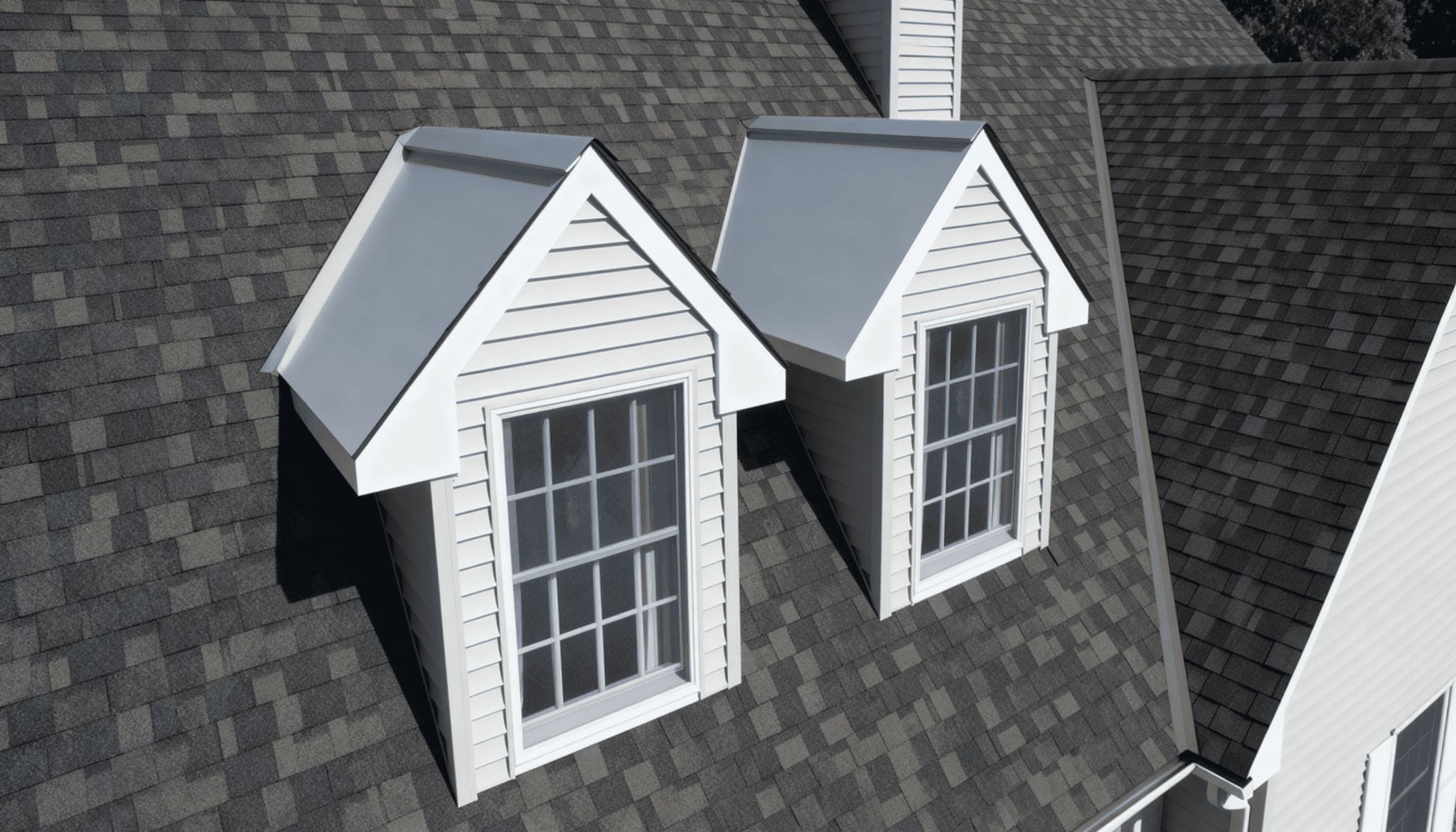
A link dormer connects two separate dormers with a flat or low-pitched roof section.
The linking section sits lower than the dormer peaks on either side. This creates a unified look when you need multiple windows across your roofline.
Perfect for creating symmetrical light sources in long hallways or extended bedroom suites.
10. Bonneted Dormer
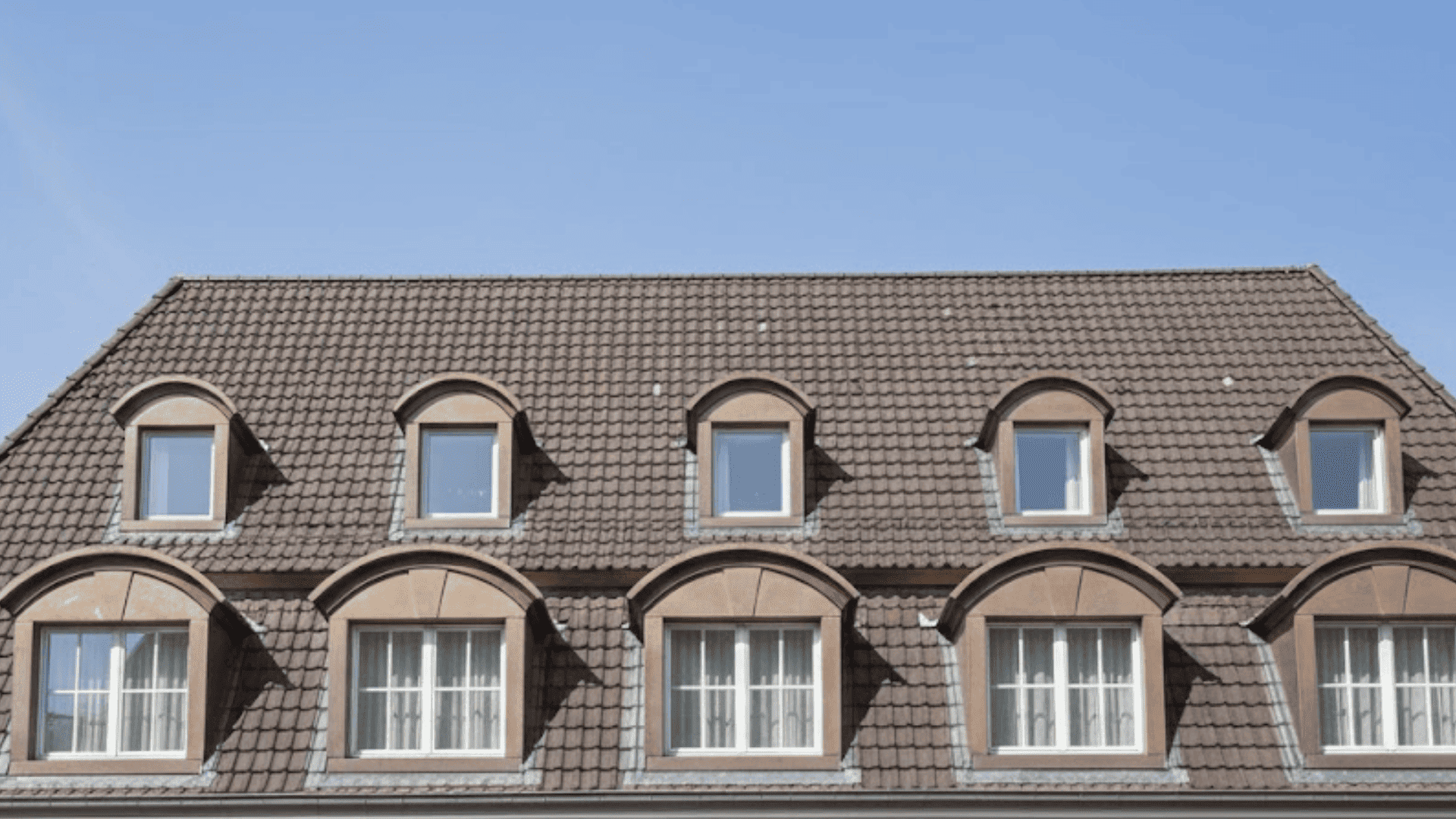
This dormer has a roof that curves down and extends beyond the window face. It looks like a bonnet or hood hanging over the window.
The extended overhang provides extra weather protection. Bonneted dormers have a distinctive, old-world appearance.
Adds rural character to artist studios or workshops where natural light matters but rain protection is crucial.
11. Recessed Dormer
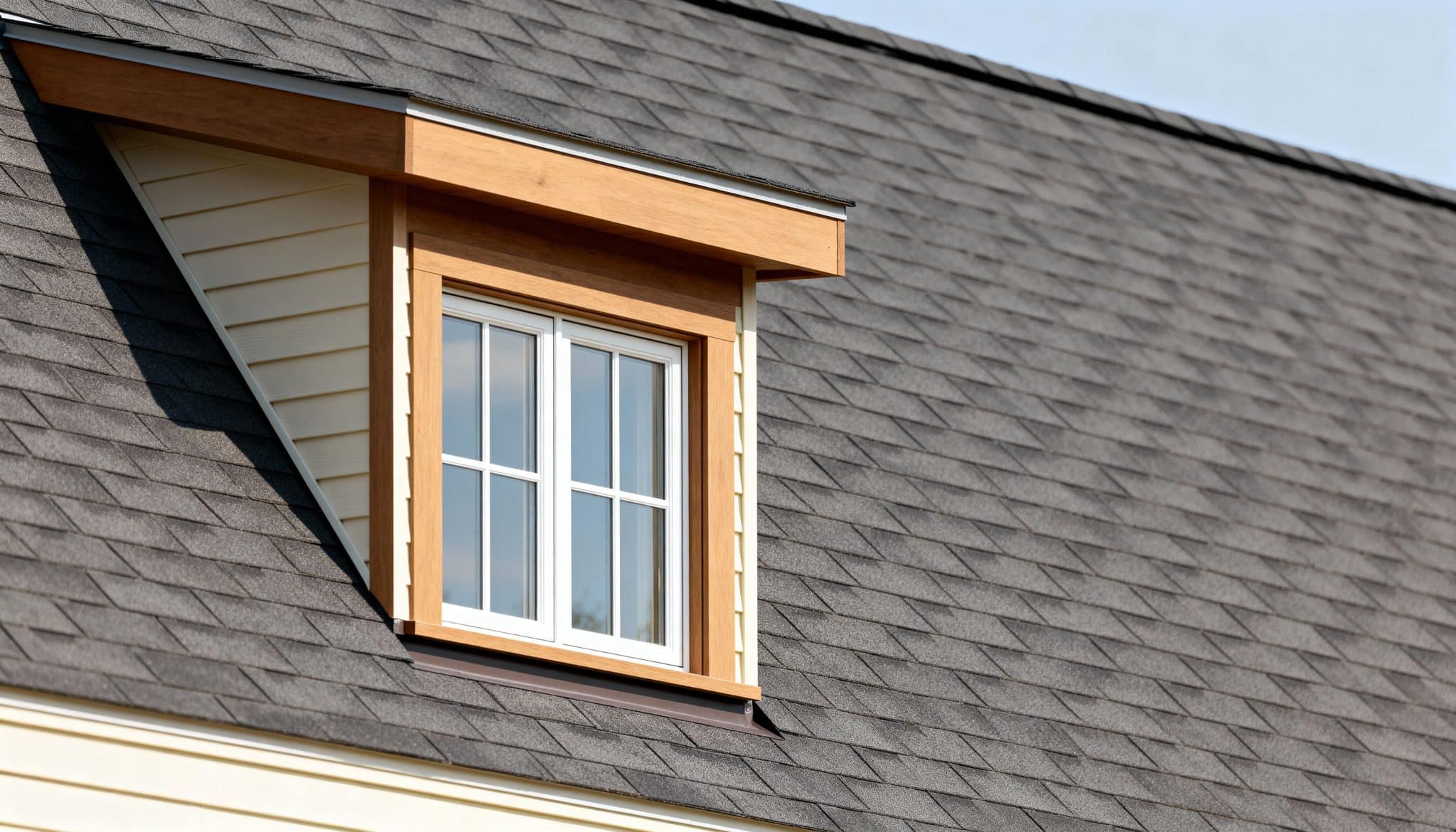
Instead of projecting outward, a recessed dormer sits back into the roof plane.
The window is set deeper than your main roofline. This subtle approach maintains your home’s profile while still bringing in light. Recessed dormers don’t add interior space.
Provides natural lighting for storage areas or walk-in closets without changing your home’s exterior silhouette.
12. Nantucket Dormer
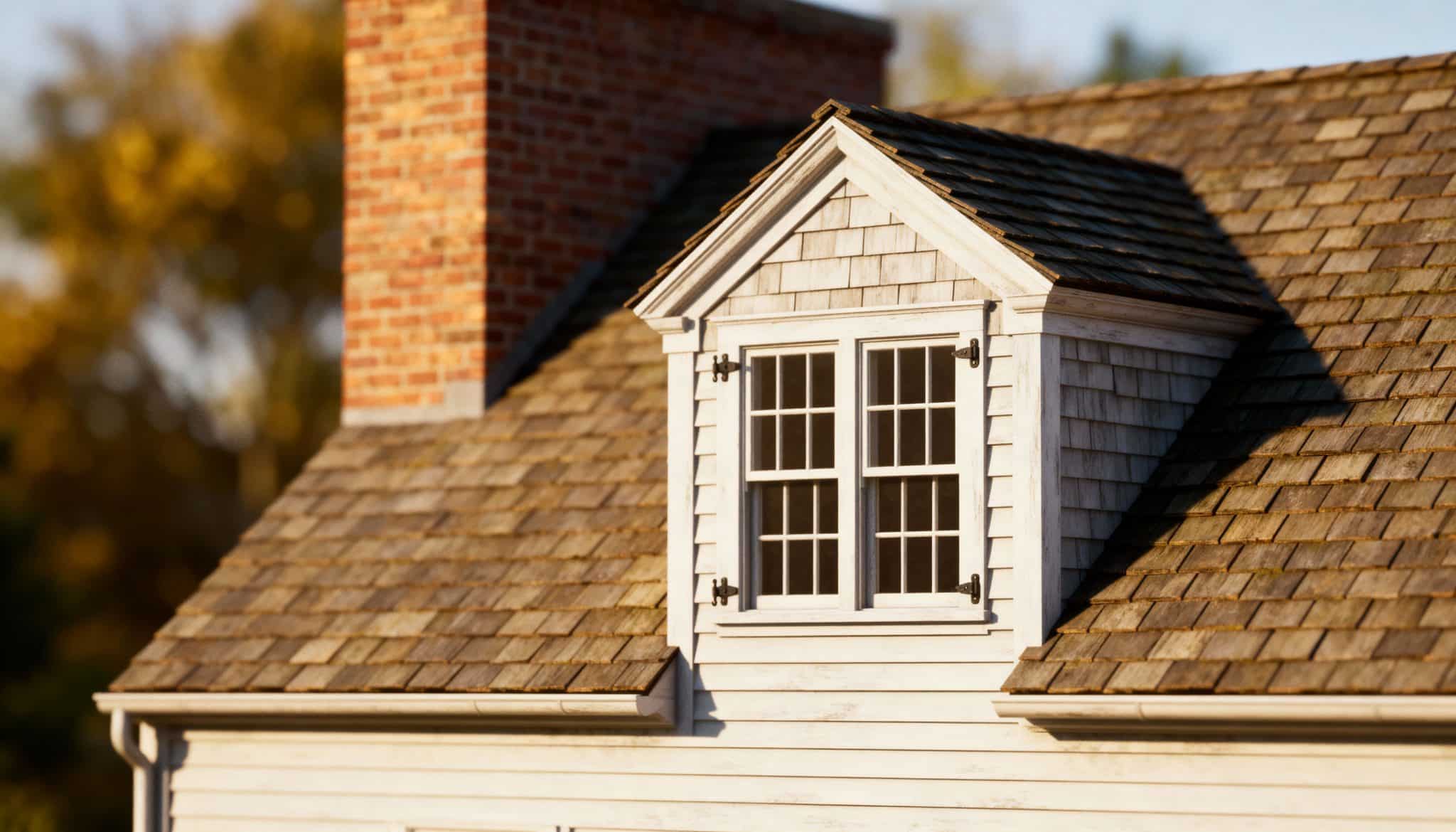
This large shed-style dormer typically spans most of your roof’s width. It sits high on the roof slope and has a steep pitch.
Nantucket dormers are named after the Massachusetts island where they’re common. They maximize attic space in coastal homes.
Creates spacious guest suites or rental units in vacation properties near water.
13. Pedimented Dormer
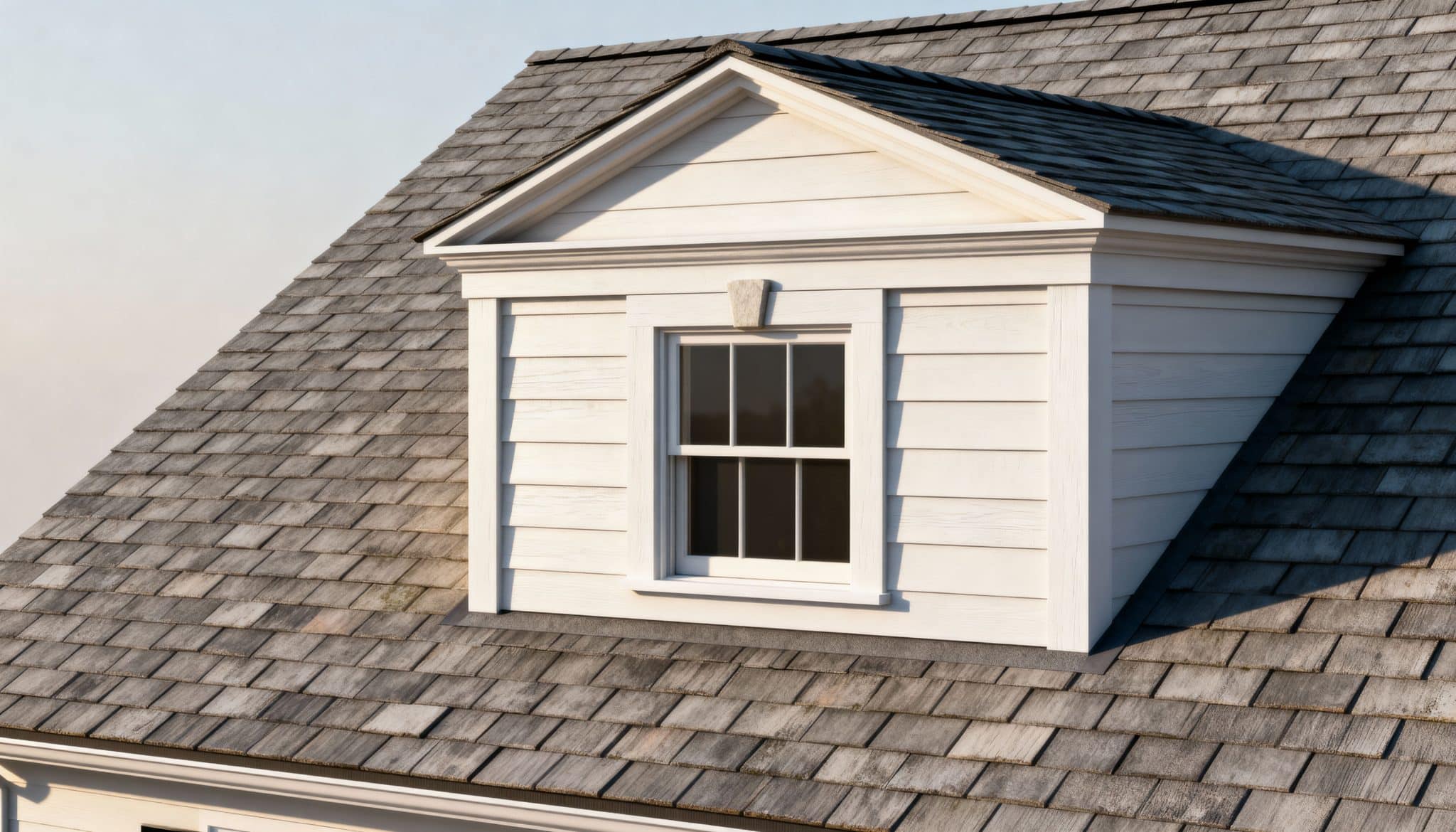
A pedimented dormer features a triangular decorative element above the window. This pediment mimics classical architecture, as you’d see on Greek temples.
The ornamental top adds formality. These dormers work best on upscale or historically inspired homes.
Improves formal sitting rooms or luxury master closets in estate-style properties.
14. Arched Top Dormer
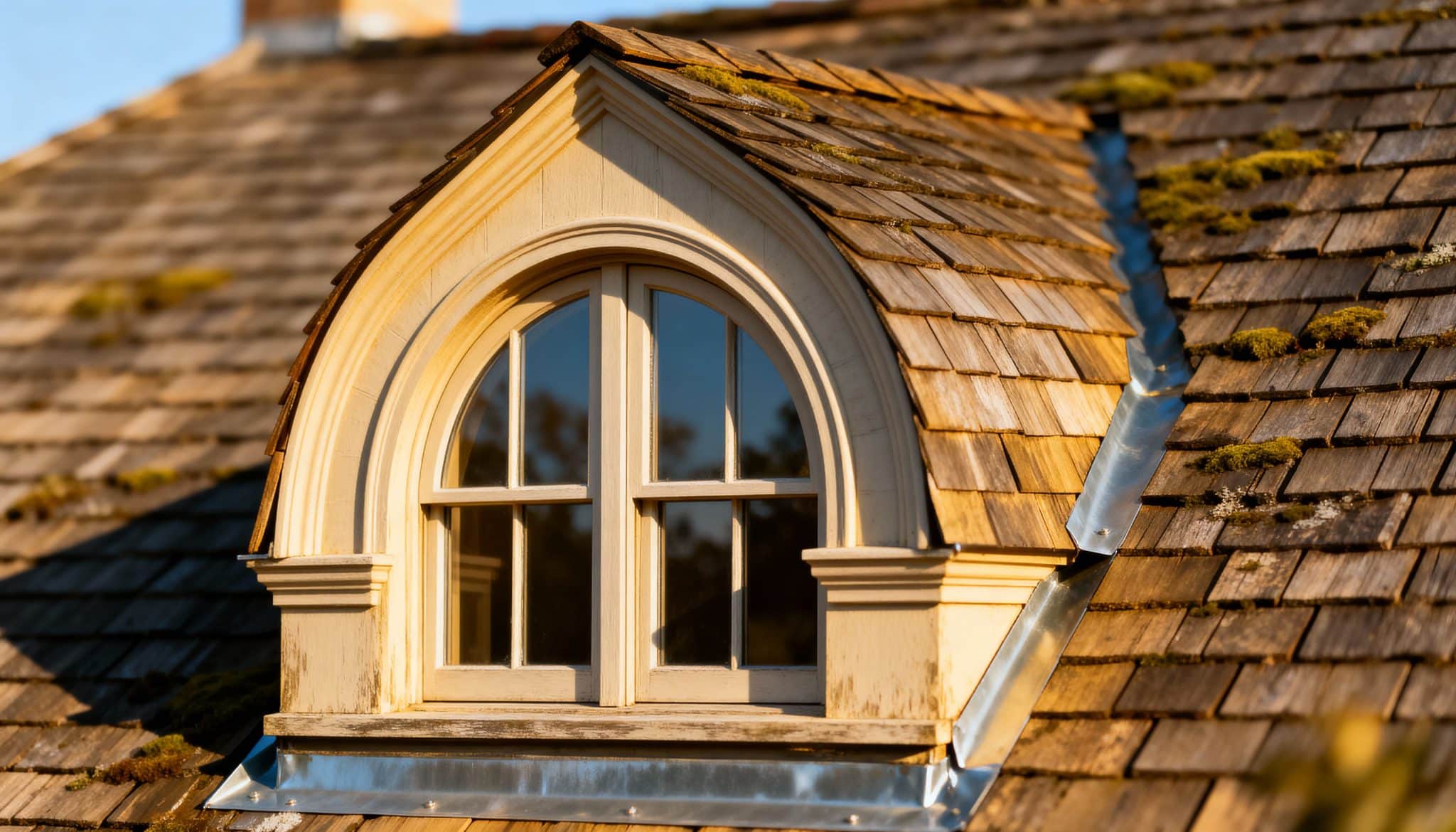
The window itself has an arched or rounded top in this design. The dormer structure might be gable or shed style, but the window shape is the defining feature.
Arched windows add polish and bring in light from a wider angle than rectangular windows.
Creates an inviting atmosphere in meditation spaces or prayer rooms with spiritual energy.
15. Dormer Bay
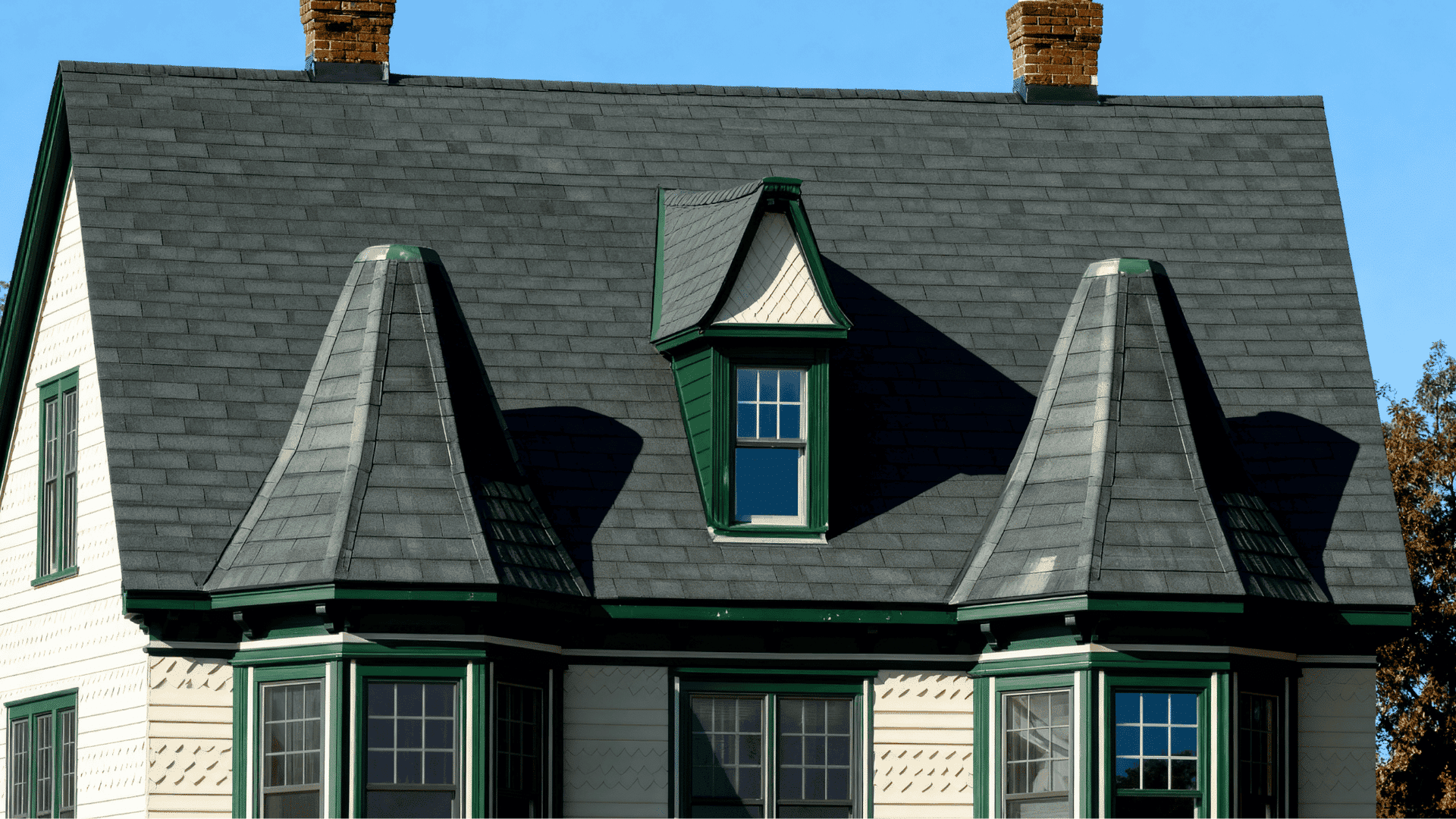
This combines dormer and bay window concepts. The dormer projects out with angled sides, like a bay window turned vertical on your roof.
It creates a small alcove inside. Dormer bays offer panoramic views and interesting interior angles.
Perfect for breakfast nooks or window seat reading areas with views in multiple directions.
16. Lucarne Dormer
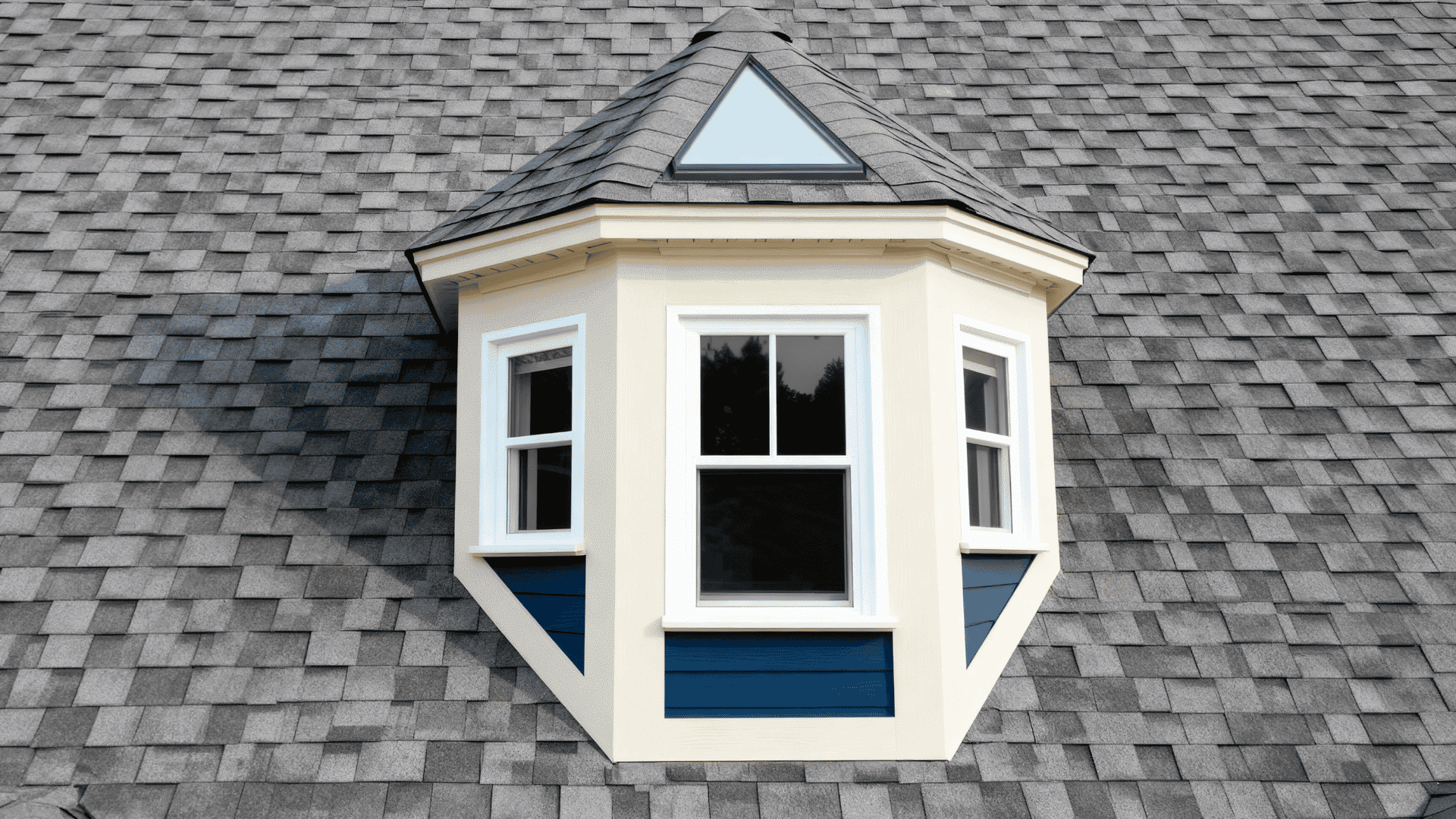
A lucarne is a small, often ornate dormer common in French architecture. It’s usually narrow with decorative elements around the window.
Lucarnes prioritize look over function. They add complexity without requiring major structural work.
Brings European grace to dressing rooms or vanity areas in boutique-style bedrooms.
17. Inset Dormer
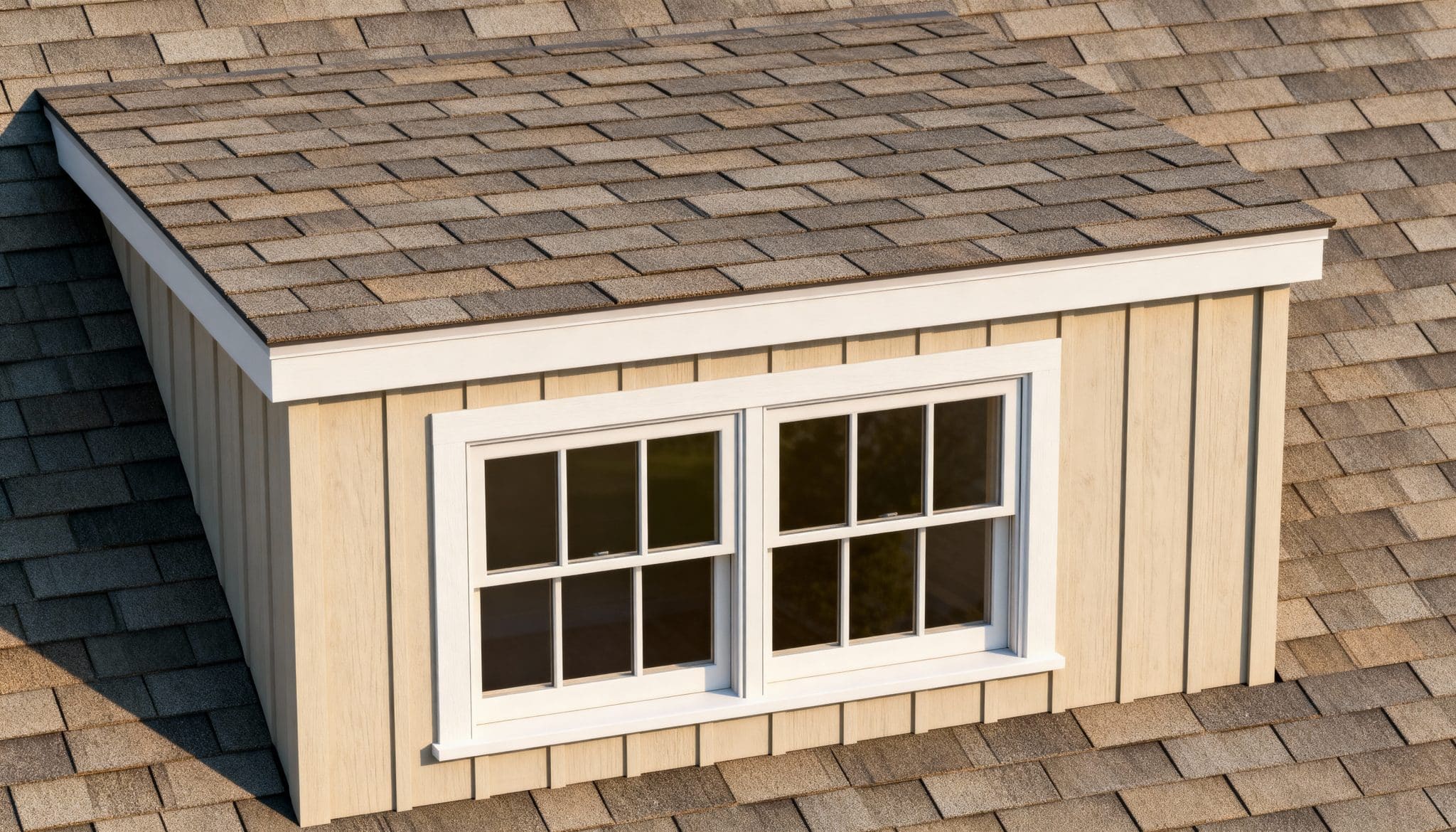
An inset dormer cuts into the roof without projecting outward or sitting in a recess.
The window sits flush with a portion of the roof that’s been built up. This creates a pocket of space while maintaining a relatively flat roofline appearance.
Ideal with adding skylights and ventilation to enclosed staircases or small powder rooms.
Mistakes to Look Out For
- Choosing a dormer style that clashes with your home’s architecture.
- Skipping the permit process to save time and money.
- Hiring the cheapest contractor without checking their references.
- Ignoring your roof’s structural limitations and load capacity.
- Installing a dormer that blocks your neighbor’s views or sunlight.
- Making the dormer too small to be functionally sound.
- Not matching the exterior materials to your existing roof.
- Not budgeting extra for unexpected structural issues discovered during work.
Final Thoughts
You’ve now got a reliable knowledge of types of dormers and how they work. Each type serves a specific purpose. The key is matching the dormer to your actual needs. Don’t pick based on looks alone.
Think about how you’ll use that extra space. Consider what your roof can handle structurally.
Get three quotes from licensed contractors. Ask to see their previous dormer projects.
Do check references before you commit to anything.