
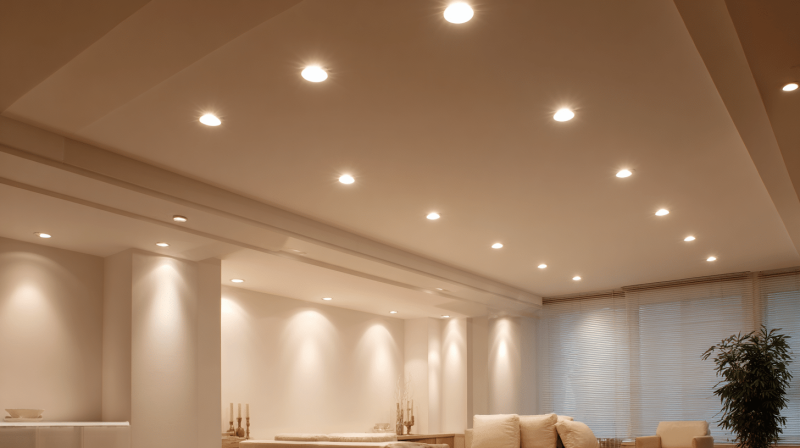
You know those lights that tuck into your ceiling instead of hanging down?
That’s recessed lighting.
People love them because they make rooms feel cleaner and more open without bulky fixtures getting in the way.
If you’re wondering how much it costs to install recessed lighting, you’re not alone.
Well, it depends.
Your ceiling situation, the wiring you’ve got, and how many lights you want all change the price.
What is Recessed Lighting?
Before we dive into recessed lighting installation cost, let’s cover the basics of what you’re actually putting in your ceiling.
Recessed lighting goes by a few names: can lights, pot lights, or downlights.
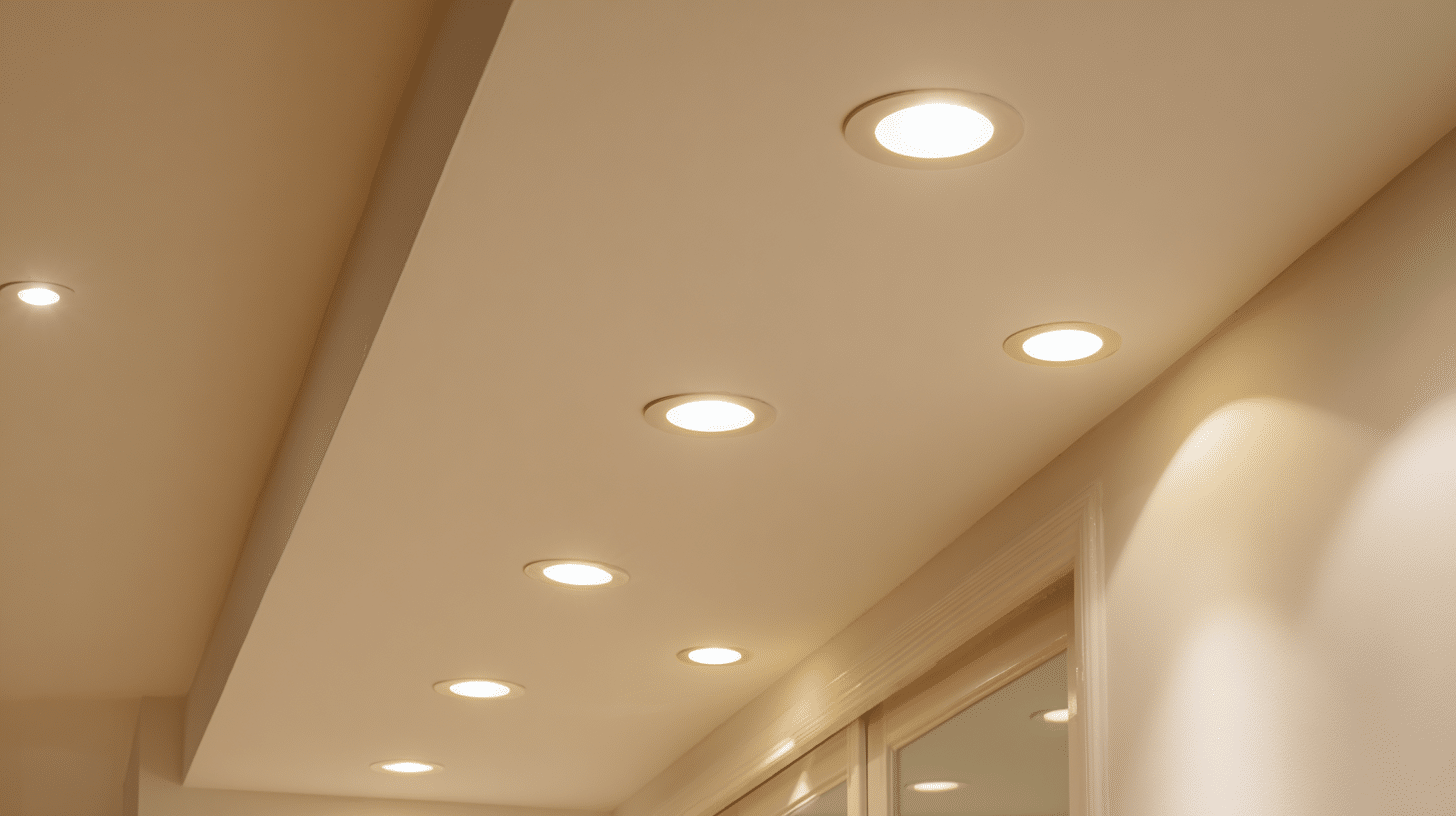
These fixtures sit inside your ceiling instead of hanging below it.
Each light has three main parts.
- The housing is the metal can that goes into the ceiling.
- The trim is the visible ring you see from below.
- And the bulb provides the actual light.
You’ll see these most often in kitchens for task lighting, living rooms for general brightness, and hallways to keep things lit without taking up space.
They’re practical and clean-looking, which is why people love them.
Average Recessed Lighting Installation Cost Breakdown
The total price isn’t just about buying lights and screwing them in.
Several pieces add up to your final bill, and knowing each one helps you see where your money goes.
1. Labor Costs
Electricians charge between $50 and $100 per hour, though rates vary by location.
An electrician might spend one to three hours per light, depending on the ceiling.
They’re cutting holes, running wiring, and making sure everything meets code. Replacing existing lights is faster since the holes and wiring are already there.
New installations mean more work and a bigger bill.
2. Materials & Fixtures
Basic recessed fixtures start around $15 to $30 each.
Mid-range options run $40 to $80.
Premium fixtures can hit $100 to $200 or more.
LED fixtures cost more upfront but save money long-term through lower electricity use and longer lifespan.
Simple white trims are cheap while fancy finishes or adjustable styles cost extra.
3. Electrical Work
If your room already has wiring nearby, the electrician taps into it.
But new electrical setups mean running wire from your panel, which includes opening walls or ceilings and installing junction boxes.
Adding dimmer switches costs $50 to $150 per switch.
And if your electrical panel can’t handle the extra load, you might need an upgrade that runs $1,000 to $3,000.
Not every project requires this, but it’s worth knowing upfront.
How Much Does It Cost to Install Recessed Lighting?
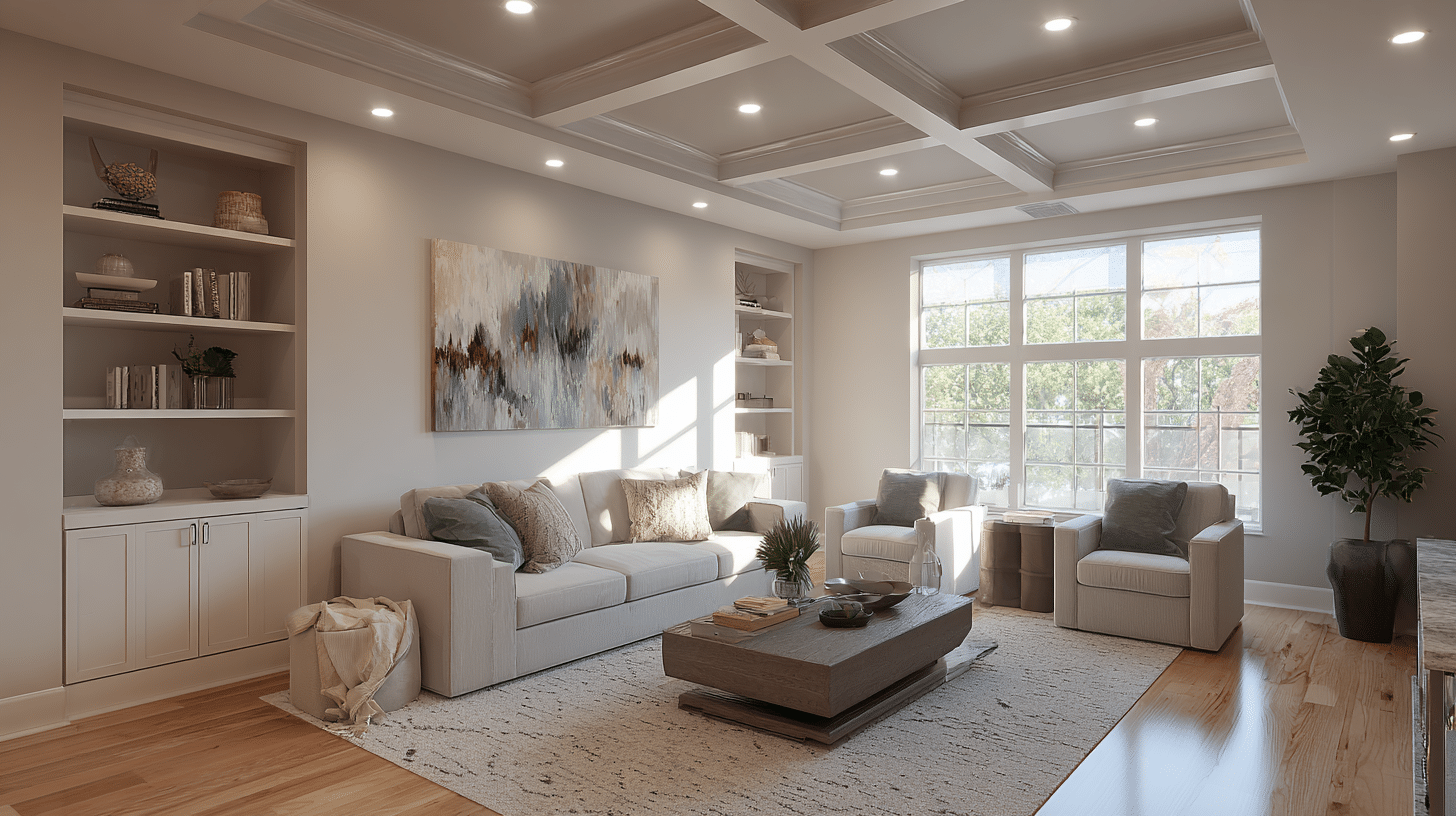
Let’s look at what people actually pay for recessed lighting projects.
1. Per Light Costs
Installing a single recessed light typically runs $100 to $300 when you include both the fixture and labor.
Some professional estimates put it higher at $380 to $529 per light for 2026, especially in areas with higher labor rates or trickier ceiling situations.
The wide range depends on your specific setup and the quality of fixtures you choose.
2. Real Project Examples
A six-light kitchen installation usually costs $700 to $1,650 total.
Standard living room projects with four to six lights fall between $800 and $2,000.
Whole-home installations get pricier fast, running $2,000 to $8,000 or more when you add up multiple rooms, extensive wiring work, dimmer switches, and premium fixtures.
3. What’s Actually Included?
Your quote covers the fixtures and trims (the visible parts), labor from licensed electricians who install everything safely and to code, and materials like wiring, junction boxes, and connectors.
Keep in mind that permit fees, drywall repairs, and painting usually cost extra on top of these numbers.
| Cost Type | Typical Range |
|---|---|
| Per light installation | $100 – $300+ |
| Higher estimate per light | $380 – $529 |
| 6-light project total | $700 – $1,650 |
| Larger whole-home projects | $2,000 – $8,000+ |
How to Calculate Recessed Lighting Installation Costs
Figuring out what you’ll spend isn’t complicated once you know the formula.
Start by deciding how many lights you need, then add up the costs for each piece of the project.
The basic breakdown: (Number of lights × fixture cost) + (Number of lights × labor per fixture) + electrical work + permits = your total cost.
Let’s walk through a real example.
Say you want to add six recessed lights to your living room. You pick mid-range LED fixtures at $60 each. Your electrician charges $150 per light for installation. You need one new circuit for $300 and a permit for $100.
The math looks like this:
- Fixtures: 6 lights × $60 = $360
- Labor: 6 lights × $150 = $900
- Electrical work: $300
- Permit: $100
- Total: $1,660
That breaks down to about $277 per light when you factor in everything.
Quick tip: Get quotes from at least three electricians since rates can vary by $50 or more per fixture. Ask about bulk discounts, too, as many pros lower the per-unit price for larger jobs.
Factors That Can Increase or Decrease the Total Cost
A lighting upgrade can change how your home looks and feels, but the final price depends on several things.
These nine factors will help you figure out what you’re really paying for.
1. Housing Type
Your ceiling’s insulation determines which housing you need.
IC-rated housing ($6 to $81) works safely with insulation since it’s designed to handle the heat without creating fire risks.
Non-IC-rated housing ($5 to $73) costs less but only works in ceilings without insulation, and you need to leave space around it for heat to escape.
Some specialized options solve specific problems:
- Airtight housings ($8 to $90) seal gaps to stop air leaks between floors and save energy
- Shallow versions ($8 to $122) fit in tight ceiling spaces where standard cans won’t work
- Canless designs ($13 to $106) attach directly to the ceiling for a super flush look
- Wet-rated fixtures ($16 to $81) handle moisture in bathrooms and outdoor areas
- Vaulted ceiling models ($16 to $62) angle properly on sloped ceilings so light points down
2. Ceiling Material
What your ceiling is made of changes how hard the job is.
Drywall is the easiest and cheapest to cut through.
Textured or special finishes need careful cutting to avoid messing up the look, which adds 30% to 40% more labor time.
Hard materials like wood or concrete require special tools and can double or triple your labor costs.
3. Trim Type
The trim is the ring you see around each light. It affects both style and function.
| Trim Type | Cost | Purpose |
|---|---|---|
| Baffle | $5 – $65 | Reduces glare |
| Reflector | $8 – $57 | Amplifies brightness |
| Shower | $8 – $73 | Waterproof |
| Eyeball | $13 – $73 | Adjustable direction |
| Decorative | $24 – $81 | Stylish finishes |
4. Bulb Type
Different bulbs have different upfront costs and energy use over time.
| Bulb | Cost | Details |
|---|---|---|
| Incandescent | $1 – $5 | Warm light but uses lots of energy |
| Halogen | $3 – $13 | Bright white light, more efficient |
| CFL | $2 – $13 | Cooler light, decent efficiency |
| LED | $5 – $41 | Lasts longest, uses least energy |
| R and PAR | $5 – $21 | Focuses light on specific spots |
| Smart | $13 – $49 | Control with your phone or voice |
5. Wiring and Electrical Work
Your home’s existing wiring matters.
Newer homes typically have aluminum wire that costs $0.21 to $0.48 per foot.
Older homes have copper wire at $0.43 to $1.02 per foot.
You can’t mix the two types because it creates fire hazards, so electricians match whatever you already have.
6. Light Location
Where you instate the lights affects the difficulty.
Bathrooms cost more ($224 to $591) because of tight spaces and moisture requirements. Kitchens run $203 to $530 due to cabinets and appliances.
Living rooms cost $163 to $530, especially with high ceilings.
Bedrooms are usually cheapest at $81 to $591 for straightforward layouts.
Rerouting around obstacles like ducts or joists adds about $163 per light.
7. Permits
Swapping out an existing fixture doesn’t need a permit.
Adding new wiring does.
Permits run $41 to $407, depending on your area and project size.
Your electrician handles the paperwork and knows what’s required locally.
8. Labor Costs
Professional electricians charge $163 to $203 per fixture or about $70 to $86 per hour.
Most installations take two to three hours per light.
Paying for skilled work prevents safety issues and guarantees a clean finish.
9. Finish Color
The trim color lets you match or contrast with your ceiling.
| Finish | Cost | Look |
|---|---|---|
| White | $5 – $16 | Blends with ceilings |
| Black | $8 – $21 | Modern contrast |
| Brushed Nickel | $13 – $33 | Contemporary style |
| Bronze | $16 – $41 | Rustic feel |
| Chrome | $16 – $37 | Polished shine |
Additional Installation Costs
Three more things can affect your final bill beyond the basic fixture prices.
Drywall Repairs: Cutting holes means patching, texturing, and painting afterward. Smooth ceilings are easy to fix. Textured ones need pattern matching that takes skill.
Expect $244 to $733 for ceiling restoration work.
Indoor vs. Outdoor: Outdoor lights ($244 to $448 per fixture) need weather protection with sealed connections and tougher materials.
Indoor lights ($81 to $391) use standard components since they’re protected from the elements.
Customization: Dimmer switches add $62 to $163 for brightness control. Wall panels that combine multiple controls run $41 to $1,221.
Complex layouts with precise positioning require extra labor hours and raise the total price.
DIY vs. Hiring a Professional
Installing recessed lights yourself can save money, but only in certain situations.
Swapping existing fixtures is manageable since the holes and wiring are already there.
New installations are a different story.
You’re cutting ceilings, running wire, and making electrical connections that could cause fires if done wrong.
You might hit hidden wiring, use the wrong housing near insulation, or create connections that overheat. If you mess up and need a pro to fix your mistakes, you’ll spend more than just hiring them from the start.
Professional electricians finish faster, spot problems early, and warrant their work.
They pull permits, follow codes, and handle inspections, which protects you during home sales since buyers check electrical modifications.
Final Thoughts
Recessed lighting installation cost typically runs $100 to $500 per fixture, depending on your home’s setup and the choices you make.
The upfront investment might seem steep, but proper lighting changes how your space looks and functions every single day.
Get multiple quotes, ask about your specific ceiling situation, and don’t skip permits to save a few bucks.
Reach out to local electricians for estimates and see what your project will actually cost.