
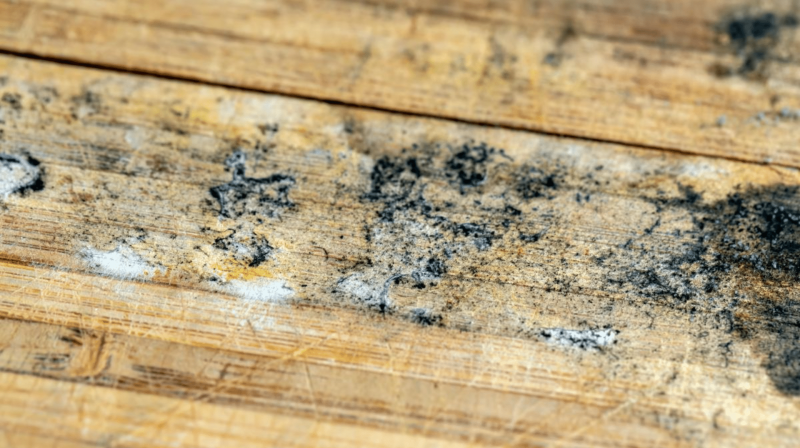
Mold ruins wood furniture.
You spent good money on that bookshelf or dining table. Now fuzzy patches are spreading across the surface.
The smell is musty, your health is being affected, and you’re worried about what this means for your family’s health.
Mold doesn’t just appear randomly. Specific conditions must exist for it to grow on wood. Once you know these triggers, you can stop mold before it starts.
This blog will tell you why mold appears on wood furniture, how to remove and prevent it, and what makes certain pieces more vulnerable than others.
Why is Mold a Problem?
Mold on wood furniture isn’t just ugly. It damages your pieces and affects your health. Knowing why it happens helps you stop it before serious problems develop.
Health Risks
Mold releases spores into the air you breathe. These spores trigger allergies, asthma attacks, and respiratory issues.
Some molds produce toxins that cause headaches and fatigue. People with weak immune systems face even greater risks from mold exposure at home.
Furniture Damage
Mold eats away at wood fibers over time. It weakens the structure of your furniture and leaves permanent stains.
The wood becomes soft and crumbly. Eventually, the piece may fall apart completely. Restoration costs more than prevention in most cases.
Spreads Quickly
Mold grows fast once it finds the right conditions. A small spot can cover an entire surface within days.
The spores travel through the air to other furniture and walls. One infected piece can lead to mold problems throughout your home
Reduces Property Value
Homes with mold problems sell for less money. Buyers avoid properties with visible mold or musty smells.
Real estate agents must disclose mold issues during sales.
The cost of professional mold removal adds up quickly. Your investment in furniture and property suffers when mold takes hold.
Unpleasant Odor
Mold creates a musty smell that lingers in rooms.
The odor gets into fabrics, carpets, and other furniture. Air fresheners only mask the problem temporarily.
Guests notice the smell immediately when they enter. Getting rid of the odor requires removing the mold source completely.
Methods to Remove Mold from Wood
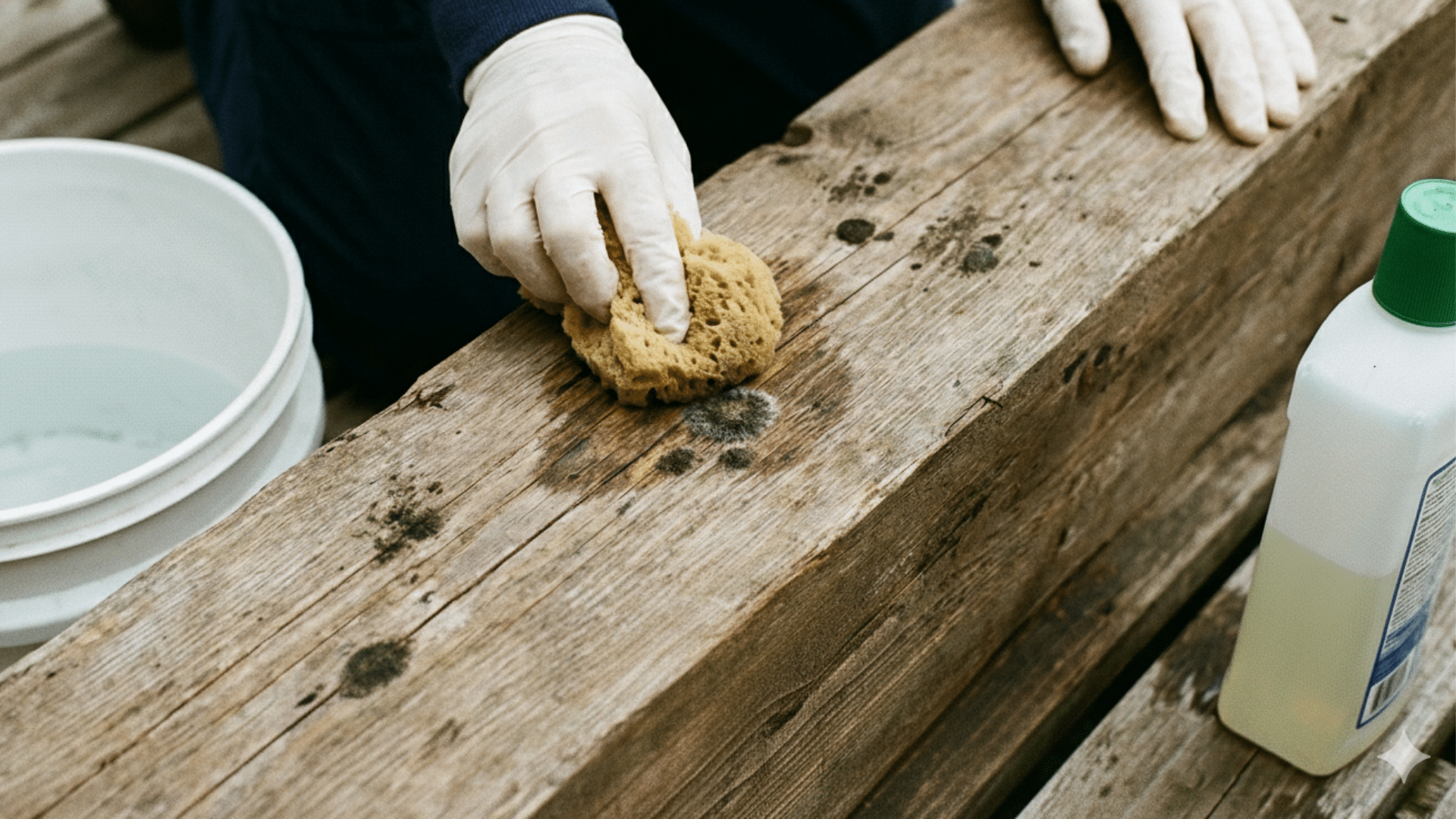
Removing mold from wood furniture requires the right approach and materials.
Different cleaning methods work for different mold severities. Choose a method based on how deeply the mold has affected your furniture.
1. Baking Soda Paste
Baking soda is gentle on wood while killing mold effectively. This natural cleaner doesn’t harm finishes or release toxic fumes. It works well for light to moderate mold growth on furniture surfaces.
Step 1: Prepare the paste
Mix three parts baking soda with one part water in a bowl. Stir until you get a thick, spreadable consistency.
The paste should stick to vertical surfaces without dripping off immediately.
Step 2: Apply to moldy areas
Use a soft cloth or sponge to spread paste over mold spots. Cover all visible mold completely with a generous layer.
Let the paste sit on the wood for fifteen to twenty minutes.
Step 3: Scrub gently
Take a soft-bristled brush and scrub the paste in circular motions. Apply light pressure to avoid scratching the wood finish.
Work the paste into crevices and textured areas where mold hides.
Step 4: Wipe clean
Remove the paste using a damp cloth with clean water. Rinse the cloth frequently to avoid spreading spores around.
Make sure no paste residue remains on the wood surface.
Step 5: Dry thoroughly
Use a dry towel to absorb all moisture from the wood. Leave furniture in a well-ventilated area for several hours.
Complete drying prevents new mold from forming in the same spot.
2. White Vinegar Treatment
White vinegar kills up to eighty percent of mold species naturally. Its acidic nature breaks down mold without damaging most wood finishes.
This method suits regular maintenance and moderate mold problems on furniture.
Step 1: Pour vinegar into the spray bottle
Fill a clean spray bottle with undiluted white vinegar. Don’t mix vinegar with water, as full-strength works best.
Keep the bottle labeled to avoid confusion with other cleaning products.
Step 2: Spray affected areas
Apply vinegar generously to all moldy spots on the furniture. Saturate the area completely so vinegar penetrates the wood fibers.
Don’t wipe immediately after spraying to allow proper contact time.
Step 3: Let it sit
Allow vinegar to work on the mold for at least one hour. For stubborn mold, leave it for two to three hours instead.
The acid needs time to kill mold roots below the surface.
Step 4: Scrub the surface
Use a brush or rough cloth to scrub away dead mold. Work in the direction of the wood grain to prevent damage.
Pay extra attention to corners and joints where mold accumulates.
Step 5: Rinse and dry
Wipe the area with a cloth dampened in plain water. Remove all vinegar smell and residue from the wood surface.
Dry completely with towels and ensure good air circulation around furniture.
3. Bleach and Water Solution
Bleach kills mold quickly and works on severe infestations. This powerful disinfectant whitens stains left by mold growth.
Use this method only on unfinished wood or furniture you plan to refinish later.
Step 1: Mix the solution
Combine one cup of bleach with one gallon of water. Mix in a well-ventilated area while wearing gloves and eye protection.
Never add other cleaners to this mixture, as dangerous fumes result.
Step 2: Test on a hidden spot
Apply the solution to an inconspicuous area of the furniture first. Wait ten minutes to check for discoloration or finish damage.
Bleach can ruin stains and varnishes on treated wood surfaces.
Step 3: Apply with a cloth
Dip a cloth into the bleach solution and wring out excess. Wipe moldy areas thoroughly with the dampened cloth only.
Avoid over-saturating wood as excess moisture causes more problems.
Step 4: Wait briefly
Let the bleach solution sit on the mold for five to ten minutes maximum. Don’t leave it longer, as bleach can lighten or damage wood.
Watch closely during this time for any adverse reactions on finish.
Step 5: Rinse multiple times
Wipe the area several times with clean water to remove bleach. Any bleach left behind will continue affecting the wood and finish.
Dry immediately and completely with absorbent towels to finish treatment.
Can You Remove Mold from Wood Floors and Ceilings Using the Above Methods?
Yes, these methods work on wood floors and ceilings too.
Baking soda paste and vinegar treatment are safe for most wooden surfaces throughout your home. However, floors require extra caution since excess moisture can seep between boards.
Apply cleaners sparingly and dry quickly to avoid water damage underneath. Ceiling mold often indicates roof leaks that need fixing first.
The bleach method works, but may discolor floor finishes and stains. Test any solution on a hidden spot before treating visible areas.
For large ceiling or floor mold problems, professional help ensures proper treatment without damaging structural wood.
Types of Mold
Different mold types grow on wood furniture. Each has unique characteristics and health effects.
Aspergillus
This common indoor mold appears in various colors, including green, yellow, and white. It thrives on wood surfaces in damp conditions.
Aspergillus causes respiratory infections and allergic reactions. People with asthma should avoid exposure to this type at all costs.
Penicillium
Penicillium grows as blue or green fuzzy patches on wood. It spreads quickly in humid environments and has a strong musty odor.
This mold type causes sinus infections and lung inflammation. It often appears on water-damaged furniture and releases airborne spores that travel easily throughout rooms.
Alternaria
Alternaria looks dark brown or black with a velvet-like texture. It commonly grows on wooden surfaces exposed to moisture.
This mold triggers severe allergic reactions and asthma symptoms.
Outdoor furniture brought inside often carries Alternaria spores that then colonize indoor wooden pieces near windows.
Stachybotrys Chartarum
Known as black mold, this type is the most dangerous. It appears slimy and dark greenish-black on wood surfaces
Stachybotrys produces mycotoxins that cause serious health problems, including memory loss.
This mold requires professional removal and indicates significant moisture problems in your home.
Common Signs of Mold on Wood
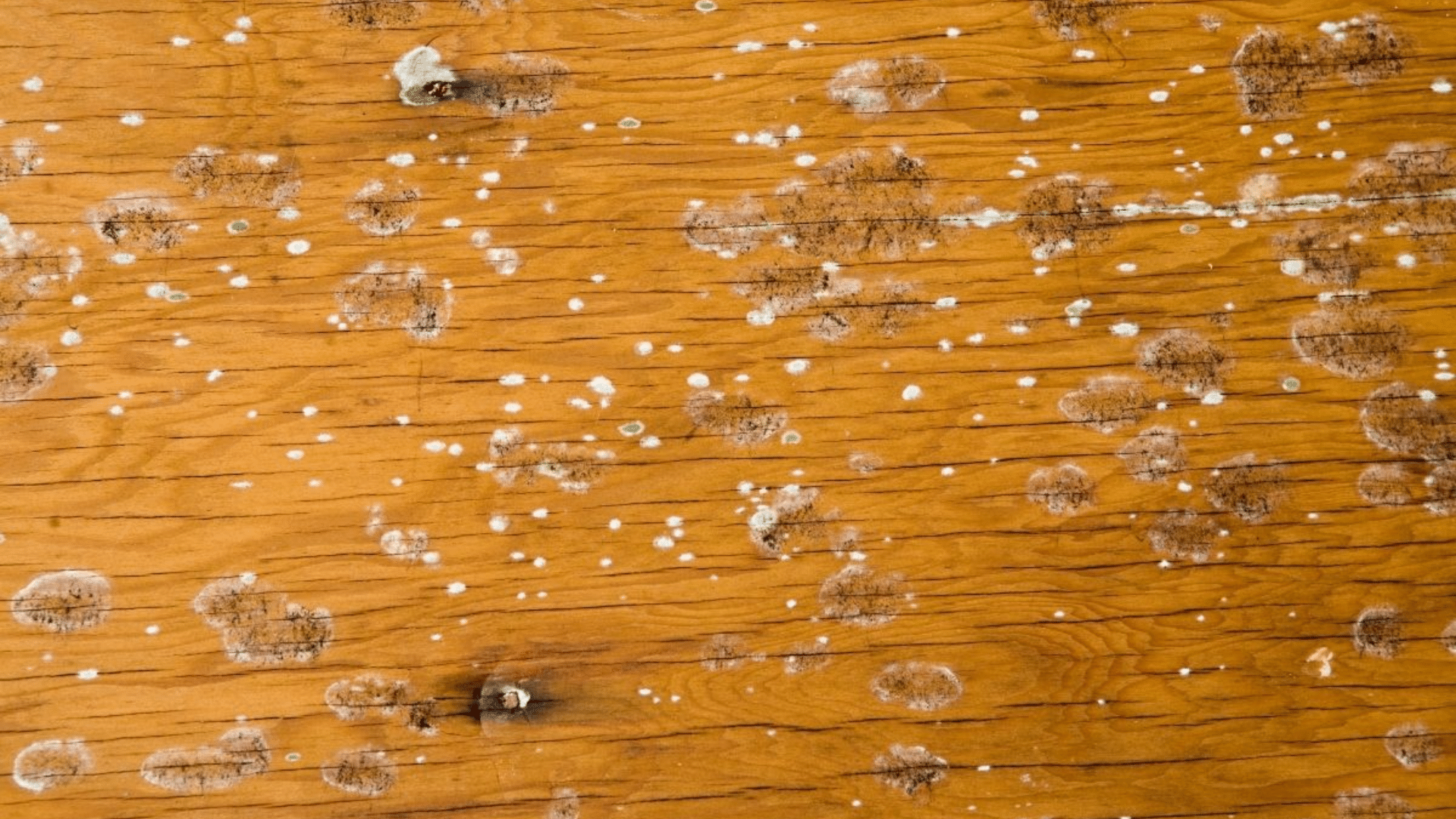
Spotting mold early makes treatment easier and cheaper.
Wood furniture shows specific warning signs when mold starts growing.
1. Visible Discoloration
Mold appears as spots or patches in various colors. You might see black, green, white, or orange marks on wood surfaces.
These spots start small but spread outward over time. The discoloration often looks fuzzy or powdery and won’t wipe away with a dry cloth.
2. Musty Smell
A strong earthy odor indicates mold presence even before you see it.
The smell gets worse in closed rooms or cabinets with poor airflow. This distinctive scent lingers on the furniture and nearby items.
If your nose detects mustiness near wooden pieces, mold is likely growing somewhere.
3. Surface Texture Changes
Mold makes wood feel damp or slimy to the touch. The surface may appear fuzzy or have raised bumps.
Sometimes the wood feels softer than normal in affected areas. You might notice a film or coating that wasn’t there before on your furniture pieces.
4. Water Stains
Dark rings or watermarks on wood suggest moisture problems. These stains create perfect conditions for mold growth underneath the surface.
The wood around stains often feels slightly damp or cool. Water damage weakens wood and invites mold to establish colonies in those vulnerable spots.
5. Warping or Swelling
Mold-infested wood often changes shape and structure noticeably. Drawers may stick or refuse to close properly anymore.
Table surfaces might develop curves or uneven areas. The wood expands as it absorbs moisture, and mold growth accelerates this deterioration process significantly.
How to Differentiate Mold from Mildew?
Mold and mildew both grow on wood furniture in damp conditions. They look similar at first glance but have key differences.
| Feature | Mold | Mildew |
|---|---|---|
| Appearance | Fuzzy or slimy texture with irregular patterns | Flat, powdery surface with even coverage |
| Color | Black, green, red, or blue shades | White, gray, or yellow tones |
| Growth Pattern | Penetrates deep into wood fibers | Stays on the surface only |
| Texture | Raised and thick to the touch | Thin and easy to brush off |
| Smell | Strong musty or earthy odor | Milder, less noticeable scent |
| Health Risk | Causes serious respiratory and allergic reactions | Creates minor irritation and discomfort |
| Removal Difficulty | Requires intensive cleaning or professional help | Cleans off easily with household products |
| Damage Level | Destroys wood structure permanently over time | Causes mainly cosmetic surface issues |
| Moisture Needs | Thrives in very damp, wet conditions | Grows in slightly humid environments |
| Growth Speed | Spreads quickly across multiple surfaces | Grows slowly in contained areas |
Safety Precautions to Take Before and While Removing Mold
Mold removal requires careful handling to protect your health. The process releases spores into the air that can harm you.
Following proper safety measures prevents exposure and keeps you safe during cleanup.
- Wear protective gear: Put on gloves, safety goggles, and an N95 respirator mask before starting. These items block spores from reaching your skin, eyes, and lungs.
- Ventilate the area: Open windows and doors to create airflow during cleaning. Fresh air dilutes spore concentration and helps fumes from cleaning products escape outside.
- Isolate the workspace: Close doors to other rooms and seal vents with plastic sheets. This prevents mold spores from spreading to clean areas of your home.
- Remove nearby items: Take away cushions, curtains, and other furniture from the work area. Spores can land on these items and create new mold colonies later.
- Dispose carefully: Place moldy materials in sealed plastic bags immediately after removal. Take bags outside right away to prevent spores from escaping indoors.
- Wash thoroughly: Clean all tools and protective gear after finishing the job. Shower and wash your clothes separately from other laundry to remove lingering spores.
When to Call a Professional?
Some mold problems are too big to handle yourself. Call a professional if mold covers more than ten square feet of your furniture.
Black mold requires expert removal due to its serious health risks. If mold keeps coming back after multiple cleanings, you need professional help to find the underlying cause.
Professionals have specialized equipment and training to remove mold safely. They can also test your home for hidden moisture problems.
Don’t risk your health trying to remove severe mold infestations alone. Experts handle the job properly and prevent future growth.
Tips to Prevent Future Mold Growth
These simple habits keep mold from returning to your pieces.
- Control indoor humidity: Keep humidity levels between thirty and fifty percent using a dehumidifier. High moisture in the air creates perfect conditions for mold to grow.
- Improve air circulation: Position furniture a few inches away from walls to allow air flow. Don’t overcrowd rooms, as packed spaces trap moisture and prevent proper ventilation around pieces.
- Fix leaks immediately: Repair any plumbing leaks, roof drips, or window seals as soon as you notice them. Even small amounts of water damage create breeding grounds for mold colonies.
- Apply protective finishes: Seal unfinished wood with varnish, polyurethane, or wax to create a moisture barrier. This makes mold growth much more difficult.
- Avoid placing near water sources: Keep wooden furniture away from sinks, bathtubs, and areas prone to spills. Distance from water reduces the chance of damaging wood.
- Sunlight exposure: Open curtains regularly to let natural sunlight reach wooden furniture when possible. Sunlight naturally inhibits mold growth and helps keep wood surfaces dry and healthy.
Types of Wood that Resist Mold
Some wood types naturally resist mold better than others.
Cedar contains oils that repel moisture and inhibit mold growth on surfaces. Teak has high oil content and a tight grain that prevents water absorption effectively.
Redwood produces natural chemicals called tannins that discourage mold colonies from forming. White oak features closed pores that block moisture from penetrating deep into the wood.
Cypress wood resists rot and mold due to its natural preservative properties.
These woods cost more than pine or regular hardwoods initially. However, they last longer and require less maintenance over time.
When to Dispose of Mouldy Wooden Furniture?
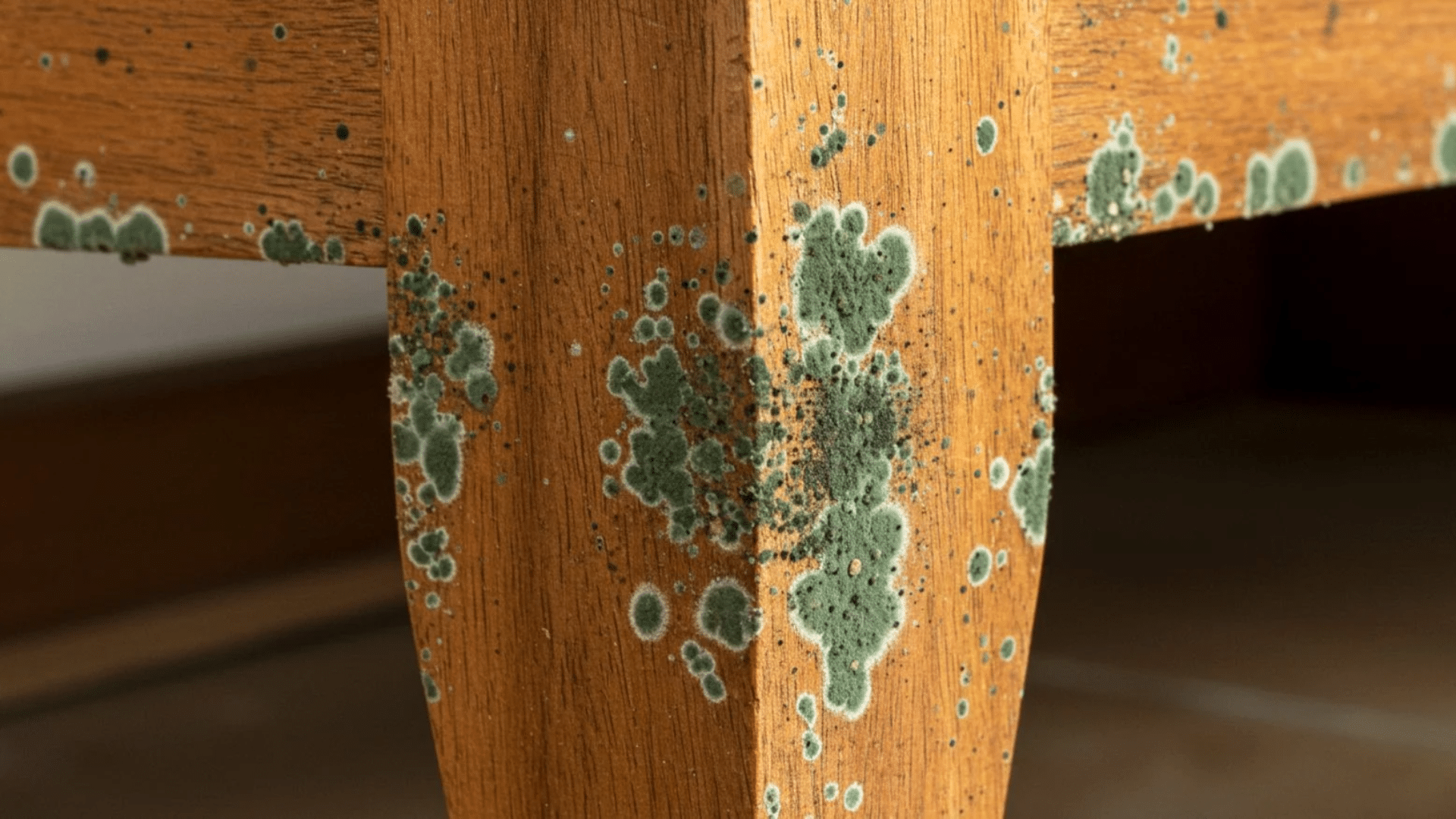
Sometimes furniture is too damaged to save from mold.
Dispose of pieces when mold affects the wood structure throughout. If the wood feels soft, crumbly, or falls apart when touched, it’s beyond repair.
Furniture with black mold covering large areas poses serious health risks and should be removed. When cleaning attempts fail repeatedly and mold returns within days, removal is necessary.
Antique or valuable pieces deserve professional assessment before you throw them away.
However, cheap furniture isn’t worth the health risk or restoration cost. Replace severely damaged pieces to protect your family.
Wrapping Up
Mold on wood furniture is a common problem that you can handle with the right knowledge.
Acting fast when you spot those first signs saves your furniture and protects your health. Regular cleaning, controlling moisture, and improving airflow stop mold before it starts.
Remember to wear protective gear when removing mold yourself. Choose the cleaning method that matches your mold severity.
Your health is worth more than any piece of furniture.
Take action today to keep your wood furniture clean and mold-free.