
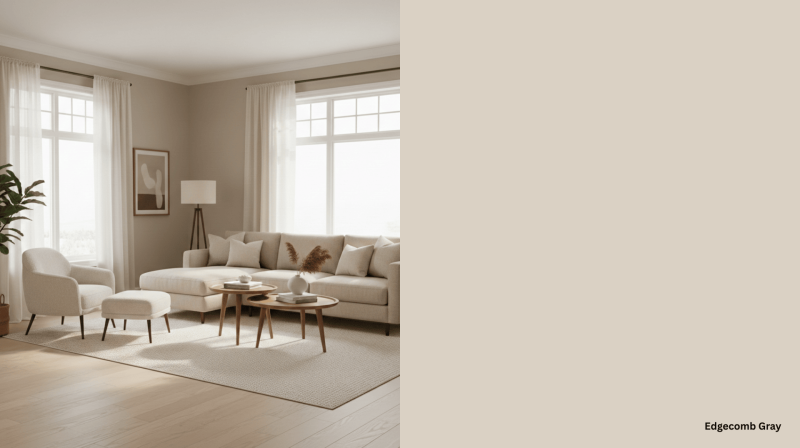
I was at a friend’s house last week, and she showed me paint samples for her room, with Edgecomb Gray on top.
“Is this color still good?” she asked. “Or am I years too late?” I hear this question all the time now.
People love Edgecomb Gray but worry it’s becoming outdated. They don’t want to pick something that feels old in a year. Here’s what I told her, and what I’m telling you now.
This color is still going strong in 2026. But things have shifted a bit.
Some rooms work better for it than others. And there are newer options people are choosing instead.
I’ll break down what’s actually happening, if it is still in style, the latest trends in neutral shades and color palettes, where this color works and where it doesn’t, and what to avoid.
Is Edgecomb Gray Still Popular in 2026?
Picking the wrong paint color is frustrating. You spend money and time, only to regret it later.
Yes, Edgecomb Gray by Benjamin Moore remains popular in 2026. Its universal, neutral tone works with a variety of design styles.
People appreciate how it adapts to different lighting conditions throughout the day.
Here’s what I’m seeing: why people still prefer Edgecomb Gray in homes lately:
- Works well with different lighting conditions.
- Pairs easily with other colors.
- Fits both modern and traditional spaces.
- Doesn’t look too gray or too beige.
- Creates a calm, neutral backdrop.
Edgecomb Gray Undertones and How it Looks in Different Lighting
Edgecomb Gray is a chameleon. It changes constantly based on your lighting.
What Undertone Does It Actually Have?
It leans hot with beige undertones. But it pulls gray in cool light and tan in hot light. This mix confuses people.
North-Facing vs. South-Facing Rooms
North-facing rooms can make a space look flat and muddy. South-facing rooms bring out the beige beautifully.
Calm sunlight is ideal for this color.
Morning vs Evening Light Shifts
Mornings bring out gray tones. Evenings heat it up and make it glow. Late afternoon is when it looks best.
In some homes with warm bulbs, people start wondering whether Edgecomb Gray can look yellow and there are real causes and fixes worth knowing before you panic about your paint choice
LED vs Warm Bulbs
Cool LEDs make it look dingy and gray. Hot bulbs bring out the beige. Use white lighting only.
Why It Looks Muddy?
Poor lighting creates the muddy look. North light plus cool LEDs is the worst combination.
Small paint samples lie. Test large swatches for three days in your actual space. And honestly, knowing when not to use Edgecomb Gray comes down to knowing your lighting and style before you even open the can.
Edgecomb Gray Compared to Popular Neutrals
People exploring similar light-toned greiges often find themselves drawn to these shades for the same reason.
Let’s see how this stacks up against other popular neutral paint colors.
| Paint Color | Undertone | Light Response | Best For | Key Difference |
|---|---|---|---|---|
| Edgecomb Gray | beige-gray | Shifts throughout the day | Flexible spaces | Balances hot and cool |
| Agreeable Gray | Hot greige | Stays consistent | Cozy rooms | More beige leaning |
| Repose Gray | Cool gray | Modern shift | Modern spaces | Cooler, crisper look |
| Accessible Beige | Hot beige | Warm in all light | Traditional homes | Stronger beige tone |
| Balboa Mist | Soft gray-green | Changes subtly | Transitional spaces | Slight green hint |
| Revere Pewter | Gray-beige | Adapts well | Any room type | Darker, more depth |
| Simply White | Hot white | Brightens spaces | Trim and walls | Lighter overall feel |
Where Edgecomb Gray Works Best (and Where It Doesn’t)
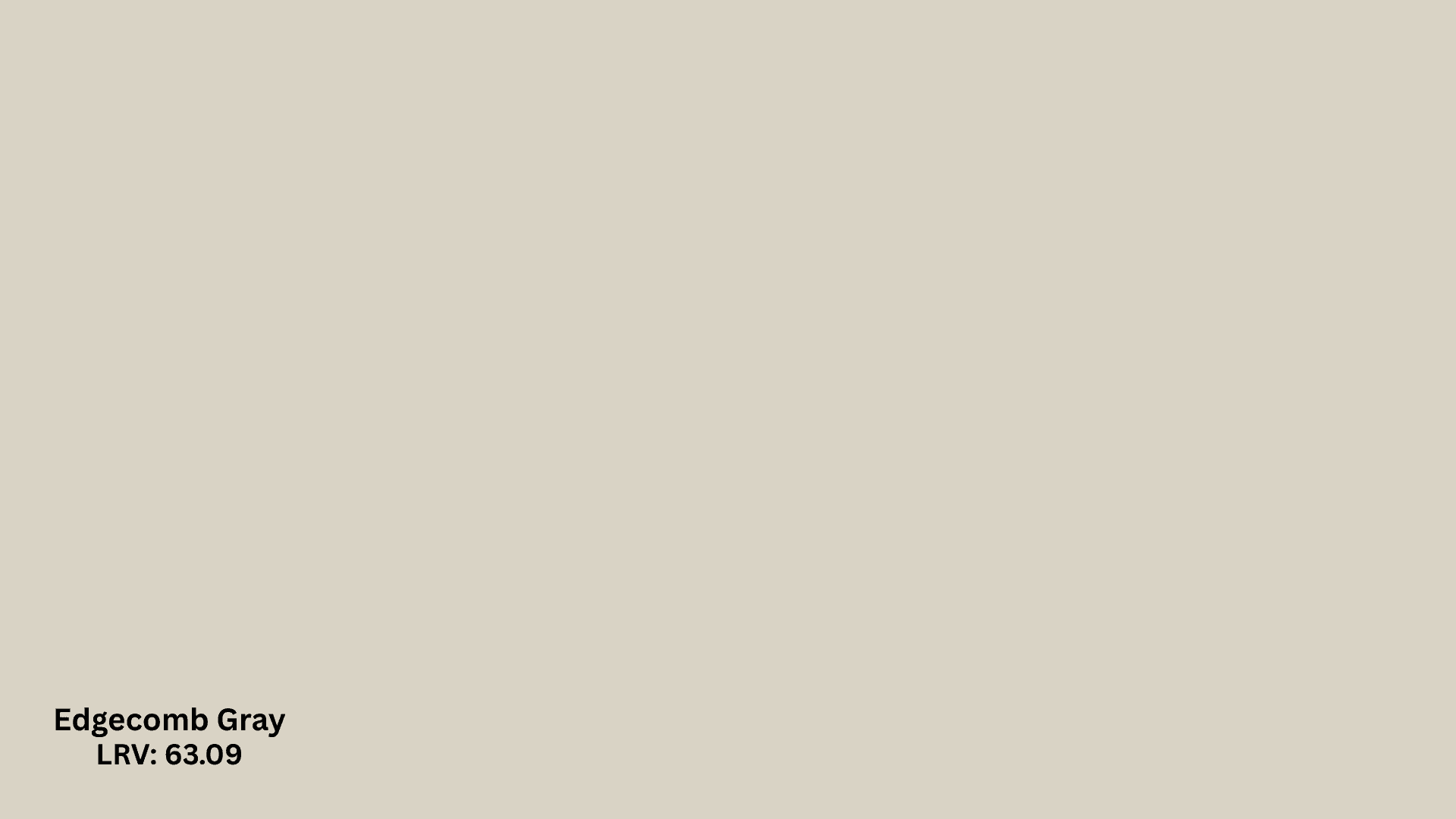
In my experience, not every color works in every space. Here’s where Edgecomb Gray shines and where it falls flat
Interior Spaces
Where It Works Best: This loves natural light. It looks great in living rooms and bedrooms with good windows.
The color feels inviting. You’ll see it adapt throughout the day. Open floor plans show off its best qualities.
Where It Doesn’t: Dark hallways make it look muddy. Rooms with only fluorescent lighting can feel flat and lifeless.
Basements without windows kill its heat. Small, windowless spaces feel even smaller with this shade.
Exterior Applications
Where It Works Best: This color complements brick and stone beautifully.
It works on homes with white trim. Colonial and craftsman styles look polished with it. Good sun exposure brings out its subtle undertones nicely.
Where It Doesn’t: Homes in heavily shaded areas look dull. It fades poorly on surfaces with harsh afternoon sun.
Modern architecture with bold lines needs stronger colors. Dense tree coverage makes it appear gray and cold.
Main Living Areas
Where It Works Best: Kitchens with white cabinets get a soft backdrop. Open dining rooms feel cohesive.
Family rooms become relaxing gathering spots. It pairs well with wood floors and natural textures throughout these spaces.
Where It Doesn’t: Busy kitchens with dark cabinets clash badly. Rooms with heavy, dark furniture feel gloomy.
Spaces with bold accent walls compete too much. Media rooms need deeper, richer tones for better ambiance.
Corner Spaces
Where It Works Best: Reading nooks feel cozy, and window corners with good light look inviting.
Breakfast nooks become charming areas. Corner home offices are professional yet comfortable with natural light.
Where It Doesn’t: Dark corners become dingy and tight, windowless spaces feel cramped; storage corners look dirty over time; poorly ventilated corners show dirt and scuffs more clearly.
When Edgecomb Gray Feels Outdated?
This color can look tired in certain situations. Overuse is the biggest problem.
When every room gets the same treatment, it feels boring and lazy. Pairing it with builder-grade beige trim makes homes look generic. It screams rental property. Combining it with outdated brass fixtures doesn’t help either.
Using it in trendy spaces backfires, too. Modern farmhouse overload made this color feel overplayed.
Homes trying too hard to look Pinterest-perfect end up looking dated instead.
The Fix? That I Recommend the Most:
Use it thoughtfully. Pair it with fresh accents and updated finishes. Balance matters more than the color itself.
What Colors to Avoid
- Builder-grade beige makes homes look cheap and generic.
- Bright yellows fade quickly and date your space instantly.
- Cool grays from the 2010s feel cold and sterile now.
- Tuscan gold looks tired and overdone in modern homes.
- Purple accent walls feel too trendy and juvenile today.
- Mauve and dusty rose bring back bad 80s memories.
- Stark white everywhere creates a hospital-like feeling nobody wants.
- Brown-gray combinations from farmhouse trends feel overplayed and boring.
Final Verdict: Should You Use Edgecomb Gray in 2026?
This color isn’t a magic fix for every space. It needs good natural light to shine.
The truth I’ve learned. Trends come and go. Edgecomb Gray works because it’s balanced, not because it’s trendy.
Before you buy gallons of paint, do what I always do. Grab large samples. Watch how the color shifts in your actual space. I checked it in the morning light. The evening light. And everything in between.
Make your decision based on your home’s lighting, not someone else’s Pinterest board.
That’s what I tell everyone who asks me.
That’s how you get a color you’ll love for years. Trust me on this one.
Frequently Asked Questions (FAQ’s)
1. Why Not Use Edgecomb Gray?
It looks muddy in north-facing rooms and fails with poor natural lighting.
2. What Color Makes a House Look Expensive?
Soft whites, deep charcoals, and hot creams create an instantly high-end, refined look.
3. What Is the Popular Exterior House Color of 2026?
Hot earth tones and soft charcoals are trending for exterior house colors.
4. What Is Benjamin Moore’s Most Popular Griege Color?
Revere Pewter remains Benjamin Moore’s most beloved and widely used griege shade.
5. What Are the Three Paint Colors that Will Never go out Of Style?
Soft whites, hot grays, and classic beiges remain effortless choices for any home.