
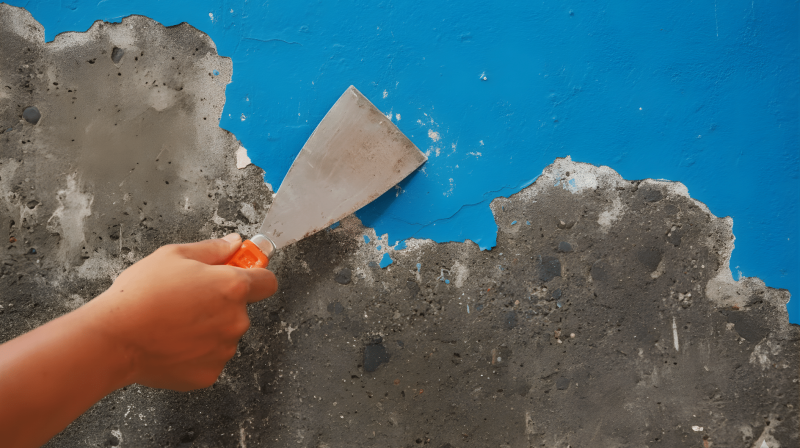
Paint spills happen. You’re working on a home project, and suddenly there’s a stubborn splotch on your concrete floor.
It’s frustrating, right? That dried paint looks terrible and won’t budge with regular cleaning. But getting paint off concrete isn’t impossible.
You just need the right method when it comes to removing paint from concrete.
This blog shows you exactly how to do that using simple techniques that actually work.
How to Remove Paint from Concrete Properly?
Success depends on choosing the right method. Fresh spills need different treatment from dried layers.
Water-based paints respond to soap, while oil-based types require solvents.
Always start gently. Try scraping and mild cleaners first.
Use chemical strippers only if needed. Test any product on a hiddenspot and wait 24 hours to check for damage.
Indoor spaces limit your options due to ventilation. Outdoor areas allow pressure washers and stronger chemicals. Match your technique to your specific situation.
Factors to Consider Before Removal
Before you grab any tools or products, assess the situation. The type of paint and its age determine which removal method will work.
1. What Type of Paint Is on Your Concrete?
Paint chemistry matters. Each type bonds differently to concrete surfaces.
- Oil-Based Paint: Tougher challenge. Needs solvent-based removers like mineral spirits or paint thinner.
- Spray Paint and Graffiti: Fresh spray paint removes more easily than old, weathered tags.
- Water-Based Paint (Latex or Acrylic): Easiest to handle. Dissolves in water and responds to soap-based cleaners.
2. How Porous is the Concrete Surface?
Porous concrete absorbs paint deep into its surface, making removal harder.
Smooth or sealed concrete keeps paint on top, allowing easier cleanup. C
heck your concrete’s texture before choosing a removal method.
3. How Old Is the Paint Stain?
Fresh or wet paint should be blotted right away using soap and water for water-based paint or mineral spirits for oil-based paint.
Dry paint can be softened with hot water and soap if it is water-based, while oil-based paint usually needs a chemical stripper.
How to Remove Paint from Concrete? Manual Methods
Sometimes the simplest tools work best.
1. Scraping with a Putty Knife or Paint Scraper
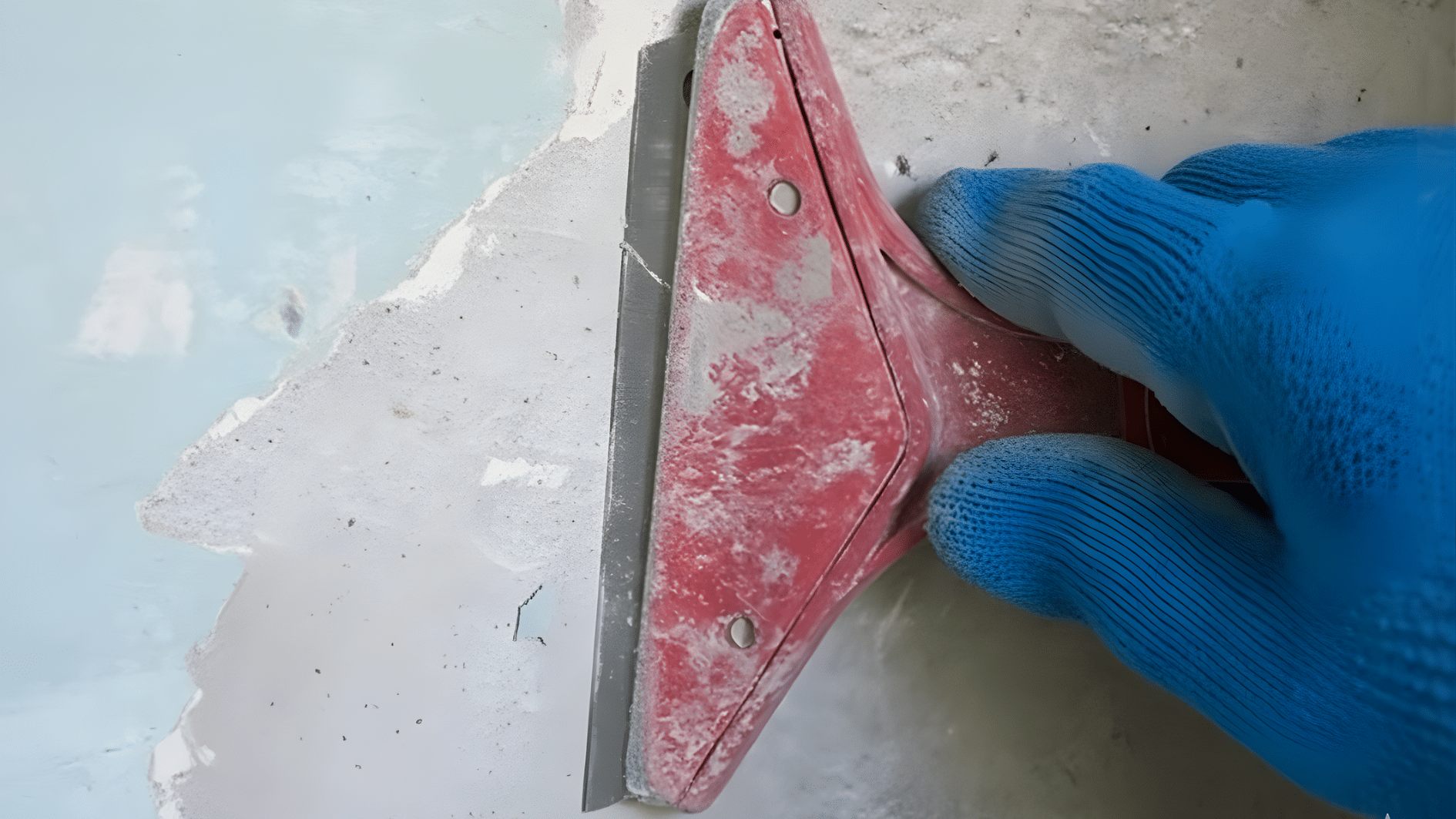
A putty knife or paint scraper works well for loosened or flaking paint. Hold the tool at a 45-degree angle and push firmly across the painted area.
For stubborn spots, soften the paint first with hot water or a mild cleaner.
Pro Tip: Always soften stubborn paint with hot water before scraping to avoid damaging your concrete surface.
2. Wire Brushes and Stiff Bristle Brushes
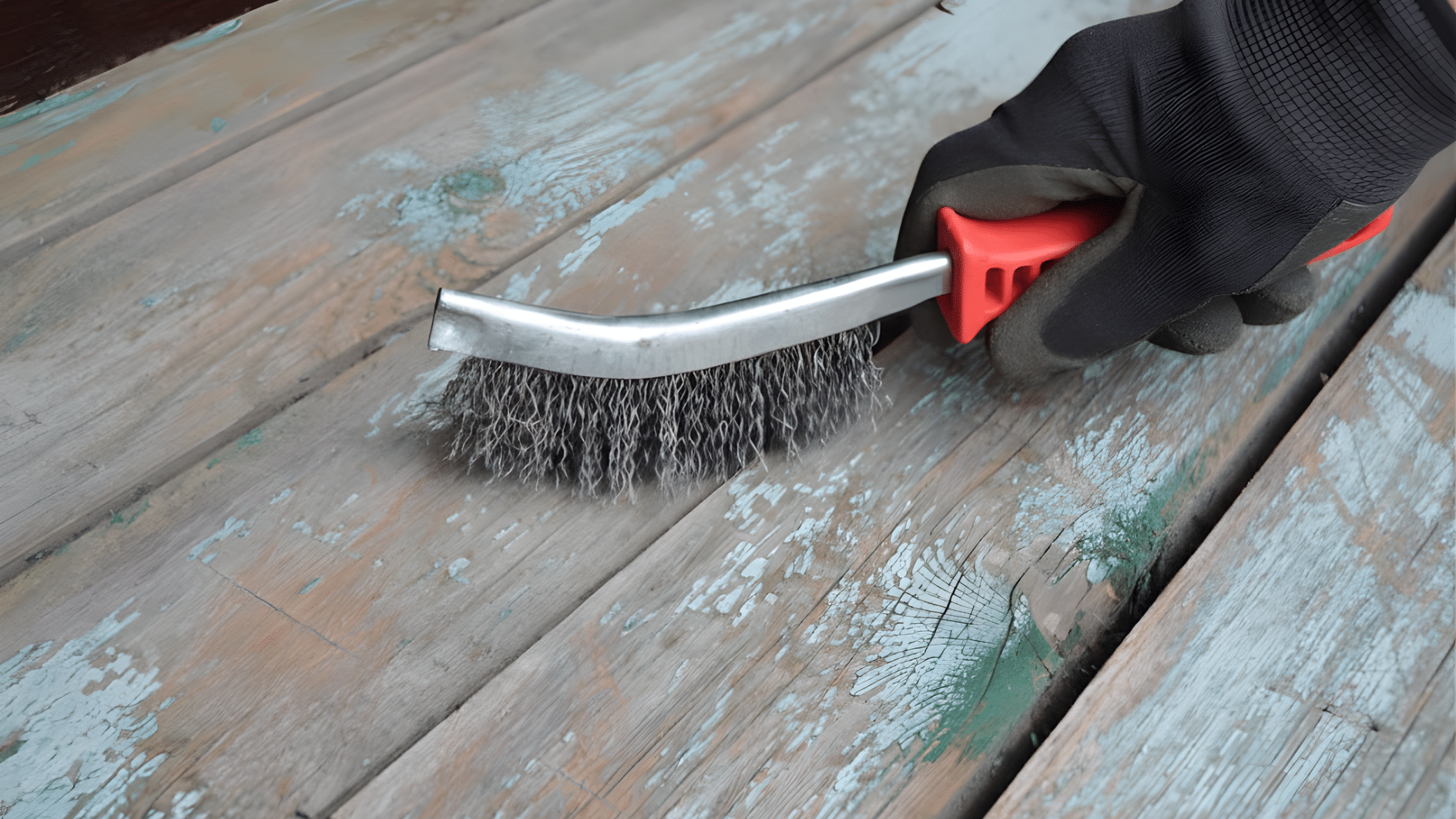
Wire brushes tackle paint that’s partially loose but won’t scrape off easily.
The metal bristles dig into crevices and textured concrete surfaces. This method works great on rough or pitted concrete where scrapers can’t reach.
Quick Trick: Use circular scrubbing motions to get into textured surfaces where flat scrapers can’t reach.
How to Remove Paint from Concrete Using Chemical Paint Removers
Chemical strippers break down paint bonds at the molecular level.
They soften even the most stubborn dried paint, making removal much easier.
3. Concrete-Safe Paint Strippers
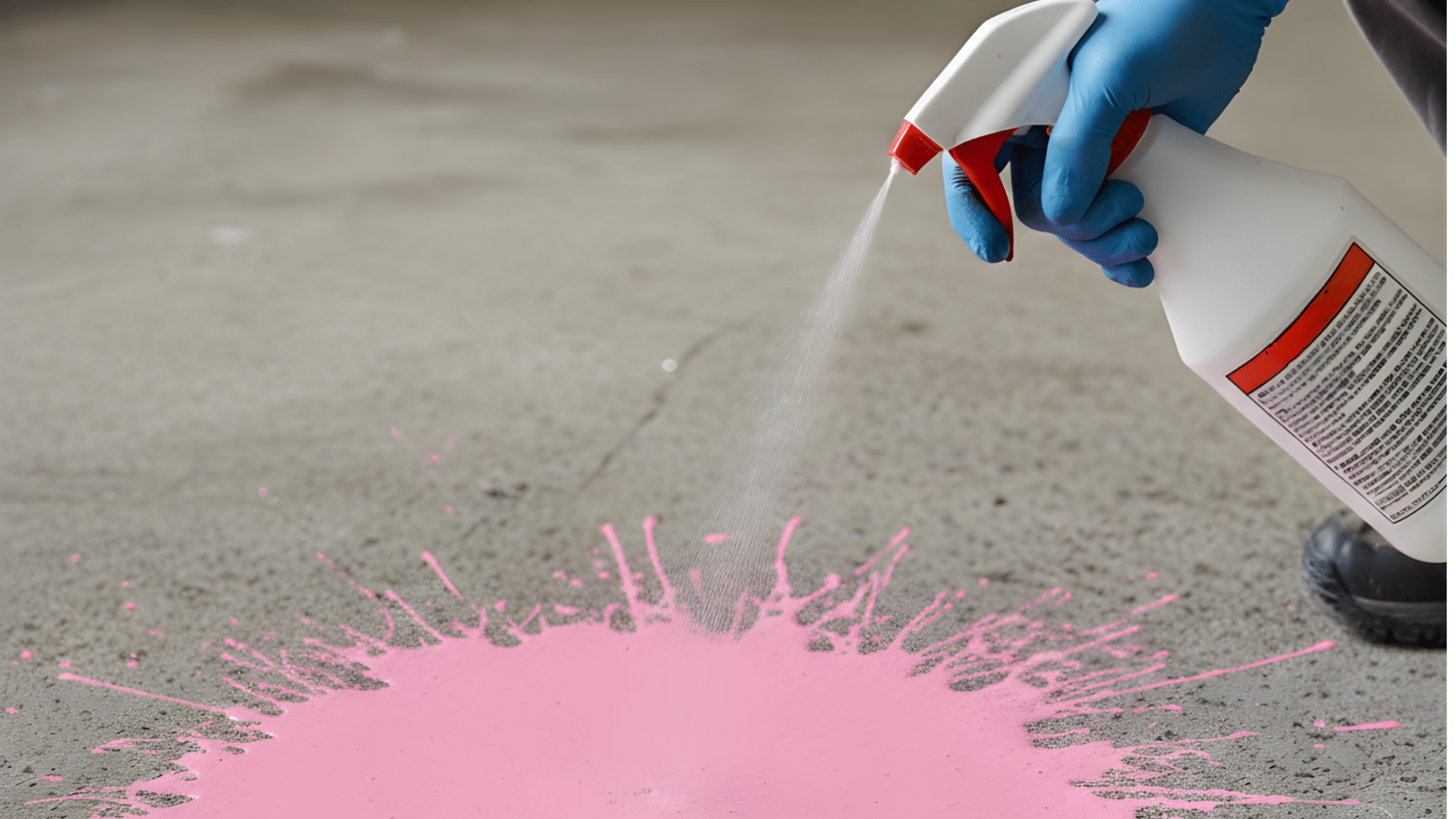
Pour or brush the stripper onto the painted area. Let it sit for the time specified on the label, usually 15 to 30 minutes. The paint will bubble or wrinkle when ready.
Scrape off the softened paint with a putty knife. Some stubborn spots might need a second application.
Safety First: Never skip ventilation when using chemical strippers open all windows and use fans to prevent fume buildup.
Other Alternative Methods to Remove Paint from Concrete
Sometimes you need options beyond scraping and chemicals.
These alternative techniques use mechanical force, heat, or natural substances to remove paint from concrete.
4. Pressure Washing Paint Off Concrete
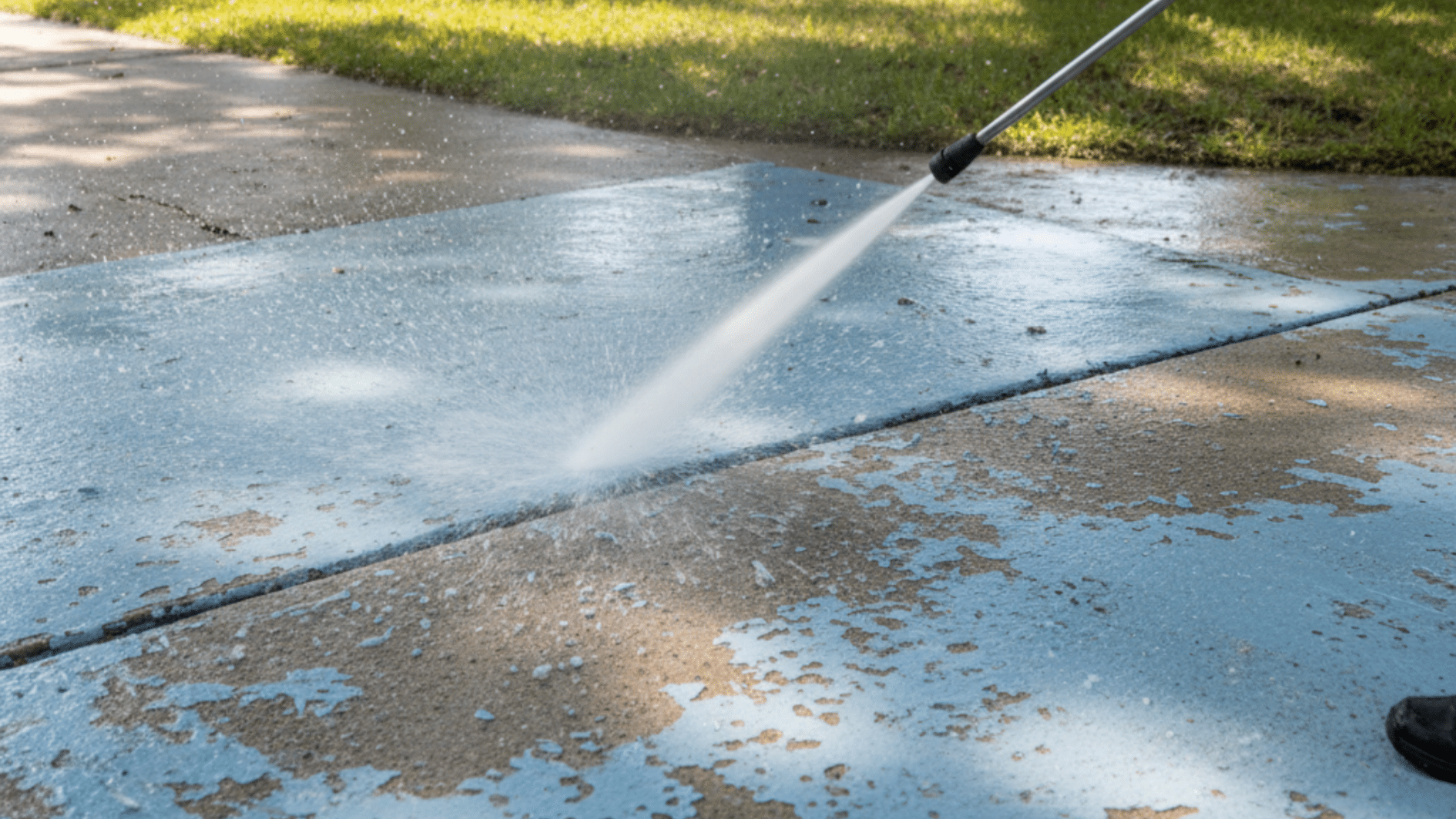
A pressure washer blasts away loose or weakly bonded paint using high-pressure water.
Hold the nozzle 6 to 12 inches from the surface. Move in sweeping motions to avoid etching the concrete. Multiple passes might be necessary for stubborn paint.
This method works best outdoors where water runoff isn’t a problem.
5. Angle Grinders and Abrasive Pads
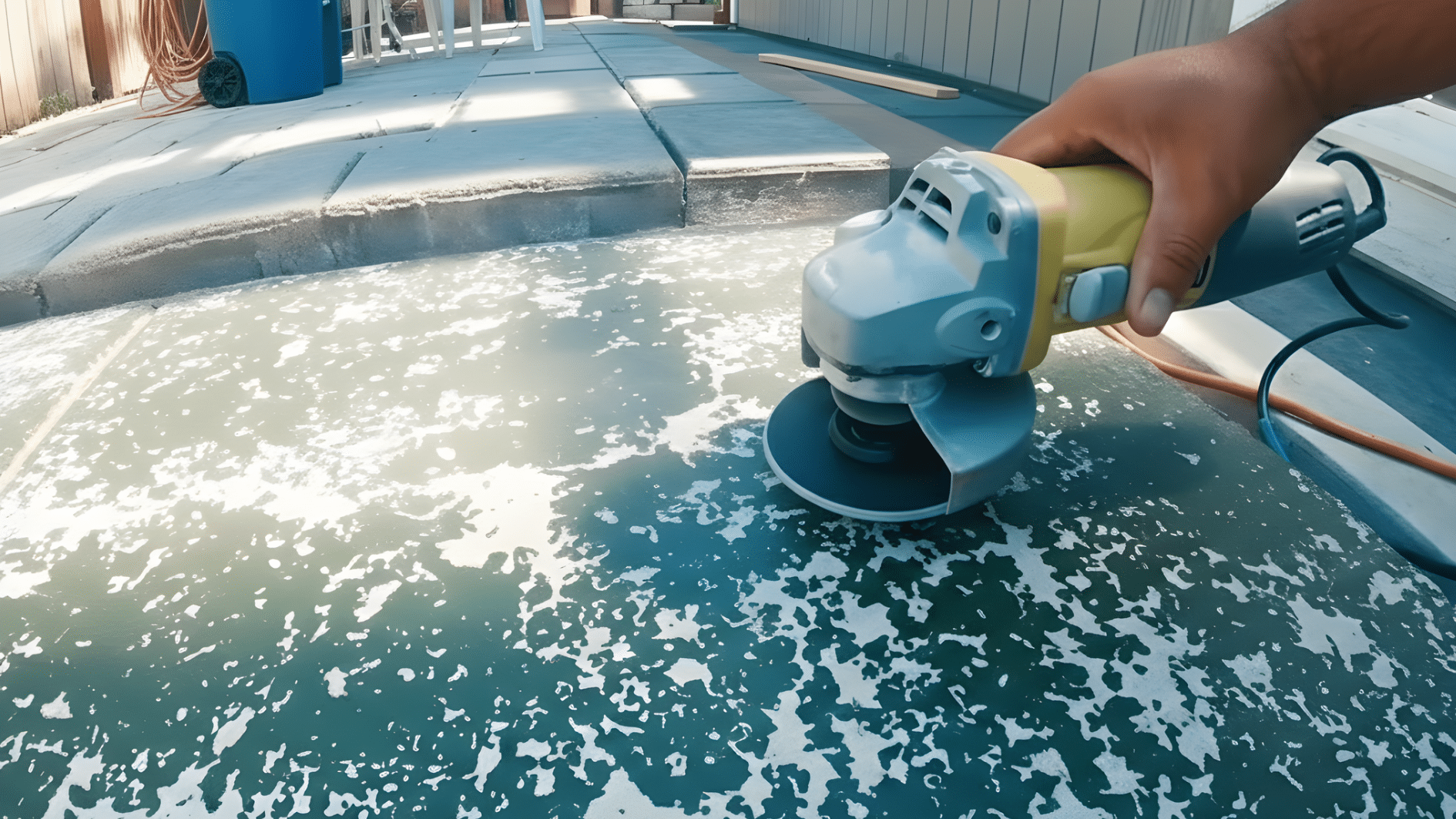
An angle grinder fitted with a diamond cup wheel or abrasive pad grinds away paint and a thin layer of concrete.
This aggressive method removes everything, including paint that has soaked into porous surfaces.
Important Note: Work in small sections and wear a dust mask angle grinders create massive concrete dust clouds.
6. Vinegar and Heat Methods
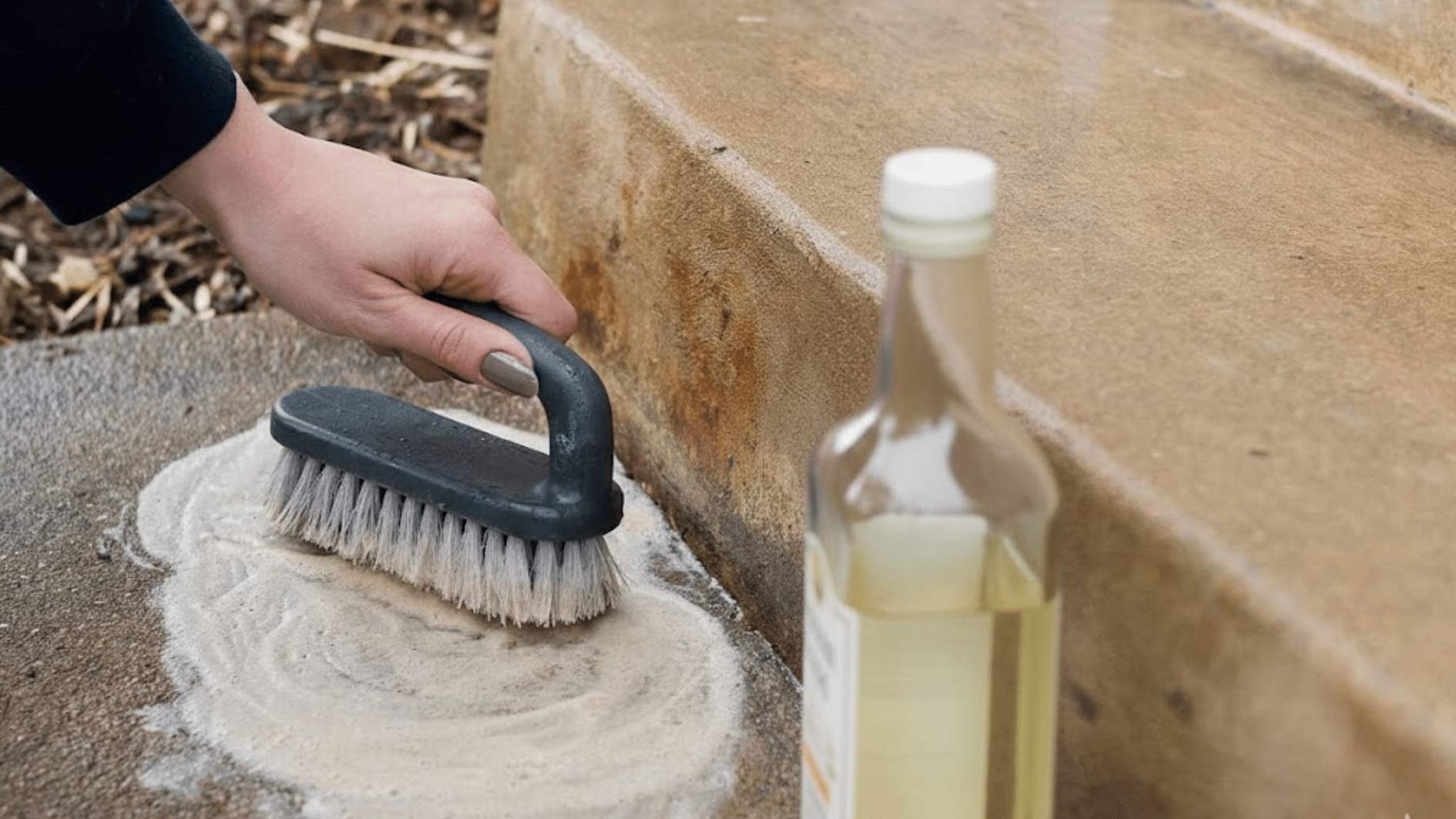
White vinegar offers a natural alternative for small paint spots. Heat the vinegar until it’s hot but not boiling. Pour it over the paint, let it sit for 15 minutes, and then scrub it.
A heat gun also softens paint for easier scraping. Hold it a few inches from the surface and move constantly.
Vinegar and heat guns tackle small paint spots without expensive chemicals or equipment.
Each of these alternative methods has its place. Your choice depends on the paint type, area size, and available resources.
But what happens when nothing seems to work?
When All Removal Methods Fail, Try Concrete Resurfacing
Concrete resurfacing offers a fresh start. Resurfacing applies a new layer over existing concrete.
This coating covers stains, cracks, and imperfections completely.
Consider resurfacing when:
- Paint has penetrated too deeply
- Multiple paint layers exist
- The concrete is already damaged
- Removal attempts have failed
The process is simple:
- Clean the surface thoroughly first. Remove loose paint, dirt, and debris.
- Let the concrete dry completely. Mix the resurfacing compound according to package directions and spread it evenly with a trowel or squeegee.
- Work quickly because these mixtures set fast. Let it cure for 24 hours before walking on it.
- Resurfacing costs more but delivers guaranteed results.
Removing Paint from Specific Areas
Different locations need different approaches. Indoor floors require methods without harsh fumes.
Outdoor spaces offer more flexibility.
Basement Floors: Manual scraping works best due to limited ventilation. Soften paint with hot water and soap before scraping.
Garage Floors: Use concrete-safe chemical strippers. Apply, wait 20 minutes, then scrape. Ventilate well by opening the garage door.
Patio Floors: Pressure washing delivers the best results. Use at least 3,000 PSI and work in overlapping passes.
For Driveways: Use a pressure washer with 3,500 to 4,000 PSI. Apply a chemical stripper if needed on the remaining stains
For Sidewalks: Hot vinegar works well on small spots. For larger areas, use a wire brush with concrete cleaner.
Important: Always prevent runoff from entering storm drains when working outdoors.
What to do After the Paint is Gone?
Removing the paint is only halfway. Your concrete needs proper cleanup and care. Clean thoroughly with water and a stiff brush.
Use tsp for chemical residue. After drying, check for cracks or rough spots; fill small cracks.
Apply two coats of sealer to protect the surface.
Dispose of residues properly. Now your concrete is clean and protected, but avoid common removal mistakes.
Mistakes to Look Out for when Removing Paint from Concrete
- Ignoring ventilation: Open doors and windows. Use fans in enclosed spaces.
- Skipping the test spot: Always test your method on a hidden area first.
- Not wearing protective gear: Wear gloves, safety goggles, and a respirator.
- Mixing different chemicals: Use one product at a time.
- Rushing the process: Follow product instructions for wait times.
- Forgetting to clean up: Rinse surfaces thoroughly and dispose of materials properly.
- Not sealing afterward: Apply concrete sealer once the surface is dry.
Concluding Thoughts
Getting paint off concrete doesn’t have to be overwhelming.
You now know how to get paint off concrete using the right techniques for your situation.
Start with gentle methods and work your way up if needed. Remember to test first, wear protection, and clean thoroughly afterward.
Whether it’s fresh latex or old oil-based paint, you have a solution that works.
Ready to restore your concrete? Grab your tools and get started today.