
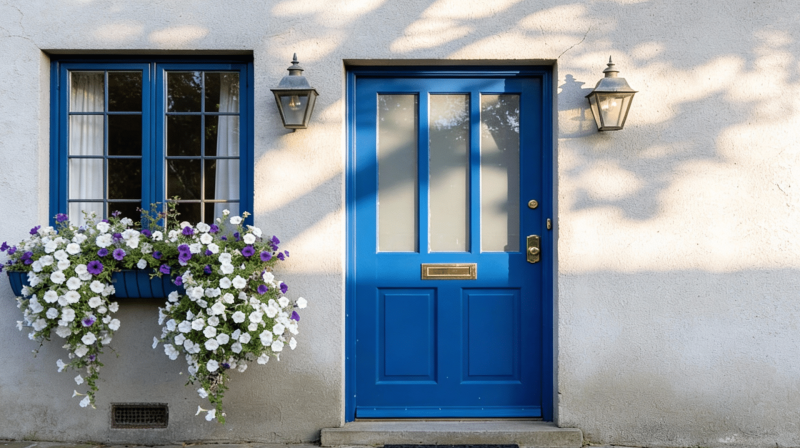
Your front door takes a beating from the sun, rain, and daily use. And choosing the wrong paint leads to peeling, fading, and endless touch-ups.
I’m going to show you the best paint for an exterior door. No random guesswork, just results.
In this post, I’ll cover the top paint options, what makes them different, and how to paint your door.
Different Types of Exterior Paints
Picking the right paint type matters more than you think.
Each one works differently on exterior doors. Let me break down the main options you’ll find at the store.
Oil-Based Paints
Oil-based paints create a hard, durable finish that resists wear beautifully.
They take longer to dry but offer superior protection against moisture and daily use. The smooth finish looks professional and lasts for years.
However, cleanup requires mineral spirits, and the fumes can be strong during application.
Latex (Water-Based) Paints
Latex paints dry quickly and clean up with just soap and water. They’re easier to work with and emit fewer odors than oil-based options.
These paints remain flexible over time, which prevents cracking as wood expands and contracts.
Most people prefer latex for its convenience and reliable performance on doors.
Acrylic Paints
Acrylic paints contain acrylic resin, making them tougher than standard latex options.
They resist fading from sunlight exceptionally well and maintain color for years. The paint adheres strongly to various surfaces and handles temperature changes without issue.
This type costs more upfront but delivers excellent long-term value for exterior doors.
Cement Paints
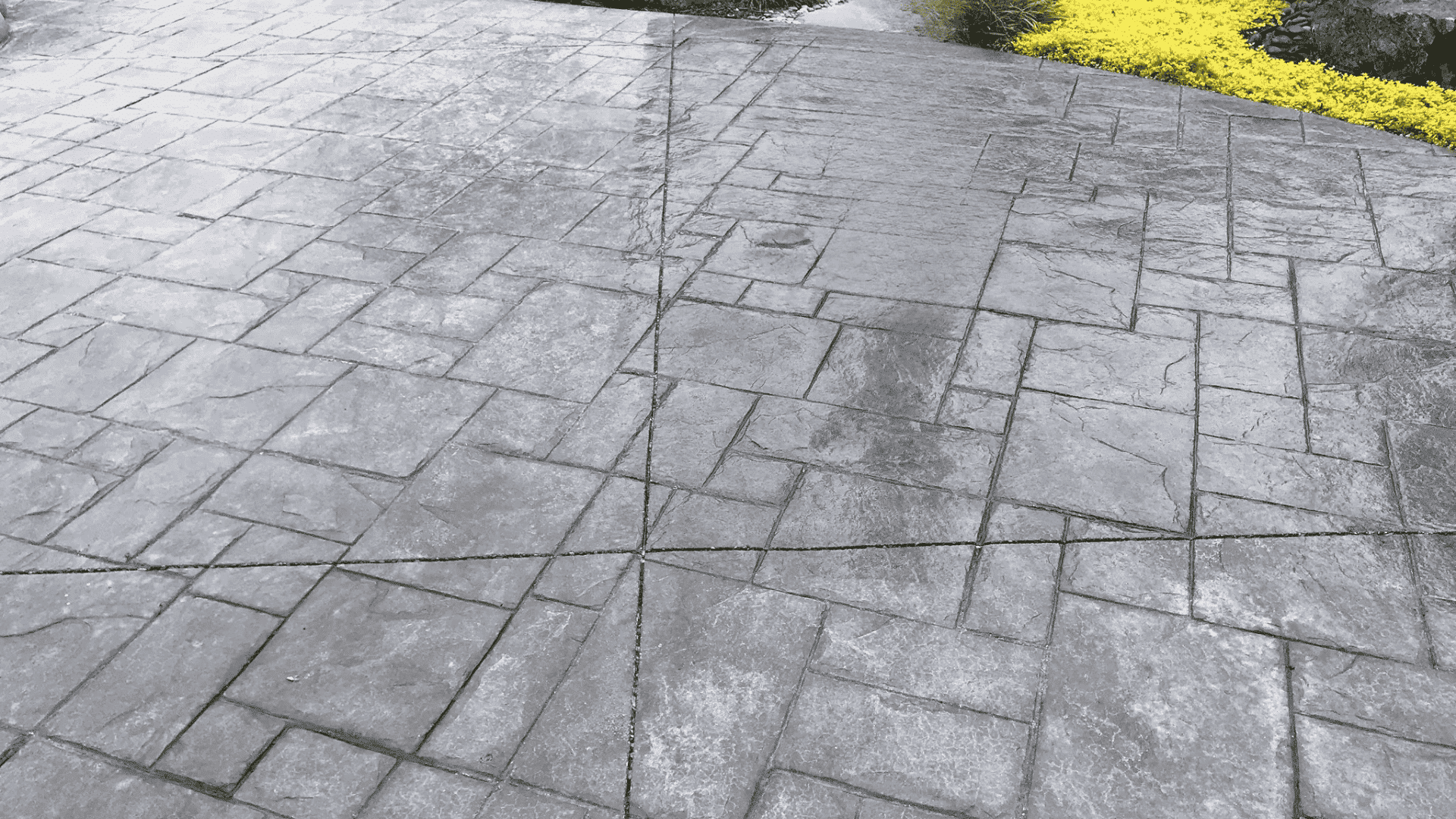
Cement paints work specifically for doors with cement or concrete surfaces. They create a rough, textured finish that’s extremely durable in harsh conditions.
The paint is waterproof and prevents moisture from seeping through the surface.
Most people use these for industrial or modern architectural styles rather than traditional wooden doors.
Texture Paints
Texture paints add dimension and hide surface imperfections on older doors effectively.
They come in various patterns from smooth to heavily textured finishes. The thick consistency fills small cracks and evens out uneven surfaces naturally.
These paints work well when you want a decorative look that also protects the door underneath.
Metallic Paints
Metallic paints contain metal flakes that create a shiny, reflective finish on doors.
They’re popular for modern homes and make a bold statement at the entrance.
The paint protects against rust on metal doors while adding an element. Application requires careful technique to avoid streaking, but the results look striking when done right.
Weather-Resistant Paints
Weather-resistant paints are specially formulated to handle extreme temperature swings and moisture exposure.
They contain additives that prevent mold, mildew, and UV damage from deteriorating the finish. These paints cost more but reduce maintenance needs significantly over the years.
For doors facing harsh climates, this type provides the best protection available.
Now Let’s Talk About the Finishes
The finish you choose affects both – how your door looks and how well it performs.
Different sheens handle cleaning and wear in their own ways.
| Finish Type | Appearance | Durability | Best For | Maintenance |
|---|---|---|---|---|
| Flat/Matte | No shine, smooth look | Low durability | Interior use only | Shows marks easily |
| Eggshell | Slight sheen | Moderate durability | Protected doors | Wipes clean fairly well |
| Satin | Soft, velvety shine | Good durability | Most exterior doors | Easy to clean |
| Semi-Gloss | Noticeable shine | High durability | High-traffic doors | Very easy to clean |
| Gloss | High shine, reflective | Highest durability | Front doors, metal doors | Resists stains and dirt |
Choose the Best Paint for the Exterior Door
The right paint color upgrades your home’s entrance instantly. These options work beautifully on exterior doors and hold up against the weather.
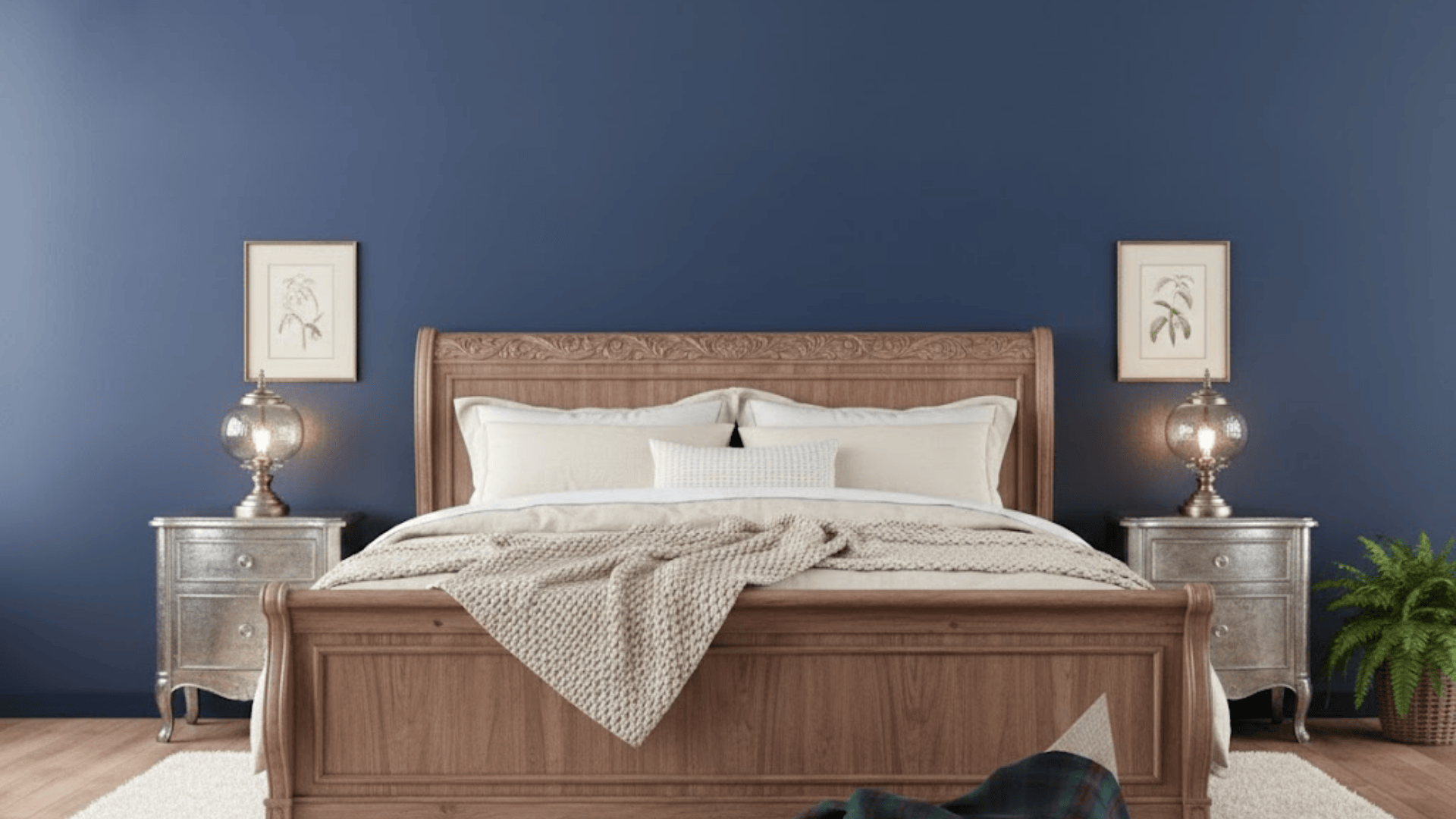
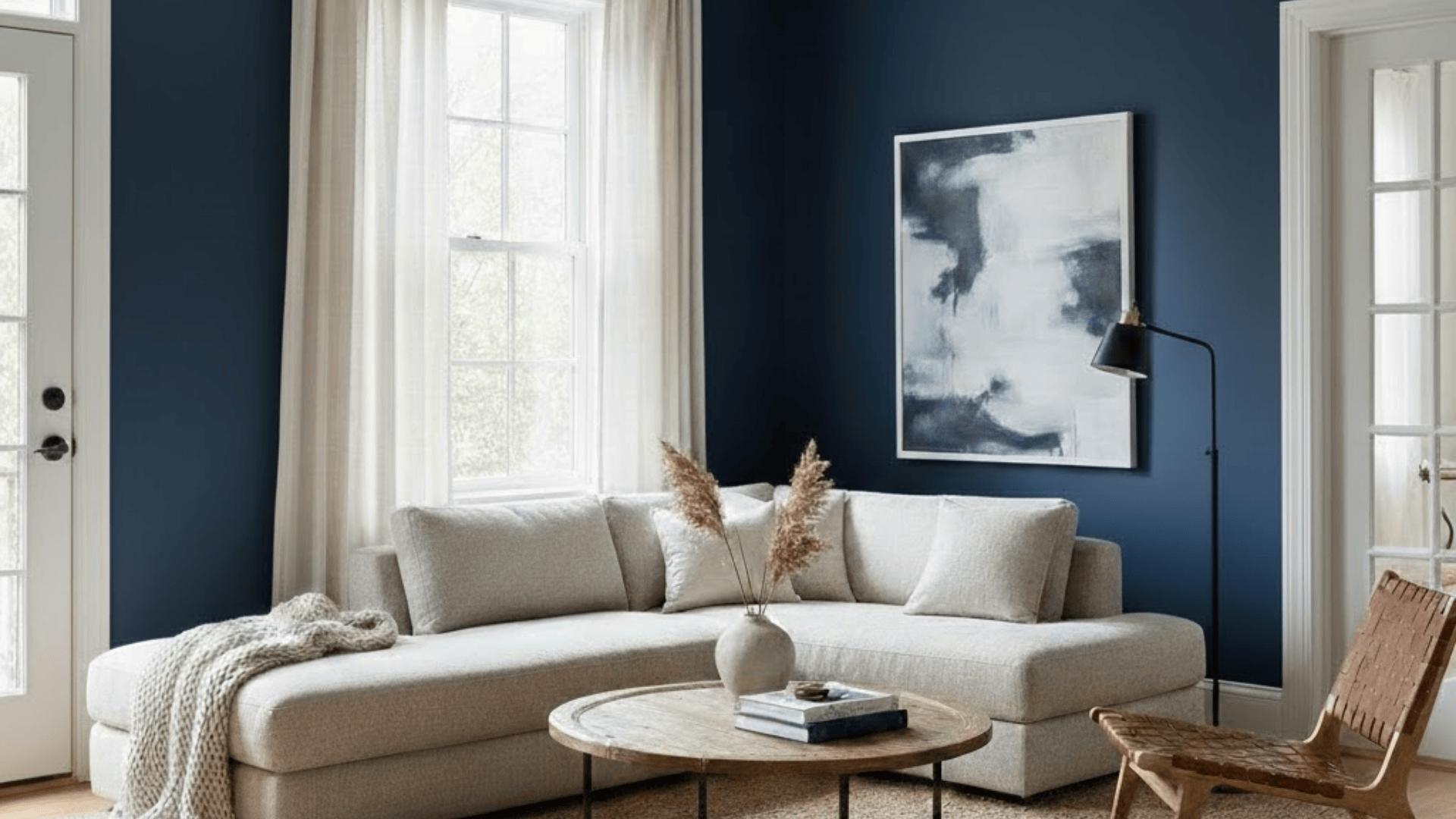
1. Sherwin-Williams Naval SW-6244
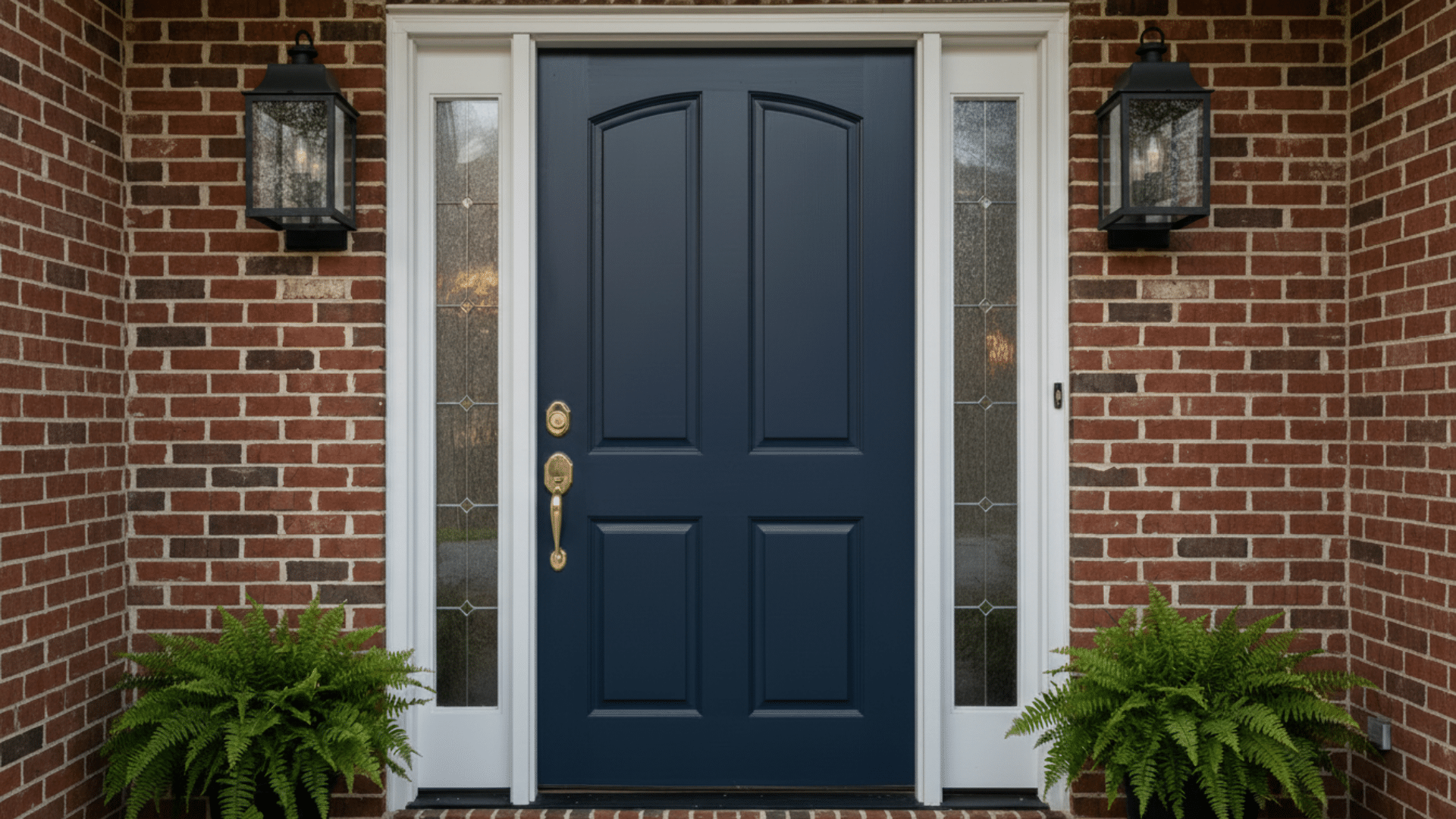
Sherwin-Williams Naval creates a look that stands out without being too bold. The rich color works perfectly with both traditional and modern home styles.
Naval maintains its depth even after years of sun exposure and harsh weather conditions.
- Easy Application: Smooth consistency spreads evenly without streaking
- Coverage: Two coats provide full, solid coverage
- Color Retention: Stays true for 5-7 years outdoors
- Durability: Resists fading and handles moisture well
2. Benjamin Moore Umbria Red 1316
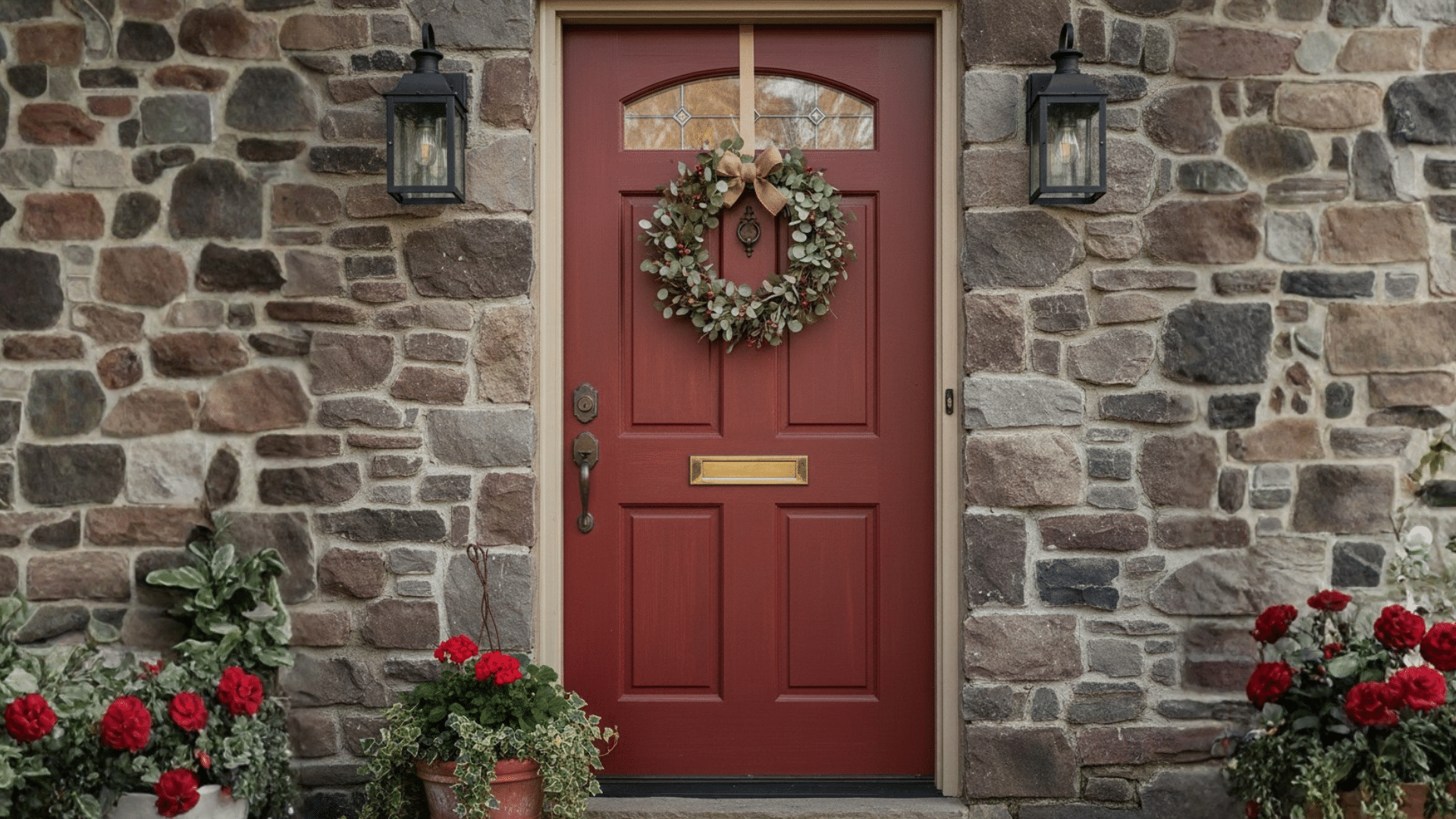
Umbria Red brings warm, earthy tones that feel welcoming and grounded at your entrance.
I used this paint on my friend’s farmhouse door, and it still looks fresh after three years. The color pairs beautifully with brick, stone, and neutral siding colors for classic appeal.
- Easy Application: Flows smoothly from brush to surface
- Coverage: Excellent hides in two coats
- Color Retention: Maintains richness without dulling over time
- Durability: Tough finish withstands daily use
3. Benjamin Moore Aegean Teal 2136-40
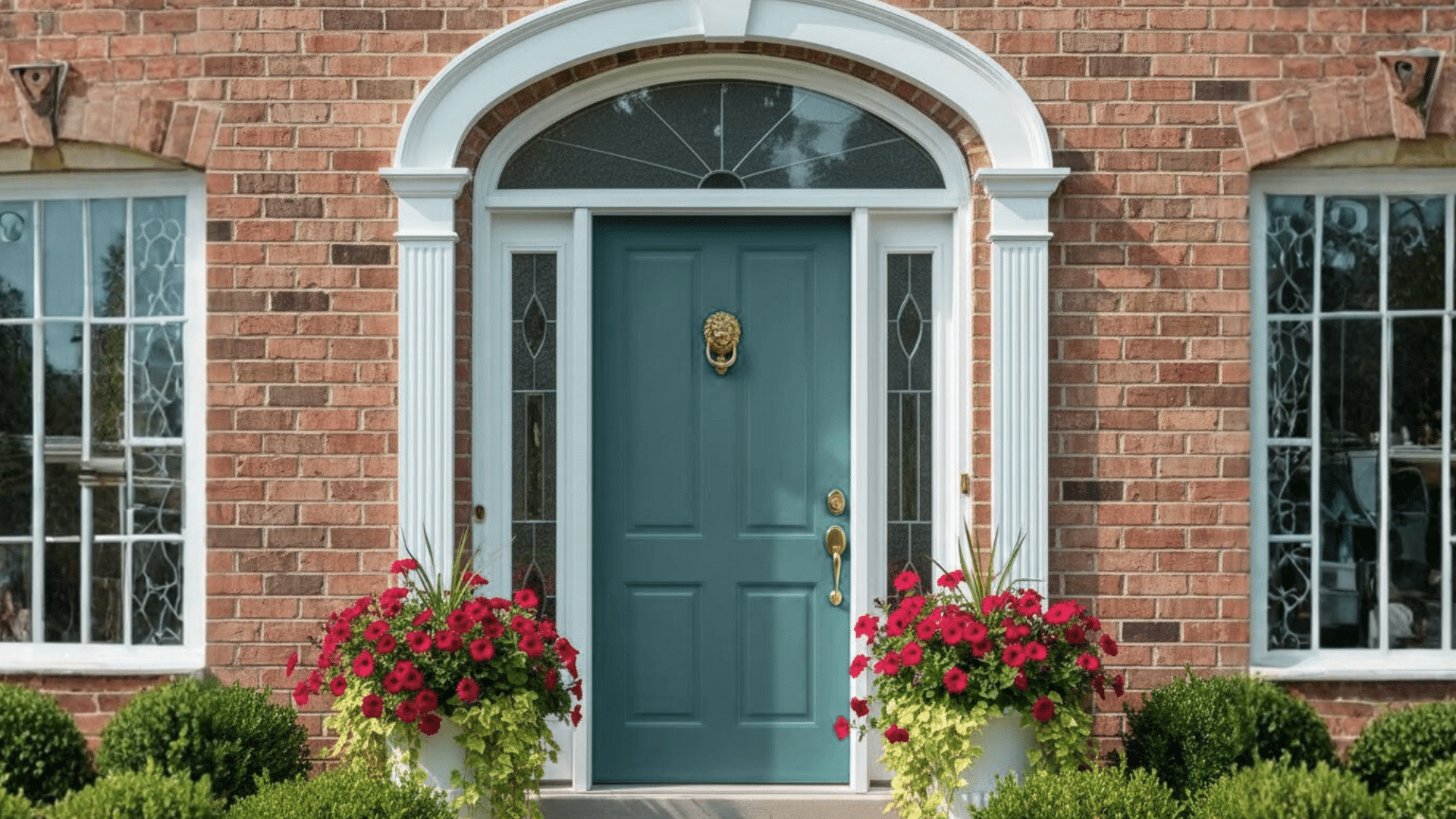
Aegean teal makes a bold statement that catches every visitor’s eye immediately.
I painted my client’s coastal cottage door with Aegean Teal, and neighbors still compliment it regularly. The color brings energy and personality while maintaining its beauty.
- Easy Application: Spreads easily without heavy brushing
- Coverage: Two coats achieve full opacity
- Color Retention: Stays bright and true outdoors
- Durability: Resists chipping and peeling remarkably well
4. Benjamin Moore Black HC-190
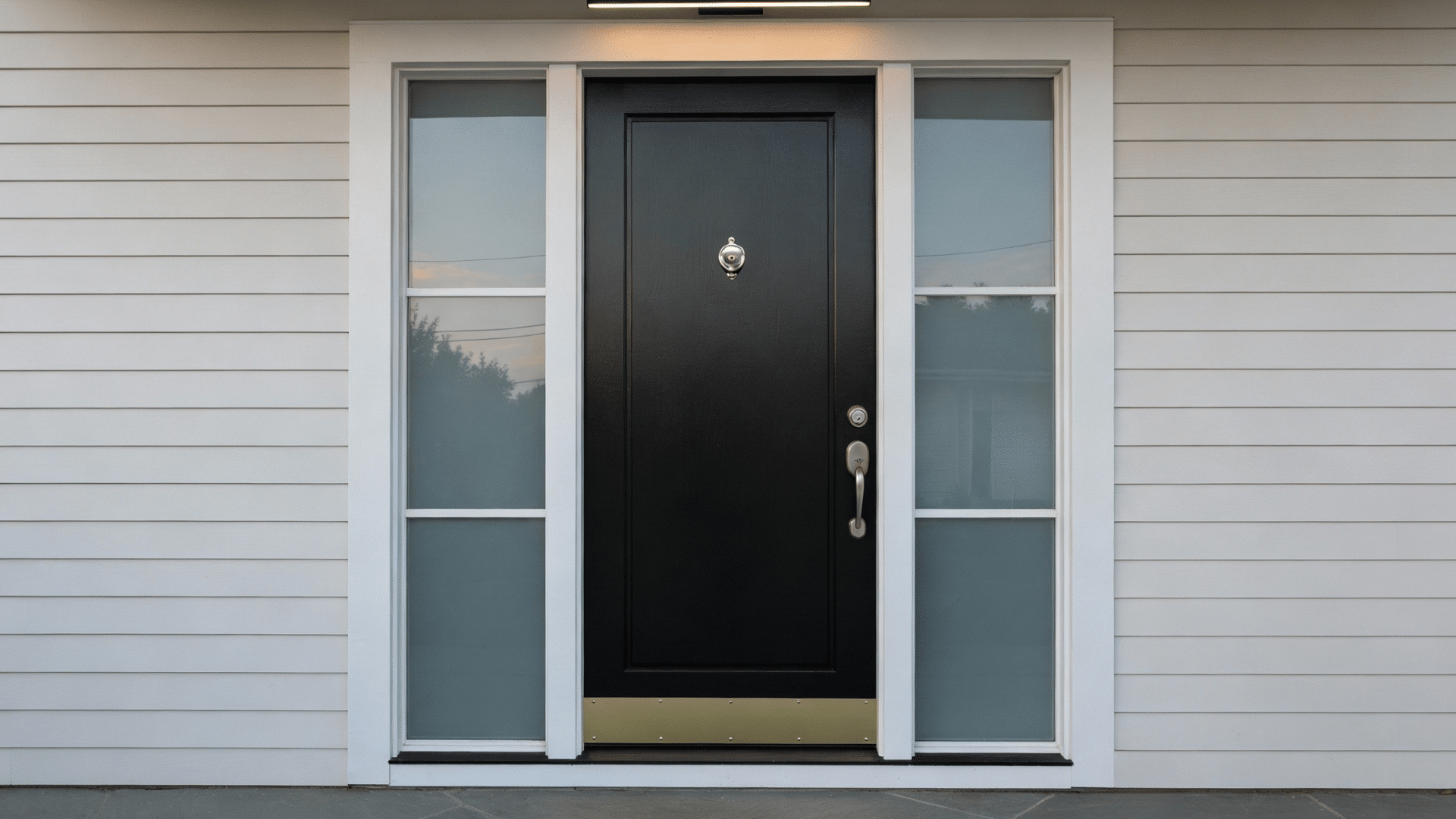
This Benjamin Moore Black creates maximum contrast and works with absolutely any exterior color scheme imaginable.
This classic choice never goes out of style and makes hardware and details pop visually. The depth of color adds an instant element to traditional and contemporary homes alike.
- Easy Application: Smooth, even application without streaks
- Coverage: Excellent coverage in two coats
- Color Retention: Pure black stays deep and rich
- Durability: Hard finish resists scuffs and scratches
5. Benjamin Moore Caliente AF-290
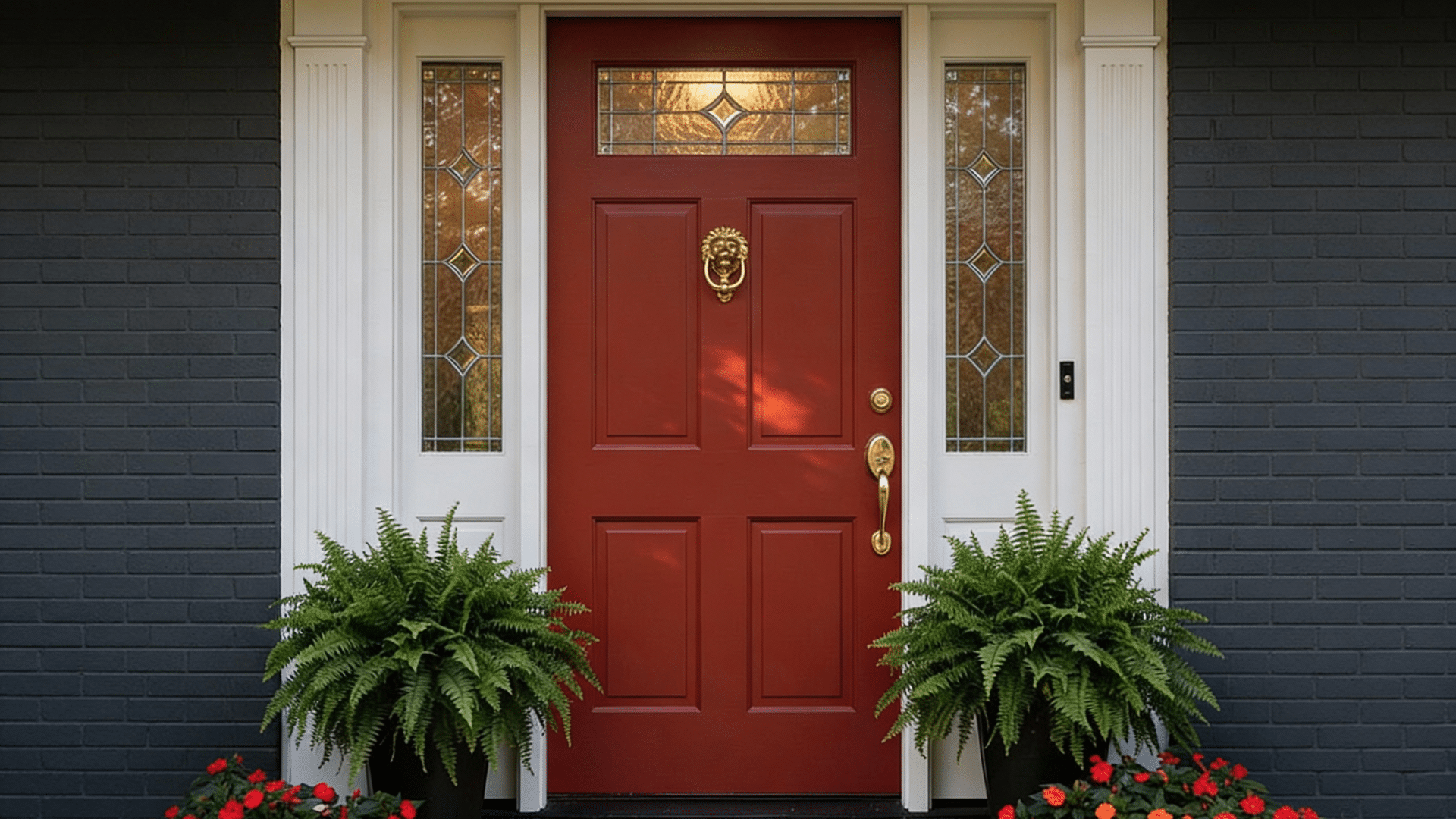
Caliente delivers a warm, spicy red-orange that radiates energy and welcomes guests with enthusiasm.
The color works especially well on Spanish-style, Mediterranean, and Southwest architecture. This shade stands out beautifully against stucco, adobe, and warm-toned siding.
- Easy Application: Consistent flow makes painting simple
- Coverage: Two coats provide a solid and even color
- Color Retention: Maintains warmth without fading to pink
- Durability: Holds up well in sunny climates
6. Benjamin Moore Chelsea Gray HC-168
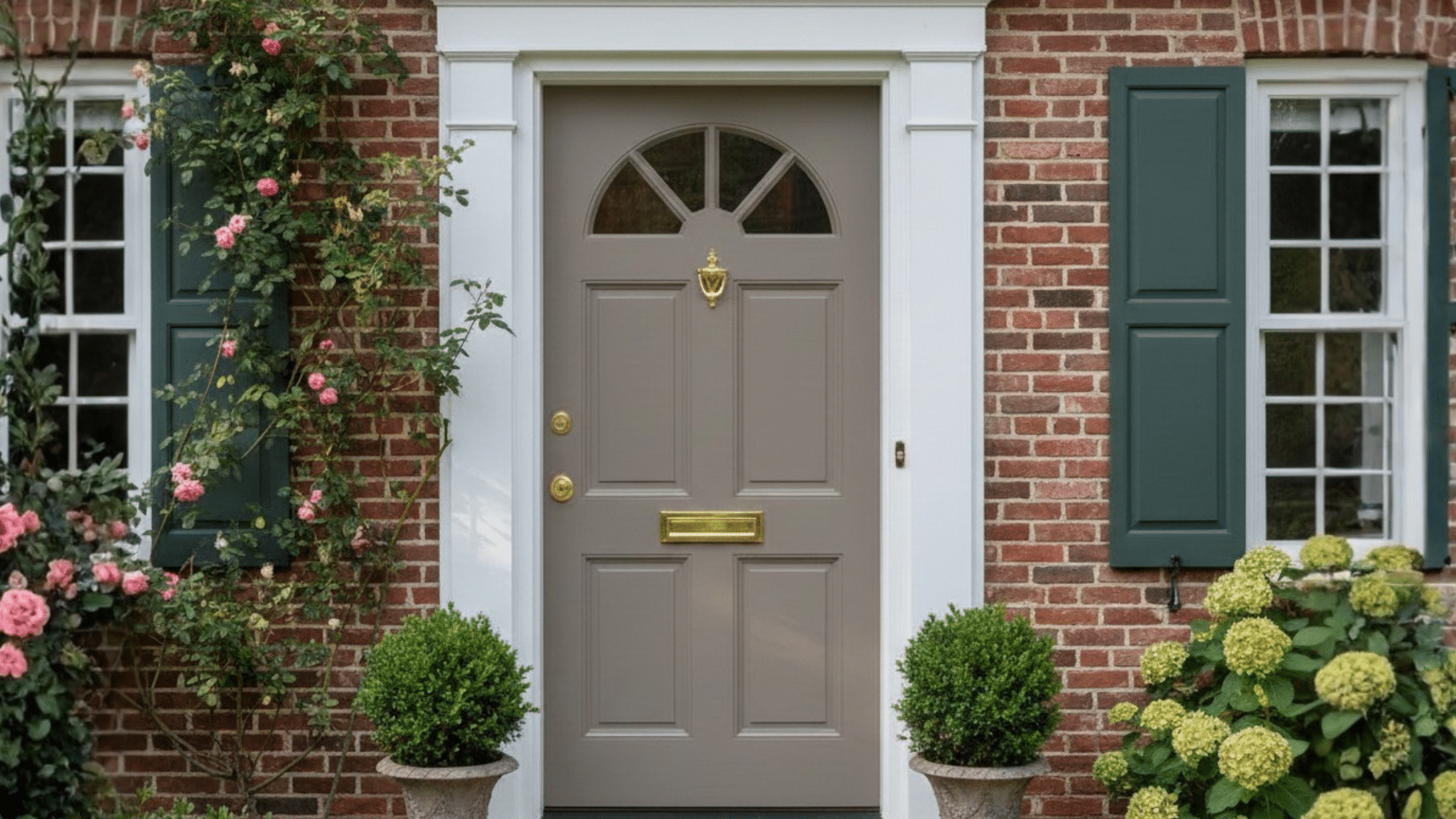
Chelsea Gray sits perfectly between warm and cool tones, making it a color for any home. I’ve used this on my own front door for four years now, and it still looks perfect.
The gray complements both modern and traditional architectural styles beautifully.
- Easy Application: Glides on smoothly without effort
- Coverage: Two coats give complete coverage
- Color Retention: Stays consistent through seasons
- Durability: Tough finish handles weather and traffic
7. Benjamin Moore Cape May Cobblestone 1474
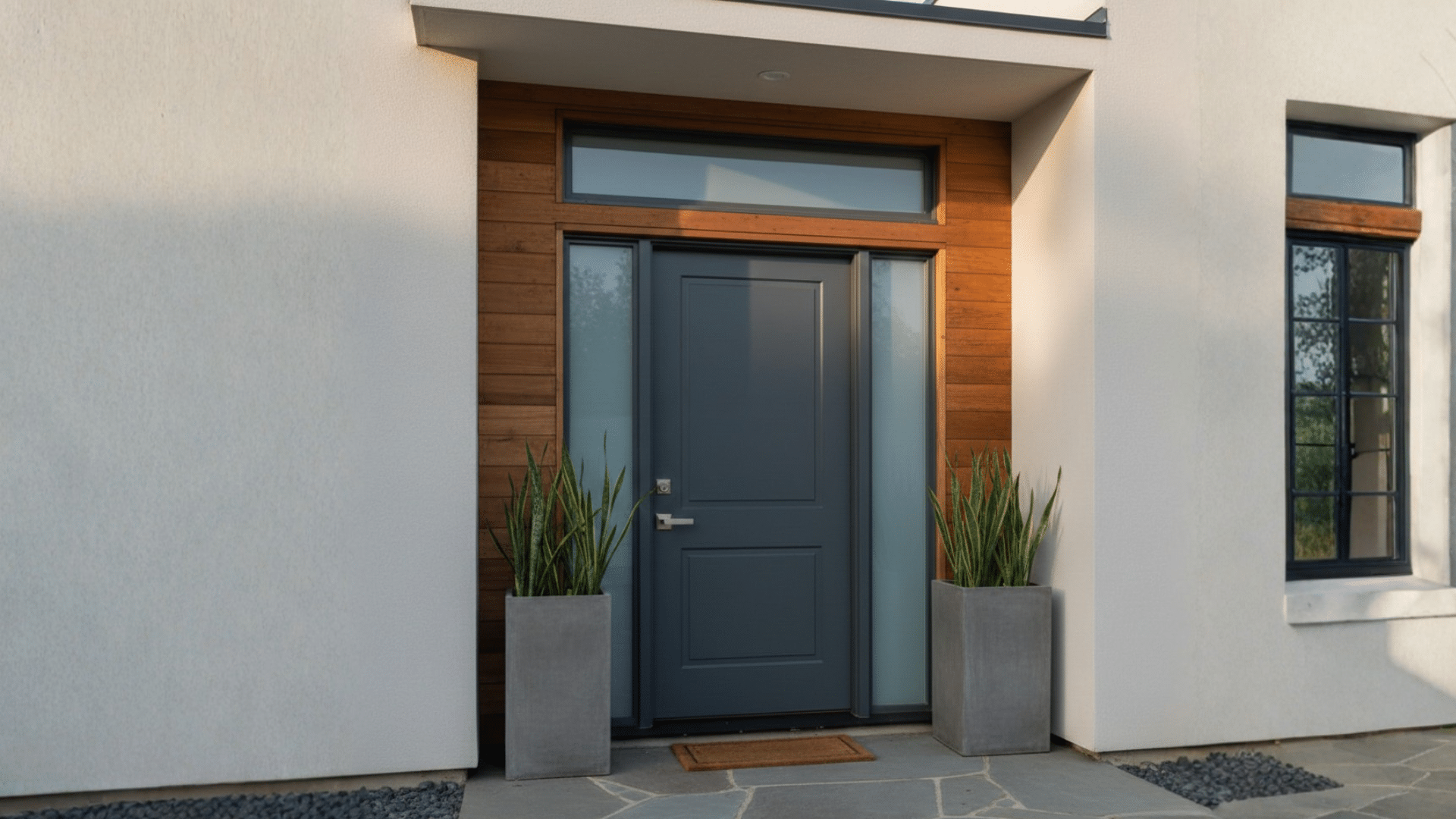
Cape May Cobblestone mimics natural stone and brings organic, earthy appeal to your entrance. The subtle warmth prevents the color from feeling cold or sterile on your door.
Cape May Cobblestone pairs perfectly with coastal, farmhouse, and transitional home styles.
- Easy Application: Easy to work with, no fuss
- Coverage: Solid coverage in two applications
- Color Retention: Gentle tone remains stable over time
- Durability: Withstands elements without deteriorating
8. Sherwin-Williams Gauntlet Gray (SW 7019)
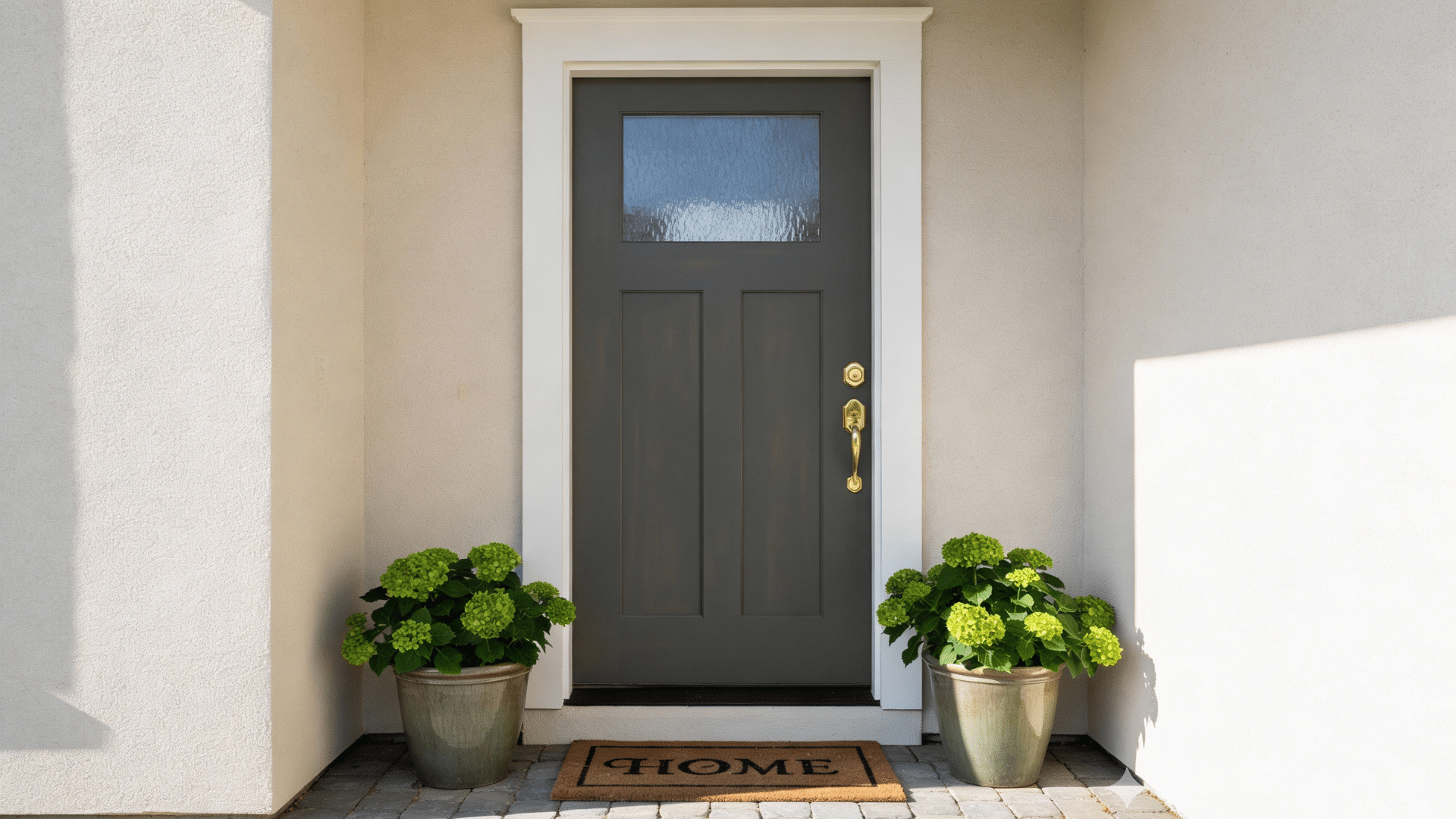
Gauntlet Gray brings a cool, contemporary feel that works beautifully on modern and minimalist homes.
My family member painted their urban townhouse door this color, and it elevates the entire facade. The medium-dark tone provides contrast without overdoing the space.
- Easy Application: Spreads uniformly across the surface
- Coverage: Excellent hides in two coats
- Color Retention: Maintains cool tone consistently
- Durability: Stands up to urban weather conditions
9. Benjamin Moore Pale Oak OC-20
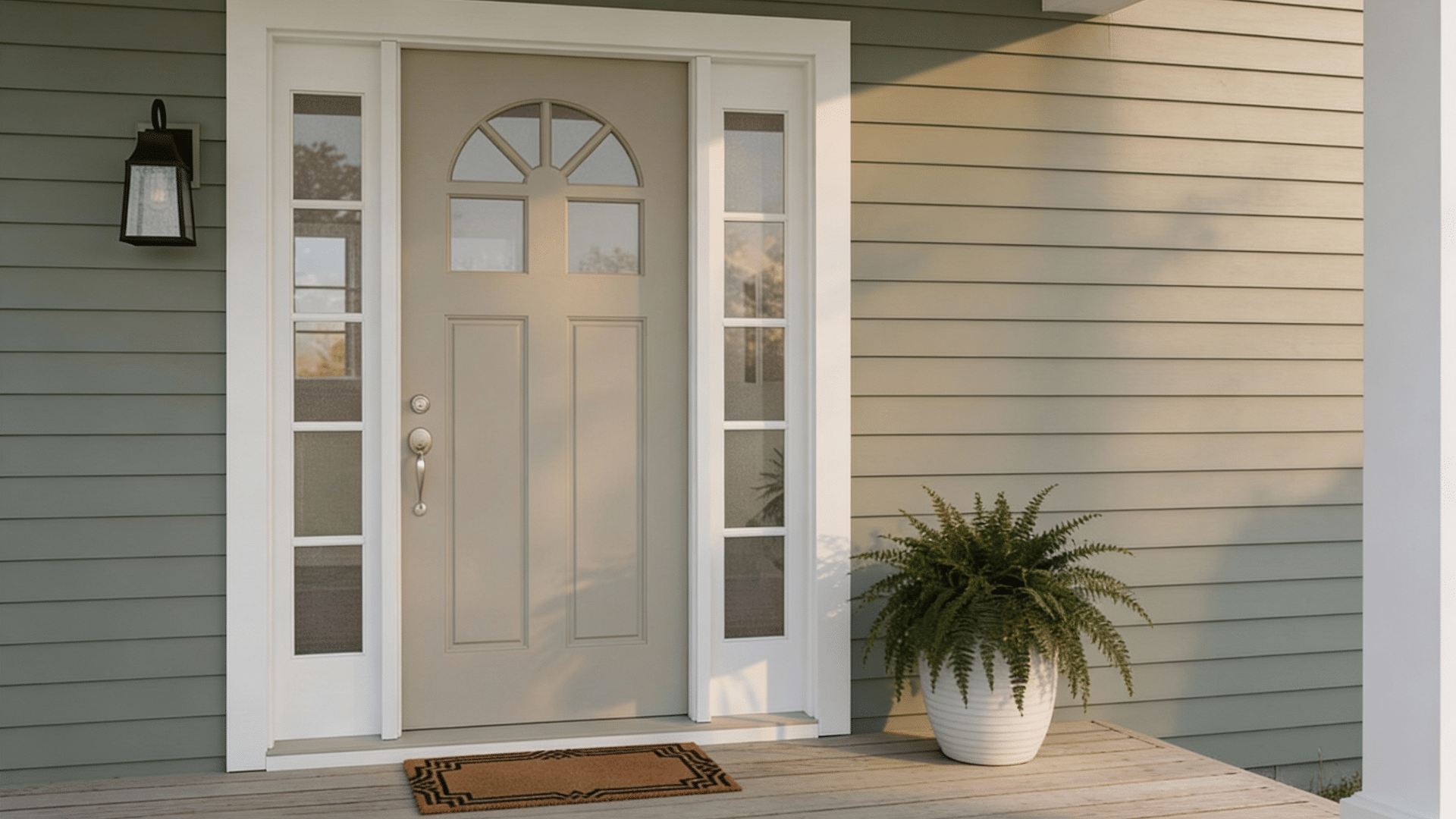
Pale Oak brings soft, warm beige tones that create a welcoming, gentle entrance aesthetic. The subtle color works beautifully when you want understated elegance rather than bold statements.
This shade complements natural wood accents, stone, and earth-tone exteriors naturally.
- Easy Application: Easy to brush on evenly
- Coverage: Two coats provide complete coverage
- Color Retention: Warm tone stays consistent outdoor
- Durability: Durable finish handles exposure well
10. Sherwin-Williams Alabaster (SW 7008)
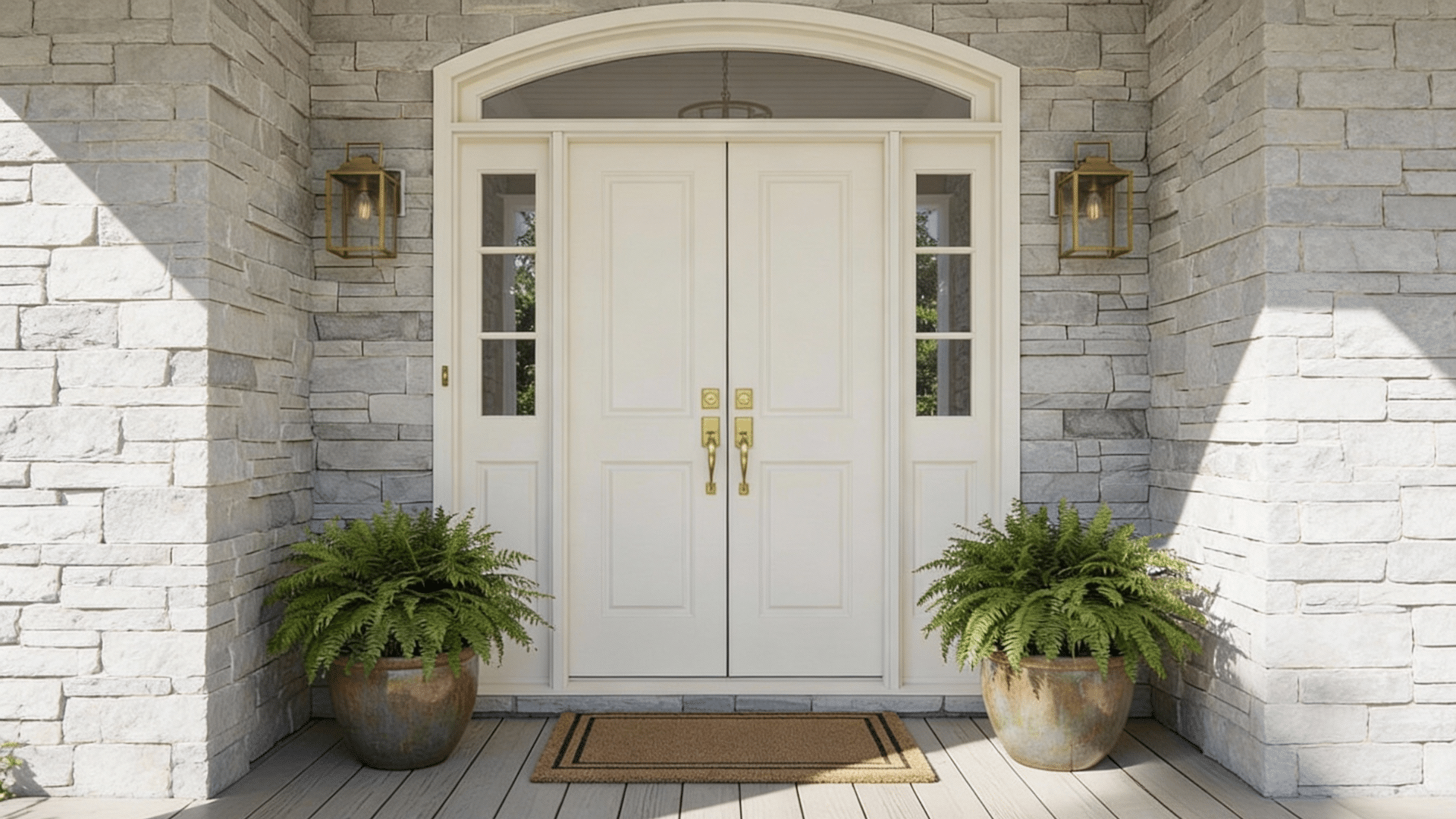
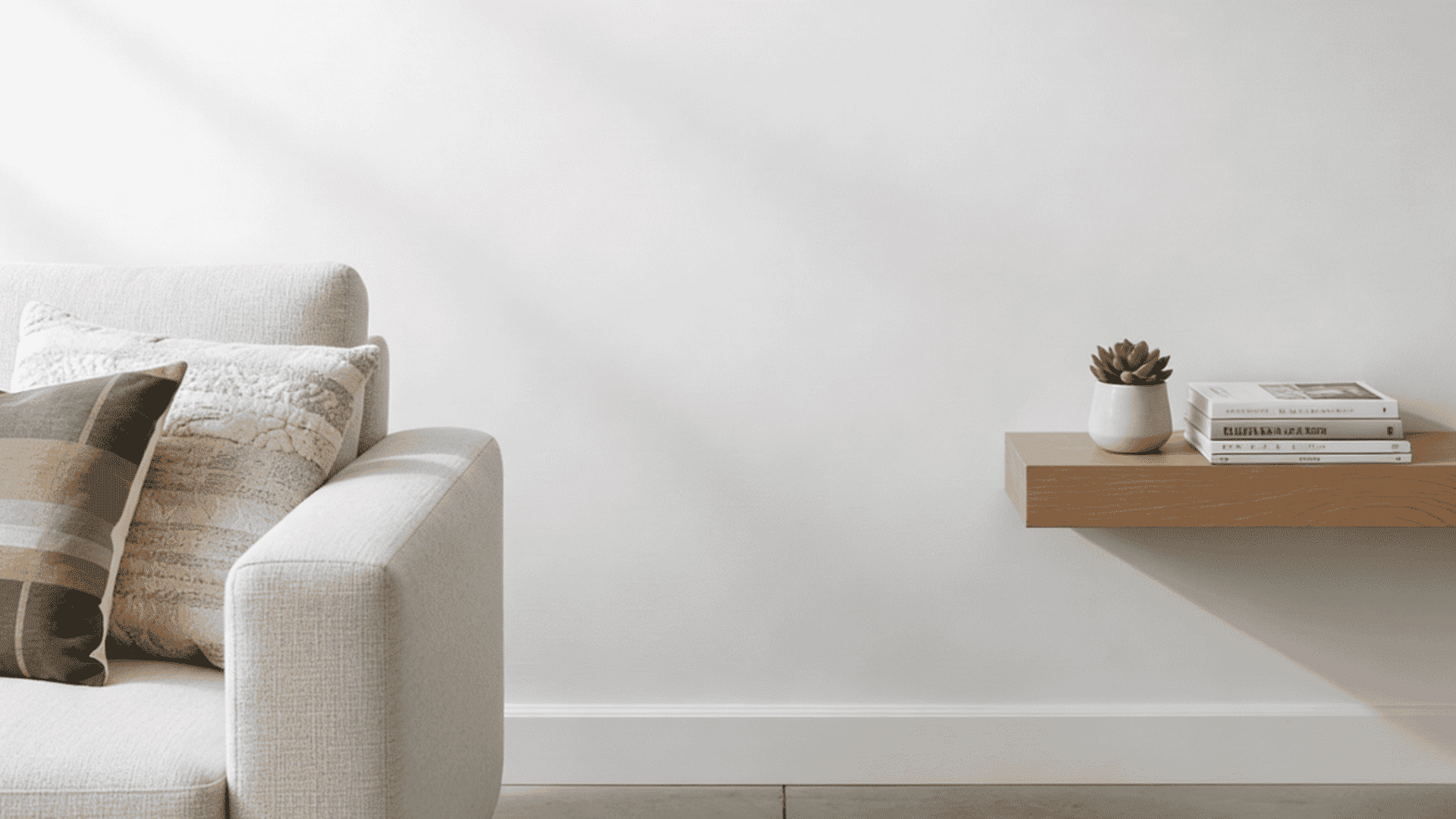
Alabaster provides a soft, warm white that feels fresh and clean without being stark.
The slight cream undertone prevents the harsh look of pure white on doors. This color brightens dark entryways and works beautifully with any architectural style imaginable.
- Easy Application: Goes on smoothly and evenly
- Coverage: Two coats achieve a bright, solid color
- Color Retention: Stays clean-looking longer than pure white
- Durability: Resists yellowing and maintains brightness
11. Sherwin-Williams Shoji White (SW 7042)
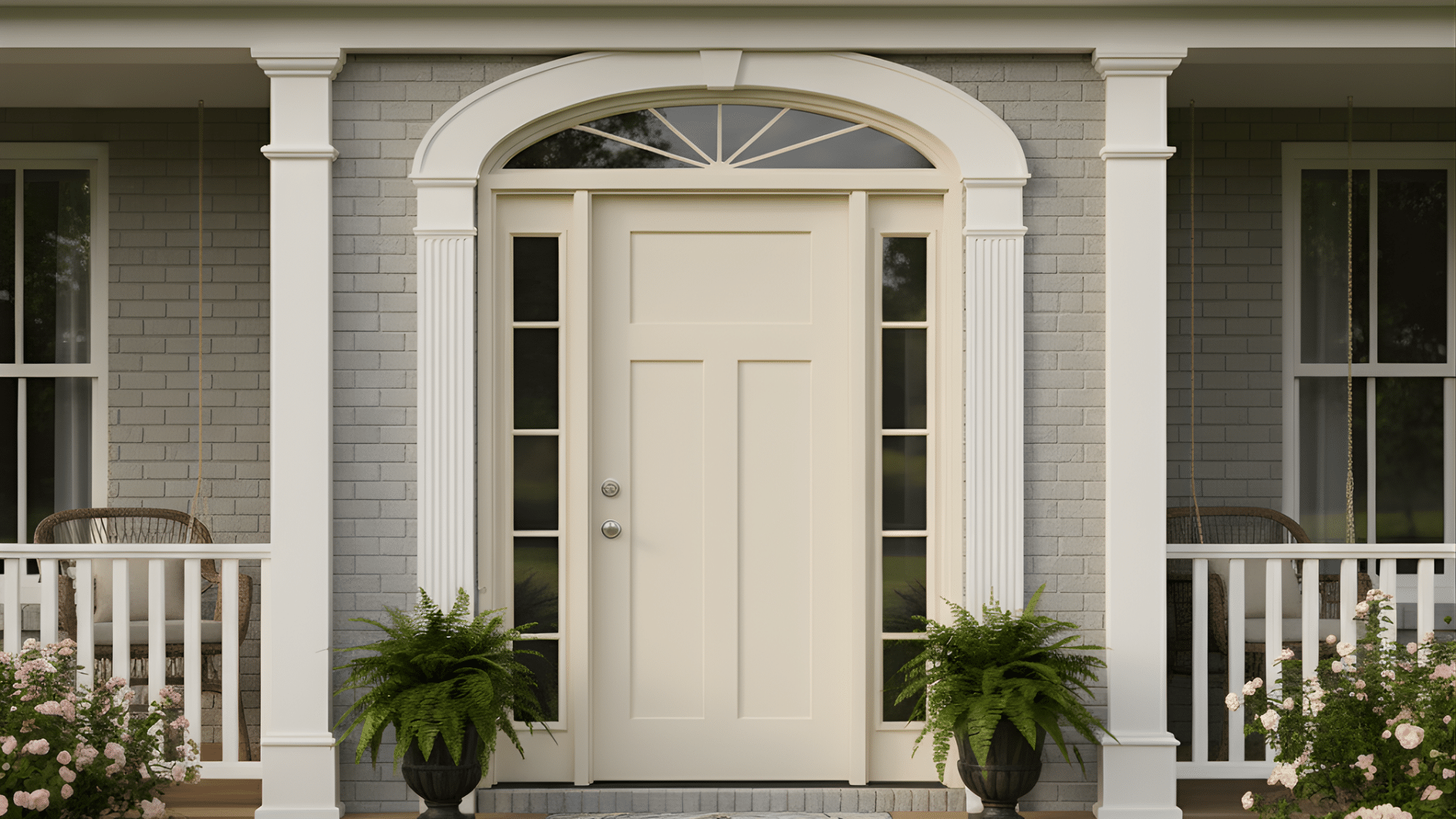
Shoji White delivers crisp, clean brightness with just a hint of warmth for balance.
The color creates a fresh, modern look that works with minimalist and contemporary home designs. This white pairs perfectly with bold trim colors or natural wood accents.
- Easy Application: Smooth, easy brushing experience
- Coverage: Excellent coverage in two coats
- Color Retention: Bright white stays true outdoors
- Durability: Durable finish resists dirt and stains
How to Paint an Exterior Door?
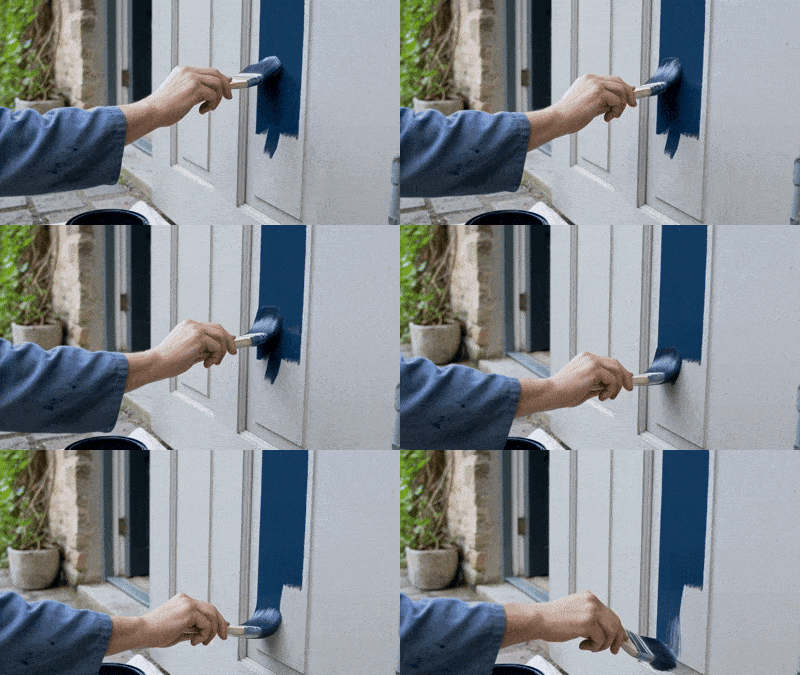
Painting a door isn’t complicated, but doing it right makes all the difference. Follow these steps for a finish that looks professional and lasts.
Step 1: Remove the Door and Hardware
Take the door off its hinges and lay it flat on sawhorses or a stable surface. Remove all hardware, including handles, locks, and hinges, to avoid paint buildup.
Working with the door flat prevents drips and gives you better access to all areas for an even coat.
Common Mistake to Avoid: Painting around hardware instead of removing it creates messy edges and prevents proper coverage.
Step 2: Clean the Door Thoroughly
Wash the entire door surface with soapy water to remove dirt, grease, and grime.
Pay special attention to areas around the handle where oils from hands accumulate over time. Let the door dry completely before moving to the next step.
Step 3: Sand the Surface
Use medium-grit sandpaper to rough up the old paint and create a surface that helps new paint stick.
Sand in the direction of the wood grain to avoid visible scratches in the final finish. Wipe away all dust with a damp cloth before priming, as dust particles create a bumpy texture under fresh paint.
Common Mistake to Avoid: Skipping the sanding step causes the new paint to peel off within months. The paint needs a rough surface to grip onto properly.
Step 4: Apply Primer
Brush on a coat of exterior primer to seal the wood and create a base for your topcoat. Primer blocks stains from bleeding through and helps the paint color look true and bright.
Let it dry according to the manufacturer’s instructions, which usually takes two to four hours, depending on humidity and temperature.
Step 5: Paint the First Coat
Apply your first coat of exterior paint using long, smooth strokes in one direction. Start with recessed panels if your door has them, then move to the flat surfaces and edges.
Don’t overload your brush, as thick coats take forever to dry and often sag or drip before they set properly.
Step 6: Sand Lightly Between Coats
Once the first coat dries completely, use fine-grit sandpaper to smooth any rough spots or brush marks.
This creates a perfectly smooth base for your final coat and removes any dust that settled while drying.
Wipe the surface clean with a slightly damp cloth before applying the second coat of paint for best results.
Step 7: Apply the Final Coat
Brush on your second coat using the same technique as before for consistency.
Check for any missed spots or thin areas and touch them up while the paint is still wet. Let the door dry completely for at least 24 hours before reattaching hardware.
Rehang it to avoid smudges or fingerprints on your fresh finish.
Can You Paint Over Old Paint?
Yes, you can paint over old paint as long as the surface is in good condition.
The existing paint needs to be clean, smooth, and firmly attached to the door. If the old paint is peeling, cracking, or bubbling, it must be scraped off first.
Sand the surface lightly to help the new paint stick better. Clean away all dust before applying primer.
Painting over solid, well-prepared old paint actually saves time compared to stripping everything down to bare wood.
Is Primer Necessary for Painting an Exterior Door?
Primer is necessary for most exterior door painting projects. It seals the surface and helps paint stick properly for years to come.
Raw wood absolutely needs primer before any topcoat gets applied. Even previously painted doors benefit from a primer coat, especially if you’re changing colors dramatically.
Primer blocks stains and prevents tannins from bleeding through the finish. Skip it only if you’re using a paint-and-primer combo on a well-prepared surface.
Otherwise, primer gives you better coverage and a longer-lasting finish.
Cost of Painting an Exterior Door
The cost of painting an exterior door varies based on several factors.
Whether you hire someone or do it yourself makes the biggest difference.
| Cost Factor | DIY Cost | Professional Cost | Notes |
|---|---|---|---|
| Paint (1 gallon) | $30 – $60 | Included in service | Premium brands cost more |
| Primer (1 quart) | $10 – $20 | Included in service | May need less for small doors |
| Sandpaper & Supplies | $15 – $25 | Included in service | Brushes, drop cloths, tape |
| Paint Stripper (if needed) | $10 – $20 | $50 – $100 extra | Only for badly damaged doors |
| Labor Cost | Your time (4-6 hours) | $100 – $300 | Depends on the door condition and location |
| Total Cost | $65 – $125 | $200 – $500 | Single door, standard size |
Should You DIY it or Call a Professional?
DIY makes sense if you have the time and basic painting skills.
The job takes about six hours for a single door, and you’ll save hundreds of dollars on labor costs.
However, professionals deliver flawless results and finish much faster with proper equipment.
Call a professional if your door has intricate details, severe damage, or if you lack confidence in your abilities.
Consider your schedule, too. A professional completes the work in one day, while DIY projects often stretch across weekends.
Final Wrap Up
Your exterior door deserves paint that protects and looks great for years. The options might seem confusing at first, but now you know what works.
Quality paint costs more upfront but saves money over time with fewer touch-ups and repaints. Take your time selecting the best paint for the exterior door.
Whether you go bold with navy or keep it classic with black, make sure the surface is clean and primed.
Ready to upgrade your entrance? Grab your supplies and get started this weekend.