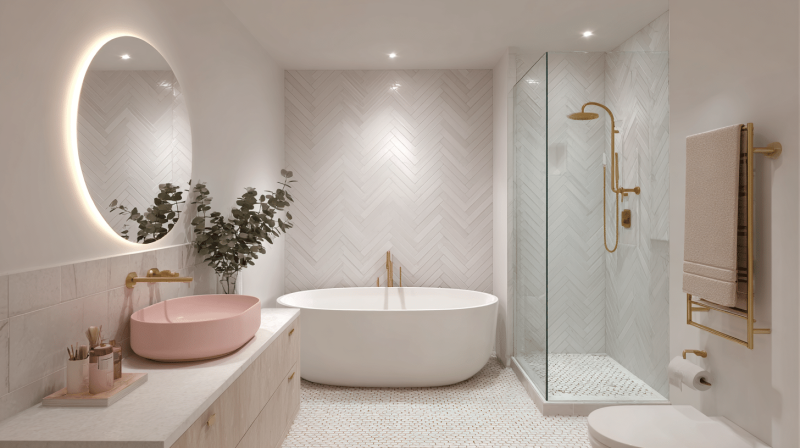
Thinking about a bathroom makeover? A wet room might be exactly what you need.
These open, barrier-free spaces are growing popular for good reason.
They’re sleek, practical, and surprisingly flexible, whether you’re working with a tiny powder room or just want something different.
Wet room ideas can completely change how your bathroom looks and functions.
No more stepping over tub edges or dealing with shower curtains. Just walk in, rinse off, and you’re done.
What is a Wet Room Bathroom?
A wet room bathroom, or wet room, is a fully waterproofed space where the shower area isn’t separated by a traditional enclosure.
The entire floor is designed to handle water, with a drain that keeps everything flowing smoothly.
Think of it as one continuous space. The floor slopes gently toward the drain, so water doesn’t pool anywhere.
You might see a glass panel for splash control, or the room could be completely open.
Either way, the whole bathroom can get wet without causing damage.
Key Features:
- Waterproof throughout: Walls and floors sealed against moisture
- Sloped flooring: Water flows directly to the drain
- Single open zone: Shower shares the same floor space
- Flexible layout: Fixtures can go almost anywhere
Difference Between a Wet Room and a Standard Bathroom
| Aspect | Wet Room | Standard Bathroom |
|---|---|---|
| Shower enclosure | No separate enclosure or tray | Enclosed shower stall or tub |
| Waterproofing | The entire room is waterproofed | Only the shower/tub area is sealed |
| Floor design | Single sloped floor with a drain | Flat floor with a separate shower base |
| Accessibility | Barrier-free, easy to enter | May have steps or thresholds |
| Space usage | Feels more open and spacious | Divided into separate zones |
| Installation cost | Higher due to full waterproofing | Generally less expensive |
| Maintenance | Requires regular squeegeeing and drying | Easier to keep dry zones separate |
The biggest difference comes down to how water is managed. Standard bathrooms keep the shower isolated, while wet rooms let the whole space handle moisture.
This changes everything from how you build it to how you use it daily.
Small Wet Room Design Ideas
Working with a small bathroom doesn’t mean you have to compromise.
The right design choices can make a compact wet room feel bigger and work better.
1. Small Wet Room with Wall-Mounted Fixtures

Wall-mounted toilets and sinks free up floor space.
Without bulky bases on the ground, you get more visible floor area, which makes the room feel less crowded. Cleaning becomes easier, too.
You can mop right underneath everything without working around pedestal bases or awkward corners.
2. Small Wet Room Design with Sliding Glass Screen

Sliding screens take up way less room than swinging doors.
A single glass panel that slides along a track gives you splash protection without demanding clearance space.
Tip: Install a towel bar on the sliding screen itself to save wall space and keep your towel within easy reach.
3. Light-Colored Wet Room for Compact Bathrooms

Light colors reflect more light. They make small spaces feel bigger.
White, cream, pale gray, or sage green tiles can open up a cramped bathroom significantly.
Dark colors absorb light and make small rooms feel closed in. Dark colors are not recommended in the compacted areas
4. Small Wet Room with Minimal Fixtures

Stick to the basics. A toilet, showerhead, and maybe a small sink if you have room.
Skip extra storage units or decorative shelves that eat up space and make things feel cramped.
A minimalist approach keeps the room breathing and makes it easier to move around comfortably.
5. Wet Room with Mirror Wall to Increase Visual Space

A full wall of mirrors or a wall with a huge mirror doubles your visual space instantly.
It reflects light and creates the illusion that the room extends beyond its actual boundaries. Just make sure it’s properly sealed.
You need a mirror rated for wet environments, or it’ll fog up and deteriorate quickly.
6. Wet Room Designed for Easy Access

Easy access means no steps, no barriers. Fixtures should be positioned for simple use.
A curbless entry, grab bars near the shower, and a handheld showerhead all contribute to better accessibility without sacrificing style.
Accessible design often looks clean and modern anyway.
Comfort-Focused Wet Room Ideas
If you have extra space to work with, you can add features to utilize that space.
These features will make your wet room more comfortable. Following ideas go beyond the basics.
7. Wet Room with Half-Wall Divider

A half wall creates separation without closing things off.
It blocks direct spray but doesn’t reach the ceiling, so the room still feels open.
You can build it knee-high or waist-high, depending on coverage. The top gives you a spot to set things down.
8. Wet Room with Raised Dry Area

A slightly raised platform keeps the shower area for the wet zone, and a part of the bathroom stays at floor level.
- Keeps toilet paper and towels completely dry
- Makes ventilation easier since moisture stays contained
- Creates visual separation between zones
9. Wet Room with Built-In Shower Bench

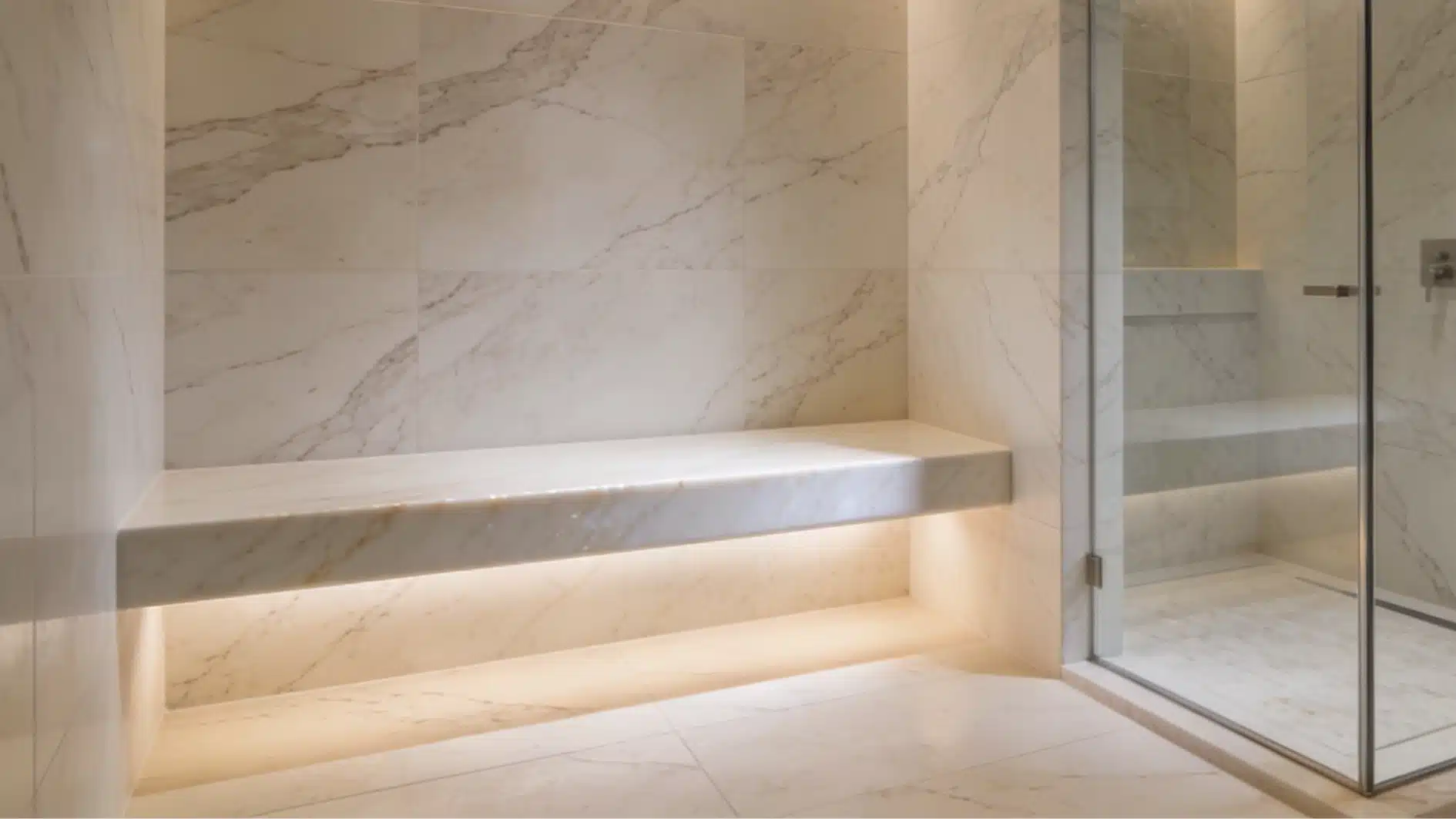
A built-in bench along one wall gives you a place to sit while showering.
Useful for shaving, relaxing, or if you get tired standing. The bench should be tiled and waterproofed like the rest of the room.
Tip: Build the bench at least 17-19 inches deep and 17-18 inches high for comfortable seating that works for most people.
10. Wet Room with Window Inside Shower Area

Natural light in the shower makes a huge difference.
Use frosted or textured glass for privacy while still getting light. Make sure the window frame and sill are properly sealed against moisture.
Opening the window after a shower helps with ventilation, too.
Shower & Drain Layout Ideas
Where you put the drain and how you position the shower affect everything. Water needs to flow properly, and the layout should feel natural.
These setups show different ways to handle drainage and shower placement.
11. Single Glass Panel Wet Room Layout

One fixed glass panel separates the shower from the rest of the room. Simple and clean.
The panel doesn’t need to reach wall to wall, just enough to block most spray.
Water still drains across the open floor, but the glass keeps the toilet and other areas drier.
12. Linear Drain Along the Back Wall

A linear drain runs horizontally along the back wall of the shower area.
The floor slopes gently toward this single line instead of a center point. It’s easier to tile around and less noticeable than traditional round drains.
- Easier to install with large-format tiles
- Creates a gentler, more uniform floor slope
- Better water flow capacity for larger areas
13. Center Drain Wet Room Layout

The drain sits right in the middle of the room, and the entire floor slopes toward it from all sides.
This is the most traditional approach and works when your wet room is roughly square.
Position the showerhead off to one side rather than directly above the drain.
14. Wet Room with Ceiling-Mounted Shower

The showerhead comes straight down from the ceiling instead of jutting out from the wall. This creates a rain-shower effect and saves wall space.
Ceiling-mounted fixtures look modern and keep walls clear. Just make sure your ceiling height works for this.
Layout-Based Wet Room Ideas
How you arrange a wet room makes all the difference. The layout depends on your space, fixtures, and how the room needs to function.
15. Fully Open Wet Room with No Screen

No glass, no dividers. Just one open space where water flows freely.
The shower sits right in the room with everything else, and the drain handles all the water.
Position the showerhead carefully so it doesn’t spray toilet paper or towels.
16. Corner Wet Room Layout for Small Bathrooms

Put the shower in a corner with a single glass panel along one side.
The toilet and sink go on the opposite wall, staying dry.
This is a popular small wet room design choice because it uses every inch efficiently and creates natural separation without walls.
17. Narrow Wet Room Layout for Long Spaces

Place the shower at one short end and line up fixtures down the length. The toilet goes midway, and the sink is near the entrance.
A glass screen at the shower end stops water from traveling too far down the room.
Tip: In narrow layouts, use light-colored tiles on the walls to make the space feel wider than it actually is.
18. Wet Room with Toilet Inside the Shower Zone

Place the toilet right in the shower area to free up floor space.
Everything gets waterproofed, and the toilet becomes part of the wet zone.
The toilet will get wet during showers, but modern toilets handle moisture fine. Choose one with smooth surfaces that are easy to rinse down.
19. Wet Room with Sink Inside the Shower Area

Put a wall-mounted sink in the shower zone to save space in cramped quarters.
You shower with your sink right there within reach. Use a simple basin and wall-mounted faucet without too many crevices where water can collect.
Position it where it won’t be in your way while showering.
20. Compact Wet Room with Clear Zoning Using Tiles

Use different tile patterns or colors to visually separate zones without adding walls.
Darker tiles where water hits most, lighter ones near the door.
This is one of those wet room ideas that gives you openness with visual organization, a smart middle ground when you want some definition without physical barriers.
Storage-Friendly Wet Room Ideas
Storage can be tricky in wet rooms since everything needs to handle moisture.
Smart built-in options keep things organized without taking up floor space or making the room feel cluttered.
21. Wet Room with Recessed Wall Shelves

Recessed shelves sit inside the wall rather than sticking out into the room.
This gives you storage without losing floor space. You can add multiple shelves at different heights for bottles, soap, and razors.
Just make sure they’re properly waterproofed since water will sit on these surfaces.
22. Wet Room with Towel Storage Inside Wet Zone

Install waterproof hooks or a heated towel rail right in the wet zone.
Your towel stays within arm’s reach when you finish showering. Heated rails dry towels quickly, so they don’t stay damp.
Position them where they won’t get directly sprayed but are still convenient.
23. Wet Room with Vertical Storage Column

A vertical storage column uses wall height instead of floor space.
Install a tall, narrow cabinet or stacked shelves from floor to ceiling. This gives you plenty of storage without eating into your square footage.
Choose waterproof materials and position them outside the direct spray zone.
Pros and Cons
Wet rooms aren’t for everyone. They come with real advantages but also some drawbacks you should know about before committing.
Pros
- Makes small bathrooms feel bigger: Without a bulky shower enclosure, the room feels more open.
- Easier to clean: No shower door tracks or tight corners to scrub.
- Better for accessibility: No curbs or steps means safer entry for everyone.
- Modern look: The open design looks sleek and contemporary.
- Increases home value: Buyers appreciate well-done wet rooms, especially in smaller homes.
Cons
- Higher installation costs: Full waterproofing and proper drainage cost more upfront.
- Whole room gets wet: Moisture spreads more, requiring regular drying.
- Requires good ventilation: Without proper airflow, mold becomes a problem.
- Cold drafts: No enclosure means no trapped warmth while showering.
- Not ideal for shared bathrooms: Wet surfaces can be annoying throughout the day.
- Potential for water damage: Poor waterproofing leads to expensive repairs.
Is a Wet Room Cheaper than a Bathroom?
No, wet rooms typically cost more.
You’re paying for extensive waterproofing, specialized drainage, and professional installation.
A standard bathroom renovation might run “$5,000 to $15,000,” while a wet room usually starts around “$8,000 and can easily exceed $20,000” depending on size and materials.
The upfront investment is higher, but many find the benefits worth it.
Is a Wet Room Design Right for Your Home?
Deciding whether a wet room fits your situation depends on several factors. Consider these points before committing.
A Wet Room Makes Sense If
You’re living alone or with just one other person, means wet surfaces won’t cause daily frustration
A wet room works well when you’re dealing with a small bathroom that needs better flow. It’s particularly smart if you need accessibility features or want to plan ahead.
You’ll need the budget for higher installation costs, but if you’re staying long-term, the investment pays off.
Skip a Wet Room If
Multiple people sharing the bathroom can make wet floors annoying.
A tight budget might not cover the extensive waterproofing required. Cold climates need heated floors for comfort, which adds more cost.
If you’re planning to sell soon, you might not get full value from the investment, especially without experienced contractors.
The right choice depends on your budget, space, and how you use your bathroom daily.
Final Thoughts
Wet rooms offer a practical solution for tight spaces and accessibility needs.
But they’re not a one-size-fits-all answer. The design you choose should match your bathroom’s size, your budget, and how you actually live.
From corner layouts to center drains, small wet room design options give you the flexibility.
It creates something functional and stylish. Take your time planning, and hire skilled contractors.