

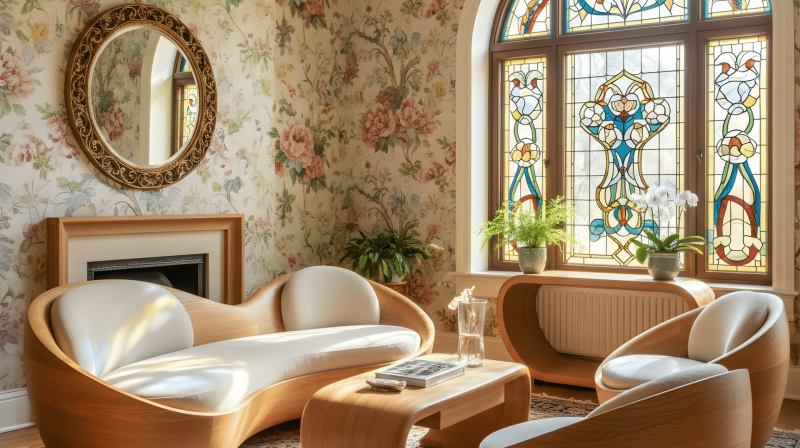
Interior design lovers often struggle to find a style that balances beauty with functionality.
Art Nouveau architecture offers exactly that, flowing lines, natural forms, and spaces that feel alive. This style transformed buildings and interiors in the late 1800s, and it still inspires designers today.
This blog will show you learn about its key features, from curved forms to nature-inspired patterns.
We’ll cover practical ways to bring this historic style into your home without making it look outdated.
The Origin and History of Art Nouveau Architecture
Art Nouveau started in the 1890s as a reaction against industrial mass production. Architects wanted something new. They were tired of copying old styles.
The movement began in Belgium and France, then spread across Europe and America. It lasted roughly 20 years, from 1890 to 1910.
Artists and architects worked together during this period. They shared ideas about bringing nature into design.
The style got different names in different countries. In Germany, people called it Jugendstil. Spaniards knew it as Modernisme. Americans sometimes called it the Tiffany style.
World War I essentially ended the movement. The war changed everything, and simpler designs took over afterward.
The Characteristics of Art Nouveau
Art Nouveau buildings share specific features that make them easy to spot.
These characteristics appeared consistently across different countries and architects.
1. Curved Lines and Flowing Forms
Straight lines rarely appear in Art Nouveau buildings. Architects preferred curves that mimic nature.
Walls, windows, and doorways flow into each other smoothly. Even structural elements like iron beams were bent into organic shapes.
This created a sense of movement throughout the entire building.
2. Nature-Inspired Decorations
Plants, flowers, and vines cover Art Nouveau structures. Architects studied real botanical forms closely.
They carved leaves into stone facades and shaped metal railings like stems. Peacocks, dragonflies, and butterflies also appear frequently.
Every decoration connects back to the natural world in some way.
3. Asymmetrical Designs
Balance didn’t mean matching both sides perfectly. Art Nouveau architects avoided strict symmetry.
One side of a building might look different from the other. Windows came in various sizes and shapes.
This asymmetry made each structure feel more natural and less rigid than traditional buildings.
4. New Materials and Techniques
Iron and glass became central to Art Nouveau design.
Architects used these materials in visible, decorative ways. Large windows let in more light than ever before.
Exposed iron beams became artistic features rather than hidden supports. Ceramic tiles added color and pattern to many buildings.
5. Emphasis on Craftsmanship
Every detail received careful attention from skilled craftsmen.
Hand-forged metalwork, custom-stained glass, and carved woodwork filled these buildings. Mass production was deliberately rejected.
Each element was treated as art. This focus on quality over quantity made Art Nouveau buildings expensive to construct.
How to Incorporate Art Nouveau in Your Interior?
Bringing Art Nouveau style into a home doesn’t require a complete renovation. Small changes can make a big difference.
Curved Furniture Lines

Choose furniture with flowing, organic shapes instead of boxy pieces.
Look for chairs with curved backs and sofas with rounded arms. Wooden pieces should have carved details that resemble plant stems.
Coffee tables with curved legs work well. These pieces instantly soften a room’s appearance.
Install Stained Glass Accents

Stained glass panels add instant Art Nouveau character to any space.
Install them in windows, cabinet doors, or room dividers. Look for designs featuring flowers, peacocks, or abstract natural patterns.
The colored light they create changes throughout the day. Even small stained glass pieces make strong visual statements.
Choose Ornate Wallpaper Designs

Wallpaper with botanical patterns brings Art Nouveau walls to life.
Select designs showing iris flowers, water lilies, or trailing vines. The patterns should flow vertically rather than repeat in rigid grids.
Rich colors like deep greens, burgundies, and golds work best.
Apply wallpaper to one accent wall if full-room coverage feels overwhelming.
Add Wrought Iron Details

Wrought iron elements bring an authentic Art Nouveau texture indoors.
Install decorative iron curtain rods shaped like branches. Add iron plant stands with vine-like scrollwork.
Iron light fixtures with organic forms also work well. These metal accents contrast beautifully with soft fabrics and wood.
Even small iron pieces create a significant visual impact.
Select Rich, Textured Fabrics

Velvet, silk, and brocade fabrics suit Art Nouveau interiors perfectly.
Choose upholstery in jewel tones like emerald, sapphire, or amethyst.
Curtains should drape heavily with plenty of fabric. Look for textiles featuring stylized floral patterns or peacock feathers.
Layering different textures adds depth and luxury to rooms.
Frame Botanical Art Prints

Botanical illustrations and nature prints fit the Art Nouveau style perfectly.
Frame prints of exotic flowers, ferns, or mushrooms in ornate frames. Alphonse Mucha posters showing women surrounded by flowers work wonderfully.
Group several prints together on one wall. Choose frames with curved edges and decorative details for authenticity.
Use Mosaic Tiled Floors

Mosaic tiles with floral or organic patterns transform plain floors.
Install them in entryways, bathrooms, or kitchen backsplashes. Look for tiles in iridescent finishes or hand-painted ceramics.
Curved patterns work better than geometric grids. Even a small mosaic section creates a focal point that draws the eye immediately.
Incorporate Ceramic Vases

Ceramic vases with nature-inspired shapes add sculptural interest to rooms. Choose pieces with handles shaped like stems or leaves.
Iridescent glazes in green, purple, or gold look particularly authentic. Display vases in groups of odd numbers on mantels or shelves.
Fill them with tall branches or leave them empty as art objects.
Layer Metallic Finishes

Brass, copper, and bronze finishes breathe life into Art Nouveau interiors beautifully.
Mix these warm metals in light fixtures, drawer pulls, and mirrors. Avoid shiny chrome or steel, which feel too modern.
Aged or patinated finishes look more authentic than brand-new metals. Layer different metallic tones throughout a room for richness and depth.
Art Nouveau Architecture vs Art Deco
Many people confuse Art Nouveau with Art Deco. Both styles created beautiful buildings, but they’re quite different.
| Feature | Art Nouveau | Art Deco |
|---|---|---|
| Time Period | 1890-1910 | 1920-1940 |
| Lines and Shapes | Curved, flowing, organic lines inspired by nature | Straight, geometric lines with sharp angles and zigzag patterns |
| Decorative Style | Flowers, vines, plants, insects, and natural forms | Sunbursts, chevrons, stepped forms, and stylized motifs |
| Materials | Iron, glass, ceramic, and hand-forged metals | Chrome, steel, glass blocks, polished stone, plastic |
| Symmetry | Asymmetrical designs that feel natural and spontaneous | Symmetrical, balanced compositions with formal arrangements |
| Color Palette | Soft, muted colors with earthy tones | Bold, contrasting colors with metallic accents |
| Craftsmanship | Heavy focus on individual craftsmen and unique pieces | Mix of handcraft and machine production methods |
To Wrap Up
Art Nouveau interior design proves that good style never fades.
The movement started over a century ago, but its principles still work today. Curved lines, natural materials, and organic patterns create spaces with character and warmth.
You don’t need a mansion to use these ideas.
Start small, add a mirror with flowing frames, choose textiles with botanical prints, or pick furniture with curved legs. Each piece adds personality to your room.
Ready to change your pace?


