

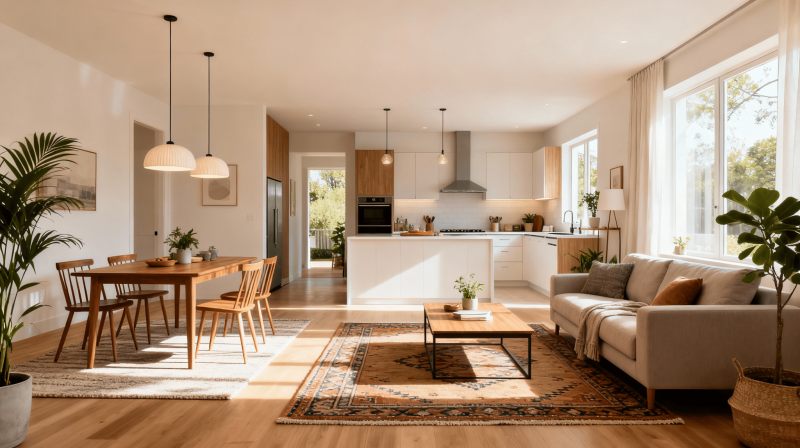
An open living room layout can make your home feel twice as big.
But here’s the thing: without the right setup, it can also feel chaotic and undefined.
With smart furniture placement, clever zoning tricks, and a few design moves, you can turn that wide-open space into a cozy, functional area that actually works for your lifestyle.
Let’s get into it.
What Makes a Good Open Layout?
A great open space doesn’t happen by accident. It needs a few key pieces working together to feel balanced and functional.
When these elements are in place, your room flows naturally instead of feeling like one big jumbled area.
You’ll notice the difference immediately.
Everything has a purpose, and the space actually works for how you live. Get these basics right, and everything else falls into place.
-
Clear Zones: Every activity needs its own spot. Visual boundaries help the room make sense.
-
Good Traffic Flow: Leave at least three feet for walkways between areas.
-
Consistent Style: Use repeated colors or materials to connect the spaces.
-
Layered Lighting: Mix overhead, task, and ambient lights in each zone.
Helpful Tips Before Starting
A few final pointers to pull everything together and make your open space work even better.
-
Start with Traffic Flow: Map out where people walk before placing any furniture. This prevents layout mistakes that are hard to fix later.
-
Use the Rule of Three: Group decorative items in threes on shelves and tables. It’s visually pleasing and keeps styling from looking too sparse or cluttered.
-
Layer Your Textures: Mix materials like wood, metal, fabric, and glass throughout the space. This adds depth and keeps the design from feeling flat.
-
Keep Sight Lines Clear: Make sure you can see from one end of the space to the other without major obstructions. This maintains the open, airy feeling.
-
Add Personal Touches Gradually: Don’t rush to fill every surface. Live in the space first, then add items that reflect how you actually use each zone.
-
Test Before Committing: Use painter’s tape to mark furniture placement on the floor. Walk through it for a day or two before moving heavy pieces.
Open Living Room Layout Ideas
These design strategies will help you carve out distinct spaces while keeping that airy, connected feel.
Pick the ones that fit your space and lifestyle.
1. Use a Sectional to Define the Living Area

A sectional creates an instant boundary.
The L-shape naturally marks where your living zone begins and ends, even in the middle of a large room.
Position it to face your main focal point, and the back acts like a soft wall that separates the seating area from whatever’s behind it.
2. Float the Sofa Away from the Wall

Pushing all your furniture against the walls actually makes a room feel smaller.
Pull your sofa a few feet into the space instead. The gap behind it becomes useful for a console table or as a pathway to other zones.
I like to leave about 18 inches between the sofa back and the wall. It’s enough space to walk through comfortably but doesn’t waste valuable square footage.
3. Create a Conversation Circle

Arrange your seating so people can actually see each other when they talk. Face sofas and chairs toward a central point, like a coffee table or ottoman.
Keep the distance between seats around 8 to 10 feet so conversations feel natural, not shouted across a canyon.
4. Add a Console Table Behind the Sofa

When your sofa floats in the middle of the room, that empty space behind it needs a purpose.
A console table fills the gap perfectly with lamps, books, plants, or a catch-all tray.
Keep the height at or just below the sofa back, and go for something slim if space is tight.
5. Combine Living + Dining with a Shared Rug Palette

Using rugs in the same color family ties adjacent zones together visually. Pick one pattern for the living area and a complementary style for the dining space.
They should feel related, which creates unity while still marking separate areas.
6. Build Zones with Area Rugs

Rugs are probably the easiest way to define spaces without construction.
Place one under your seating arrangement, another under the dining table, and maybe a runner in the kitchen.
Make sure your rugs are big enough so all the front legs of your furniture sit on them, or better yet, all four legs.
7. Use Open Shelving as A Room Divider

A bookshelf placed perpendicular to the wall creates separation while keeping things open.
You can see through it, so the space doesn’t feel closed off, but it still gives each zone its own identity. Style both sides since it’s visible from multiple angles.
8. Add a Kitchen Island that Faces the Living Room

If you’re planning a renovation, position the island so it faces the living area.
This creates a natural gathering spot and lets whoever’s cooking stay part of the conversation.
Add bar stools on the living room side for extra seating that bridges both zones.
Make sure there’s at least 42 inches of clearance between the island and any other surface. You need room to open cabinets and move around comfortably while cooking.
9. Use Dual-Facing Sofas

Two sofas facing each other create a strong visual anchor.
This works well when you have a large space and need to fill it without overcrowding.
Position them parallel with a coffee table in between, and the setup naturally defines the living area while creating symmetry.
10. Add a Secondary Seating Nook

If you have the square footage, create a smaller seating area separate from your main one.
Two chairs with a side table or a loveseat give you options for reading, morning coffee, or when you need a quiet corner.
This breaks up a large room and makes it feel more layered.
11. Choose Backless Furniture for Flexible Flow

Stools, benches, and backless ottomans keep sightlines open.
You can tuck them under tables when not in use or pull them out when you need extra seating.
Since they don’t have tall backs, they don’t visually block anything, and they work as footrests, side tables, or spare seats depending on the moment.
12. Use Corner Seating to Maximize Space

Corners often go unused, but they’re perfect for built-in benches or L-shaped seating arrangements.
A corner banquette in the dining area or a cozy reading nook makes the most of every inch.
This also helps with flow since you’re not putting furniture in the middle of pathways.
13. Incorporate a Fireplace as A Natural Divider

If you’re building or renovating, consider a double-sided fireplace. It creates a focal point for two zones at once and adds architectural interest.
Even a single-sided fireplace helps define the living area by giving it a clear anchor point that draws the eye.
14. Use Pendant Lighting to Define Zones

Hanging lights over specific areas signals what happens there.
Pendants over the dining table mark the eating zone, while a cluster of lights over the living area highlights that space.
Each fixture creates a visual ceiling that separates the area below it from the rest of the room.
15. Add a Large Accent Wall to Anchor the Living

Paint one wall behind your sofa in a different color or add wallpaper, wood paneling, or textured tile.
This creates a backdrop for your living area that distinguishes it from the rest of the space. The accent wall becomes a focal point and gives the seating arrangement a sense of place.
16. Mix Shapes for Better Flow

Combining round and rectangular pieces creates visual interest and improves movement through the space.
A round coffee table with a rectangular sofa, circular pendants over a square dining table, or an oval rug under angular furniture all work well.
Round tables are especially good because they don’t have corners that jut into walkways.
17. Use Sliding Panels or Half Dividers

Sometimes you want the option to close off a space.
Sliding barn doors, frosted glass panels, or even curtains on a ceiling track let you separate zones when needed and open them back up later.
Half-height dividers create a boundary you can see over, which maintains the open feel while still providing separation.
18. Add a Floating Media Console

Instead of a bulky entertainment center, use a floating console.
It takes up less visual space and keeps the floor area clear, which makes the room feel bigger.
Mount your TV above it and keep the styling minimal for a clean focal point.
19. Create a Linear Layout in Long Spaces

If your open area is more rectangular than square, arrange furniture in a line.
Living area on one end, dining in the middle, and kitchen at the other end.
Each zone flows into the next naturally, and you can use rugs and lighting to mark the transitions between these areas.
20. Add a Home Office Zone Behind the Sofa

That space behind a floating sofa is perfect for a small desk.
You get a work area that feels separate but isn’t completely cut off from the rest of the home.
A slim desk and task lamp are all you need, and it works especially well if you need to keep an eye on kids or want to feel less isolated while working.
21. Use Plants as Natural Dividers

Tall plants or a series of planters create a green wall that separates spaces gently. They add life and color while improving air quality.
Group several plants at different heights or use a long planter box, and you can move them around until you find the right spot, since they’re not permanent.
22. Align Furniture with Architectural Lines

Follow the natural lines in your space when placing furniture. If you have exposed beams, align your sofa or dining table parallel to them.
This creates visual harmony and makes the layout feel intentional rather than random.
23. Add a Statement Ceiling Feature

The ceiling is often forgotten, but it’s a huge opportunity to define zones.
Install coffered ceilings, painted sections, or wood paneling over specific areas. This draws the eye up and gives each zone its own character without taking up any floor space.
Those are your options for styling an open living space.
Mix and match based on what your room needs and how you actually use it.
Look Out for These Things
Even with great ideas, a few common missteps can throw off your whole open living room layout. Here’s what to watch out for.
Blocking Natural Pathways
Don’t place furniture where people naturally walk. Leave at least three feet for main walkways so no one has to squeeze past the couch to get to the kitchen.
Using Too-Small Rugs
A tiny rug under a big sofa looks awkward. Go bigger than you think you need, with at least the front legs of all your furniture resting on it.
Pushing Everything Against the Walls
This actually makes rooms feel empty and undefined. Float your furniture to create purposeful zones instead.
Ignoring Scale
Match your furniture size to your square footage. Oversized pieces in a small space feel cramped, while tiny furniture in a large room looks lost.
Skipping Task Lighting
Overhead lights alone don’t cut it. Add table lamps, floor lamps, and under-cabinet lighting so each zone has proper illumination.
Forgetting About Storage
Open spaces look cluttered fast without places to stash things. Built-ins, baskets, and closed storage keep the visual noise down.
Wrapping Up
Getting your open living room layout right comes down to smart zoning and thoughtful furniture choices. Start with one or two ideas from this guide and build from there.
Your space should work for how you actually live, not just look good in photos.
Try floating that sofa, add a rug to define your seating area, or bring in some plants as dividers. Small changes make a big difference.
Ready to redesign your space?


